Kerala Minister Sunny Joseph defends brother-in-law's staff appointment
Synopsis
Kerala Minister Sunny Joseph is defending the appointment of his brother-in-law Benny Thomas to his personal staff — but the real story is what it reveals about a recurring pattern in Kerala politics, where both Congress and CPI(M) ministers have used personal staff rosters as patronage channels, and where past precedent is routinely invoked to shield present practice.
Key Takeaways
Kerala Minister Sunny Joseph defended the appointment of his brother-in-law Benny Thomas to his personal staff on 5 June .
Joseph stated there were no legal barriers to the appointment and cited Thomas's record as Ullickal Grama Panchayat President and DCC General Secretary .
The order covers 13 members of the Minister's personal staff, also including Youth Congress leader Sudeep James .
Muraleedharan backed the appointment, pointing to similar past instances including within CPI(M) .
Left circles have alleged the appointment constitutes nepotism, triggering a political controversy in Thiruvananthapuram .
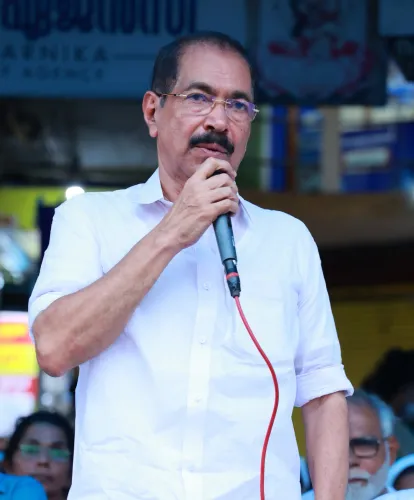
Kerala Minister Sunny Joseph on Friday, 5 June defended the appointment of his brother-in-law, Benny Thomas, to his personal staff, asserting there were no legal impediments to the move and that Thomas brings a substantial political record to the role. The appointment has drawn criticism from within Left circles, who have characterised it as nepotism.
The Minister's Defence
Joseph described Benny Thomas as a seasoned public worker who was elected Ullickal Grama Panchayat President with a record majority. He noted that Thomas had previously served as his chief agent during the Assembly elections and has always openly acknowledged their family relationship.
'Benny Thomas could have been placed in another minister's staff if that was the intention. I am not ready for such hypocrisy,' Joseph said, dismissing suggestions that the appointment was an act of concealed favouritism.
Benny Thomas's Political Background
According to the Minister, Benny Thomas has held several prominent party positions over the years, including roles in Youth Congress, as Congress Ullickal Mandalam President, as DCC General Secretary, and as Ullickal Grama Panchayat President. Joseph argued this track record justified the appointment on merit.
The order appointing 13 members to the Minister's personal staff also included Youth Congress leader Sudeep James, who had previously worked alongside Joseph during his tenure as KPCC president.
Health Minister Backs the Move
Health Minister K. Muraleedharan came out in support, stating that Thomas was well known as a frontline Congress worker. Muraleedharan questioned the basis of the criticism, pointing to past precedents where political leaders had appointed close relatives in similar positions.
'Did anyone raise questions when Chief Minister Pinarayi Vijayan appointed his son-in-law as a minister? These things have happened before,' Muraleedharan said.
A Pattern of Precedents
The controversy surfaces against a backdrop of similar instances in Kerala politics. There have been earlier cases where ministers appointed relatives on the rolls of another minister's office while those relatives effectively worked with the minister to whom they were related. A previous instance also involved a CPI(M) minister appointing his son's wife to their office. Critics argue these precedents normalise nepotism rather than justify it.
With the opposition sharpening its attack and the ruling side citing past practice as cover, the episode is likely to keep the spotlight on ministerial appointment norms in Kerala in the days ahead.
Point of View
But it sidesteps the structural question: whether personal staff appointments in Kerala have become a de facto patronage system for party loyalists and family members alike. Muraleedharan's counter-attack, invoking Pinarayi Vijayan's son-in-law appointment, is politically pointed but logically weak — past misconduct does not validate present practice. What is notable is how both the ruling Left and the opposition Congress have, at different times, been on both sides of this argument. Until Kerala codifies transparent, merit-based criteria for ministerial personal staff, these controversies will recur, and the defence of 'it has happened before' will continue to do more damage than the appointments themselves.
NationPress
20 Oct 2026
Frequently Asked Questions
Why is Kerala Minister Sunny Joseph facing criticism?
Sunny Joseph is facing criticism after appointing his brother-in-law, Benny Thomas, to his personal ministerial staff. Left circles have alleged that the move amounts to nepotism, though the Minister has denied any wrongdoing.
Who is Benny Thomas and what is his political background?
Benny Thomas is the husband of Minister Sunny Joseph's sister. He has held several Congress party positions, including Youth Congress member, Ullickal Mandalam President, DCC General Secretary, and Ullickal Grama Panchayat President, where he was reportedly elected with a record majority.
What did Sunny Joseph say in his defence?
Joseph stated there were no legal barriers to the appointment and argued that Thomas had a long-standing political record that justified the role. He also said Thomas had openly acknowledged their family relationship and had previously served as his chief agent during Assembly elections.
How has Health Minister K. Muraleedharan responded?
Muraleedharan backed the appointment, calling Thomas a well-known frontline Congress worker. He questioned the criticism by pointing to past instances — including Chief Minister Pinarayi Vijayan's appointment of his son-in-law as a minister — where similar appointments drew little opposition.
Are there precedents for such appointments in Kerala politics?
Yes. There have been earlier instances in Kerala where ministers appointed relatives on the rolls of another minister's office while those relatives effectively worked with the related minister. A CPI(M) minister was also previously reported to have appointed his son's wife to their office.