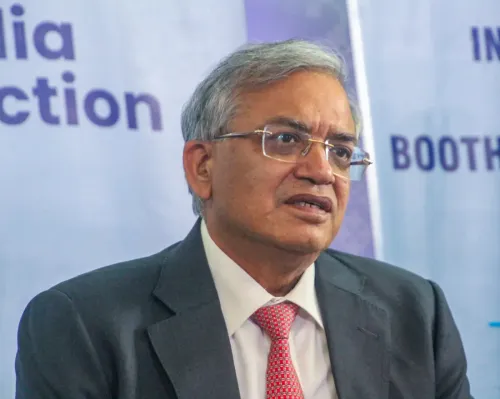
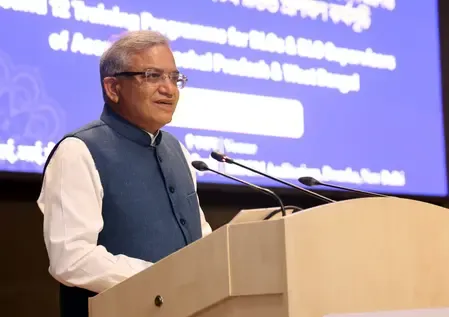
Kharge demands CEC Gyanesh Kumar's removal, calls him govt 'puppet'
Synopsis
Congress chief Mallikarjun Kharge escalated his party's electoral-integrity offensive on Tuesday, directly demanding the removal of Chief Election Commissioner Gyanesh Kumar and calling for PM Modi's resignation 'on moral grounds' — the sharpest political attack on the Election Commission's top official in recent memory, timed ahead of assembly polls in five states.
Key Takeaways
Congress National President Mallikarjun Kharge demanded the immediate removal of Chief Election Commissioner Gyanesh Kumar on 29 September 2026 .
Kharge alleged Kumar had become a 'puppet' of the Modi government , citing the ongoing Special Intensive Revision (SIR) of electoral rolls.
He also called on Prime Minister Narendra Modi to resign on moral grounds over alleged pressure on the CEC.
The Congress Working Committee placed five formal demands before the government and ECI, covering voter list transparency, appeal rights, and independent investigations.
Kharge alleged that rules for Form 6 — used by first-time voters — were changed 'illegally' , targeting youth voters.
Two Election Commissioners were allegedly excluded from an internal SIR portal, according to Kharge's claims at the meeting.
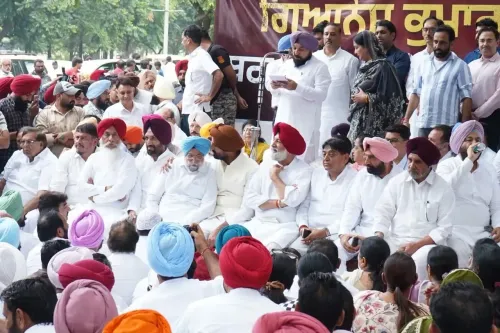
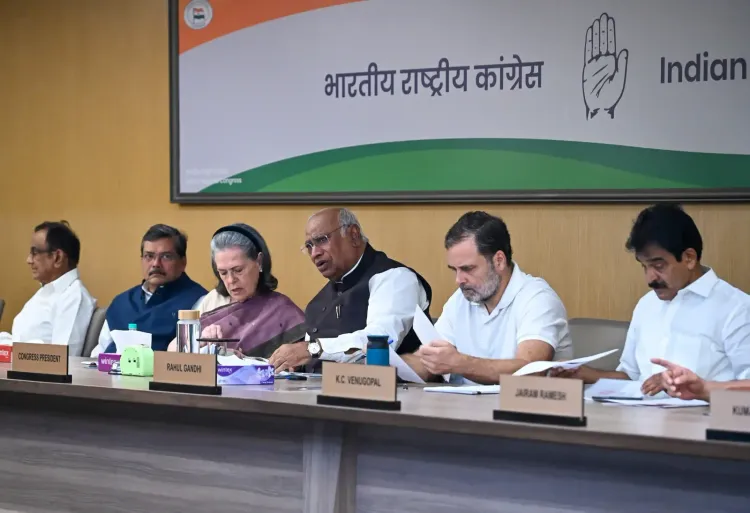
Congress National President Mallikarjun Kharge on Tuesday, 29 September 2026, demanded the immediate removal of Chief Election Commissioner Gyanesh Kumar, accusing him of functioning as a 'puppet' of the Central government and undermining the constitutional independence of the Election Commission of India (ECI). The demand was made at the Congress Working Committee (CWC) meeting in New Delhi, convened to finalise the party's strategy on the Special Intensive Revision (SIR) of electoral rolls.
What Kharge Said at the CWC Meeting
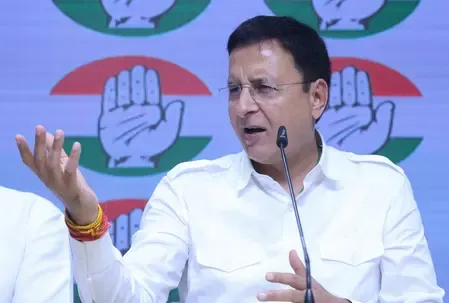
Addressing senior party leaders, Kharge declared that Chief Election Commissioner Kumar had 'no right to remain in his position' and must be removed forthwith. He further alleged that Prime Minister Narendra Modi — under whose pressure he claimed Kumar acted — should also resign on moral grounds.
Kharge alleged that voter names were being deleted from electoral rolls arbitrarily, citing what he described as instructions from the Bharatiya Janata Party (BJP) and the Modi government. 'People's names are being removed from voter lists through conspiracy, and the Chief Election Commissioner has become a puppet of the Modi government,' he said.
The SIR Controversy and Electoral Roll Concerns
The CWC meeting centred on the Congress party's response to the ongoing Special Intensive Revision of voter lists, which the party contends is being conducted in a non-transparent manner. Kharge questioned why two Election Commissioners were allegedly excluded from an internal portal related to the SIR process, alleging that something 'confidential' was being concealed.
He claimed that his colleague Lok Sabha Leader of Opposition Rahul Gandhi had earlier raised specific concerns — including duplicate voters, doubtful addresses, large numbers of voters registered at a single address, and suspicious Form-6 entries — that the Election Commission had not addressed with adequate seriousness. Kharge argued that had the CEC acted on those concerns, 'his credibility would have been preserved.'
Notably, Kharge also alleged that the government had quietly changed the rules for Form 6 — the form used by first-time voters to register — calling it 'completely illegal' and targeting young voters. He invoked the legacy of former Prime Minister Rajiv Gandhi, who in December 1988 lowered the voting age from 21 to 18, to contrast what he characterised as the current government's alleged effort to disenfranchise youth.
Invoking Ambedkar and the Constitution
Kharge drew extensively on the foundational arguments of Dr B.R. Ambedkar in the Constituent Assembly, where Ambedkar had described voting rights as 'the most fundamental thing in democracy.' He alleged that the present government's actions violated the constitutional spirit Ambedkar and Jawaharlal Nehru had sought to enshrine.
'Baba Saheb had said that names will not be deleted at the whim of any officer. Today, officers are arbitrarily deleting names at the behest of the BJP and Modi government,' Kharge said. He stressed that the right to vote for poor, Dalit, and marginalised citizens was the cornerstone of Indian democracy.
Congress Places Five Demands Before Government and ECI
The CWC formalised five demands directed at both the Centre and the Election Commission. These include: making complete data on every major change to the voter list publicly available; providing voters whose names have been removed with full information and an opportunity to appeal; ensuring timely access to voter lists for political parties in a usable format; ordering independent and timely investigations where serious discrepancies emerge; and ensuring that critical electoral data and decisions are transparent enough to prevent allegations of concealment.
Kharge also called on party workers to take a pledge to protect the transparency of voter lists, the fairness of elections, and the independence of constitutional institutions, saying Congress would pursue the fight 'from the streets to Parliament.'
What Comes Next
The Congress demand for the CEC's removal is unlikely to be acted upon by the Centre in the near term, but it signals an escalation of the party's electoral-integrity campaign ahead of assembly elections in five states. The ECI has not yet formally responded to the specific allegations raised at the CWC meeting. With the SIR process still ongoing and the Opposition sharpening its legal and political challenge, the dispute over electoral roll integrity is set to intensify in the weeks ahead.
Point of View
With five state elections approaching. The specific allegation that two sitting Election Commissioners were shut out of an internal SIR portal is the most substantive claim in the speech; if verified, it would raise serious process questions that go beyond partisan rhetoric. Yet the Congress faces a credibility test of its own: broad accusations of 'vote-stealing' require granular, verifiable evidence to move public opinion beyond its existing base. The invocation of Ambedkar and Nehru is politically resonant but also a reminder that the Opposition's strongest ground is procedural accountability — demanding auditable data — rather than sweeping conspiracy narratives that are harder to sustain.
NationPress
29 Sept 2026
Frequently Asked Questions
Why is Congress demanding the removal of Chief Election Commissioner Gyanesh Kumar?
Congress president Mallikarjun Kharge alleges that CEC Gyanesh Kumar has acted as a 'puppet' of the Modi government by conducting the Special Intensive Revision (SIR) of electoral rolls in a non-transparent manner, excluding fellow Election Commissioners from an internal portal, and failing to address Opposition concerns about duplicate and deleted voter names. Kharge says Kumar has 'no right to remain in his position' and must be removed immediately.
What is the Special Intensive Revision (SIR) of electoral rolls?
The Special Intensive Revision is an Election Commission of India process to update and clean voter lists ahead of upcoming elections. Congress alleges the current SIR exercise is being used to arbitrarily delete the names of eligible voters — particularly youth, Dalits, and marginalised communities — at the behest of the BJP and the Modi government, a charge the government has not formally responded to.
What are Congress's five demands to the government and the ECI?
The Congress Working Committee has demanded: full public disclosure of all major voter list changes; a proper appeals mechanism for voters whose names have been removed; timely access to voter list data for all political parties; independent investigations where serious discrepancies are found; and end-to-end transparency in electoral data and decisions to prevent concealment allegations.
What did Kharge allege about Form 6 and youth voters?
Kharge alleged that the Modi government quietly changed the rules governing Form 6 — the registration form for first-time voters — calling the move 'completely illegal' and a deliberate attempt to disenfranchise young voters. He contrasted this with former PM Rajiv Gandhi's 1988 decision to lower the voting age from 21 to 18.
What did Kharge say about PM Modi and the Election Commission's independence?
Kharge called on PM Modi to resign 'on moral grounds', alleging he had exerted pressure on the CEC. He also argued that the independence of the Election Commission is a foundational condition for democracy, and that the Congress's questions were aimed at strengthening, not weakening, constitutional institutions.