BJP, INDIA Bloc clash over 'public impeachment' of CEC Gyanesh Kumar
Synopsis
The INDIA Bloc's decision to stage a symbolic 'public impeachment' of Chief Election Commissioner Gyanesh Kumar at Mallikarjun Kharge's residence has triggered one of the sharpest BJP-Opposition exchanges of the season — with the ruling party calling it constitutional drama and the Opposition calling it democratic necessity. With a Delhi mega-rally announced for 1 November and the BJP reportedly mobilising at 800 locations in response, the battle over the ECI's legitimacy is moving from Parliament's corridors to the street.
Key Takeaways
The INDIA Bloc held a symbolic 'public impeachment' of CEC Gyanesh Kumar at Mallikarjun Kharge's residence in New Delhi on 30 October 2026 at 3:30 pm .
CPI(M) MP John Brittas alleged Gyanesh Kumar had lost both moral and legal authority and called on him to resign.
BJP MPs Yogender Chandolia, Sanjay Jaiswal , and leader Ram Kadam condemned the exercise as unconstitutional political theatre and challenged the Opposition to raise concerns inside Parliament.
The BJP reportedly planned counter-mobilisation at nearly 800 locations across the country, which the Congress cited as evidence of ruling-party defensiveness.
The INDIA Bloc announced a major rally in Delhi on 1 November , which Congress MP Imran Pratapgarhi described as potentially the largest in the capital's history.
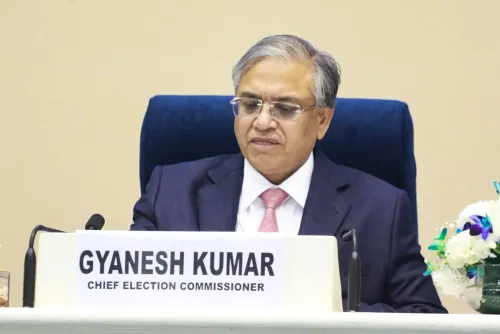
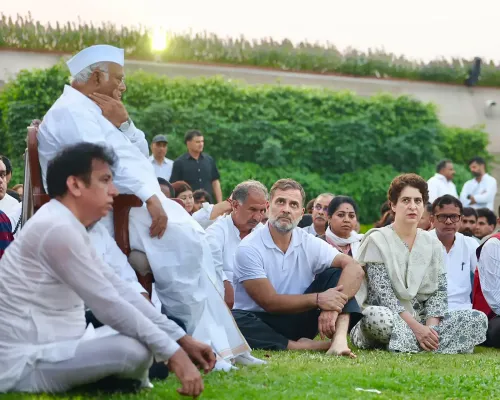
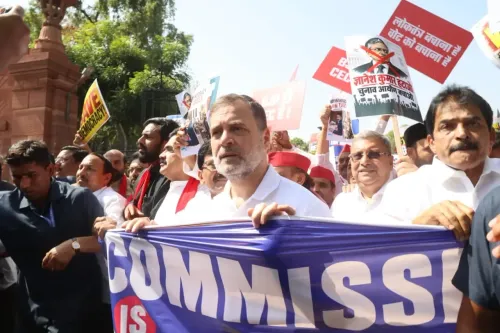
A sharp political confrontation erupted between the Bharatiya Janata Party (BJP) and the INDIA Bloc on Friday, 30 October 2026, over the Opposition's decision to hold a symbolic 'public impeachment' of Chief Election Commissioner (CEC) Gyanesh Kumar at the New Delhi residence of Congress President and Leader of the Opposition in the Rajya Sabha, Mallikarjun Kharge. The programme was scheduled to commence at 3:30 pm, with the BJP branding it a constitutional mockery and the INDIA Bloc defending it as a democratic necessity.
What the Opposition Said
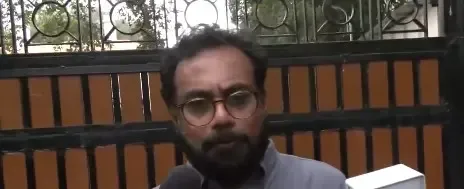
Communist Party of India (Marxist) MP John Brittas framed the public impeachment as a direct expression of popular will, arguing that constitutional institutions had been systematically undermined. 'When constitutional institutions are trampled on, when elections are not free and fair, when the umpire itself becomes partisan, and when our notices are not entertained by the Lok Sabha Speaker or Rajya Sabha Chairman, we have only one option: To organise such a public impeachment,' he said.
Brittas went further, claiming that Gyanesh Kumar had already lost both moral and legal authority, and expressing the expectation that the CEC would 'quit forthwith.' The claim that courts had 'indirectly indicted' Kumar was not elaborated upon with specific citations.
Congress leader Udit Raj described the mock exercise as a public awareness effort. 'A mock Parliament is a way of informing the people of the country about how our Parliament and democracy are being dismantled,' he said. Congress MP Imran Pratapgarhi alleged that the BJP was 'forming governments through vote theft' and accused the ruling party's response of reflecting a deeper crisis of democratic accountability.
Pratapgarhi also announced that the INDIA Bloc would hold what he called a 'historic rally' in Delhi on 1 November, describing it as potentially the largest rally in the capital's history — a claim that remains to be verified.
BJP's Counter-Offensive
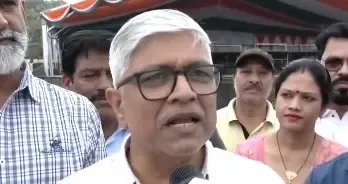
BJP MP Yogender Chandolia accused the Congress and its alliance partners of attempting to 'spread anarchy' over the Election Commission, arguing that legitimate grievances should be raised in Parliament rather than through street theatre. 'What message do they want to give by conducting mock drill programmes like this? They do not let the Lok Sabha function, and today they hold a Lok Sabha at their own home,' Chandolia said.
BJP MP Sanjay Jaiswal was more pointed in his criticism, alleging that the Opposition avoided parliamentary debate precisely because it feared being 'thoroughly exposed.' 'Whenever Parliament is in session, you spend all 40 days outside, on the streets, and do not allow Parliament to function,' he said, adding that the mock impeachment was driven by the Opposition's reluctance to defend its positions inside the House.
BJP leader Ram Kadam invoked constitutional propriety, stressing that impeachment was a serious legal process that could not be reduced to political theatre. 'Impeachment is a serious constitutional process. You cannot turn it into a political drama. If you have any objections, approach the judiciary or submit evidence to the Election Commission,' Kadam said. He also pointed to 28 Legislative Council seats across four states contested via ballot papers, claiming the Congress had won only one — arguing that electoral losses could not be automatically attributed to Electronic Voting Machines (EVMs).
The EVM and ECI Fault Line
The immediate flashpoint is the INDIA Bloc's sustained confrontation with the Election Commission of India (ECI), rooted in the Opposition's long-running allegations about EVM integrity and, more recently, concerns about the conduct of CEC Gyanesh Kumar. The bloc has accused the Commission of partisan functioning, a charge the ECI has consistently denied. Notably, the BJP's reported plans to counter-organise at nearly 800 locations across the country — cited by Congress leader Raj as evidence of ruling-party defensiveness — suggest that both sides are treating this as a high-stakes messaging battle ahead of upcoming electoral cycles.
This confrontation is not new terrain. The Opposition and the ECI have been locked in a series of disputes over electoral rolls, model code enforcement, and the EVM audit process. The decision to stage a public impeachment, however, marks a significant escalation in symbolic terms — transforming what were procedural grievances into a direct challenge to the CEC's personal legitimacy.
What Happens Next
The BJP has signalled it will use the upcoming Parliament session to force the Opposition to debate these allegations on the record inside the House — a setting the ruling party believes favours it. The INDIA Bloc, meanwhile, has committed to the 1 November Delhi rally as its next major mobilisation. Whether the public impeachment generates sustained public pressure or remains a symbolic gesture will likely depend on whether any formal legal or parliamentary action follows it.
Point of View
But legally hollow — and the BJP knows it. By forcing the confrontation onto street-level theatre rather than parliamentary procedure, the Opposition hands the ruling party an easy narrative about democratic norms being abused. The more substantive question — whether the Election Commission has genuinely operated with institutional independence under Gyanesh Kumar — risks being buried under the optics of the exercise itself. If the INDIA Bloc's EVM and ECI concerns have legal merit, as it claims, the public impeachment may actually weaken rather than strengthen the case by allowing the BJP to reframe a governance accountability argument as a spectacle.
NationPress
30 Oct 2026
Frequently Asked Questions
What is the 'public impeachment' of CEC Gyanesh Kumar?
It is a symbolic exercise organised by the INDIA Bloc on 30 October 2026 at Congress President Mallikarjun Kharge's New Delhi residence, in which Opposition leaders formally declared a lack of confidence in Chief Election Commissioner Gyanesh Kumar. The exercise has no legal standing but is intended as a political and public awareness statement about the Opposition's concerns over the Election Commission of India's functioning.
Why is the INDIA Bloc targeting CEC Gyanesh Kumar?
The INDIA Bloc has accused the Election Commission of India of partisan functioning under Gyanesh Kumar, alleging that elections are not free and fair and that the CEC has lost moral authority. CPI(M) MP John Brittas claimed that courts had 'indirectly indicted' Kumar, though he did not specify which judgments he was referring to.
What is the BJP's response to the public impeachment?
The BJP has condemned the exercise as unconstitutional political theatre, with MPs Yogender Chandolia, Sanjay Jaiswal, and leader Ram Kadam all arguing that the Opposition should raise its concerns inside Parliament rather than through symbolic street programmes. The party also reportedly mobilised counter-events at nearly 800 locations.
What happens next after the public impeachment event?
The INDIA Bloc has announced a major rally in Delhi on 1 November 2026, which Congress MP Imran Pratapgarhi called potentially the largest in the capital's history. The BJP has signalled it will challenge the Opposition to debate these issues formally when Parliament reconvenes.
Does a 'public impeachment' have any constitutional validity?
No. The public impeachment of a constitutional official is a purely symbolic act with no legal force. Under India's Constitution, the removal of the Chief Election Commissioner requires a formal impeachment process in Parliament similar to that for a Supreme Court judge, involving a special majority in both Houses.