CM Fadnavis hails PM-KISAN 24th instalment, ₹18,690 cr to 9.34 cr farmers

Synopsis
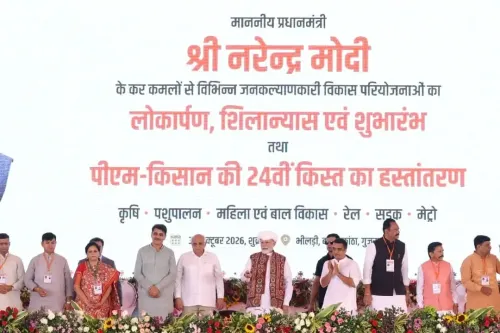
Maharashtra CM Devendra Fadnavis on 30 October 2026 praised the release of the PM-KISAN Samman Nidhi's 24th instalment — ₹18,690.32 crore transferred directly to over 9.34 crore farmer families — crediting Prime Minister Modi's leadership for sustained agricultural income support.
Key Takeaways
₹18,690.32 crore disbursed under the 24th instalment of PM Kisan Samman Nidhi on 30 October 2026 .
Over 9.34 crore farmer families received the direct bank transfer in a single day.
PM-KISAN was launched on 24 February 2019 and provides ₹6,000 per year in three equal instalments of ₹2,000 .
Maharashtra CM Devendra Fadnavis posted in both Hindi and Marathi to amplify the disbursement to regional audiences.
The scheme uses Direct Benefit Transfer (DBT) , routing funds straight to farmers' bank accounts without intermediaries.
More than 9.34 crore farmer families woke up on Friday, 30 October 2026 to a direct credit in their bank accounts — ₹18,690.32 crore disbursed in a single sweep under the 24th instalment of the PM Kisan Samman Nidhi Yojana. Maharashtra Chief Minister Devendra Fadnavis took to X to salute the transfer, calling farmer prosperity the very foundation of the nation's progress.
Posting in both Hindi and Marathi, Fadnavis framed the disbursement as the direct result of Prime Minister Narendra Modi's 'visionary leadership' and described the scheme as the Modi government's core commitment — 'अन्नदाताओं का सम्मान और उनका आर्थिक सशक्तिकरण' ('respect for the food-givers and their economic empowerment').
What PM-KISAN puts in a farmer's pocket
Launched on 24 February 2019 after its announcement in the interim Union Budget of that year, the PM Kisan Samman Nidhi is a central sector scheme that transfers ₹6,000 per year directly to eligible landholding farmer families in three equal instalments of ₹2,000 each. The money moves through Direct Benefit Transfer (DBT) — no middlemen, no state treasury delays, straight to the account.
The 24th instalment's aggregate figure of ₹18,690.32 crore for over 9.34 crore beneficiaries underscores the scheme's sheer scale: it is one of the largest cash-transfer programmes for agriculture anywhere in the world by number of recipients in a single payout.
Why a Maharashtra CM amplifies a central scheme
Fadnavis is a senior BJP leader and the political face of the ruling alliance in India's most industrialised state. His bilingual post — reaching Hindi and Marathi audiences simultaneously — is textbook coalition messaging: anchor the rural voter to the Union government's welfare delivery while reinforcing the party's image as the farmer's champion ahead of any electoral cycle.
The pattern is well-established. State BJP leaders routinely amplify PM-KISAN instalment releases through social media, extending the Union government's communication reach into regional constituencies where agriculture still drives livelihoods and votes.
The bigger picture for Indian farm income policy
Direct income support was a deliberate policy pivot. For decades, farm support in India meant subsidised inputs and minimum support prices — mechanisms that helped large landholders disproportionately and often leaked in delivery. PM-KISAN's DBT model was designed to bypass that distortion, putting cash — however modest — directly into the hands of small and marginal farmers who own the bulk of India's cultivated plots.
Critics have long argued that ₹6,000 a year is insufficient against the backdrop of rising input costs and climate-linked crop losses. Supporters counter that the scheme's value is in its reliability and universality: the same amount, on schedule, every four months, without negotiation. The 24th consecutive instalment running on time is itself a political signal — that the pipeline holds.
With the next Union Budget season approaching, every instalment release now doubles as a referendum on whether DBT-led farm welfare is delivering — or whether the next budget will need to do more. The kisan is watching the calendar, and so is Delhi.
Point of View
A strategy that has proved durable across electoral cycles. The sheer scale of the disbursal — over nine crore households in a single DBT sweep — consolidates the scheme's image as an infrastructure of governance, not just a subsidy. As budget discussions near, each on-time instalment raises the floor for what rural voters expect, quietly setting a higher bar for any government that follows.
NationPress
30 Oct 2026
Frequently Asked Questions
What is PM Kisan Samman Nidhi Yojana?
PM Kisan Samman Nidhi (PM-KISAN) is a central government scheme launched on 24 February 2019 that provides ₹6,000 per year in direct income support to eligible landholding farmer families, paid in three instalments of ₹2,000 each directly into their bank accounts.
How much was transferred in the 24th PM-KISAN instalment?
The 24th instalment of PM-KISAN transferred ₹18,690.32 crore to more than 9.34 crore farmer families across India on 30 October 2026.
Why did CM Devendra Fadnavis post about PM-KISAN?
As Maharashtra Chief Minister and a senior BJP leader, Fadnavis posted in both Hindi and Marathi to highlight the central government's farmer welfare delivery, reinforcing the party's rural outreach and crediting Prime Minister Narendra Modi's leadership.
Who benefits from the PM Kisan Samman Nidhi scheme?
Eligible landholding farmer families across India — primarily small and marginal farmers — benefit from PM-KISAN. As of the 24th instalment, over 9.34 crore such families are enrolled in the scheme.
How does PM-KISAN money reach farmers?
PM-KISAN uses Direct Benefit Transfer (DBT) to credit funds straight into farmers' registered bank accounts, bypassing intermediaries and state treasury delays.