CM Fadnavis Hails PM-KISAN Extension to 2030–31
Synopsis
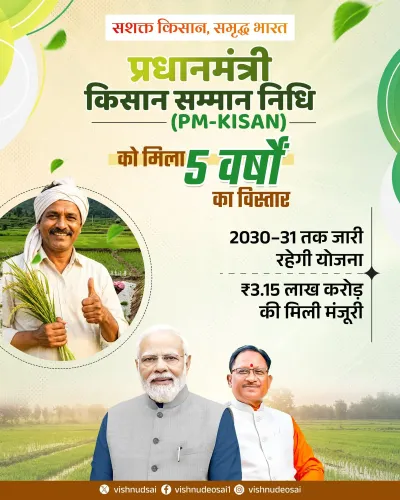
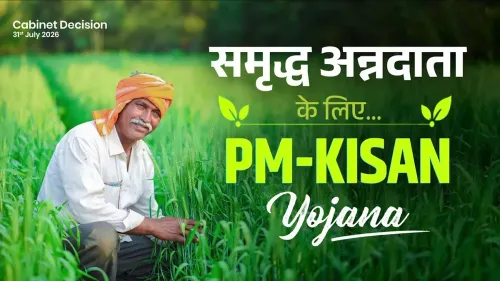
Maharashtra CM Devendra Fadnavis has welcomed the extension of the PM-KISAN Samman Nidhi scheme to 2030–31, praising PM Modi's decision to continue Rs 6,000 annual direct income support to millions of farmer families as a pillar of rural welfare and Viksit Bharat.
Key Takeaways
PM-KISAN Samman Nidhi has been extended to 2030–31 , according to Maharashtra CM Devendra Fadnavis .
The scheme provides Rs 6,000 per year in direct bank transfers to landholding farmer families across India.
Launched in February 2019 , PM-KISAN uses Direct Benefit Transfer to eliminate intermediaries.
Fadnavis posted in both English and Marathi , framing the extension as 'new strength for the prosperity of the food-giver.' The Ministry of Agriculture and Farmers Welfare administers the scheme; state-level beneficiary verification will continue through the extension period.
The extension aligns with the central government's broader Viksit Bharat rural self-reliance agenda.
A scheme that has quietly deposited cash into the accounts of millions of Indian farming families just got a longer lease on life. Maharashtra Chief Minister Devendra Fadnavis on Friday, July 31, 2026, welcomed the extension of the PM-KISAN Samman Nidhi scheme till 2030–31, calling it a decisive step toward strengthening agricultural resilience and advancing the vision of a self-reliant Viksit Bharat (Developed India).
Posting in both English and Marathi, Fadnavis credited Prime Minister Narendra Modi with the decision, writing: 'Under the visionary leadership of our Hon PM Narendra Modi Ji, the extension of the PM-KISAN Scheme till 2030-31 will continue to provide direct financial support to millions of farmers.' In Marathi, he framed it as 'अन्नदात्यांच्या समृद्धीला नवे बळ' — 'new strength for the prosperity of the food-giver.'
What PM-KISAN Delivers — and to Whom
Launched in February 2019, the Pradhan Mantri Kisan Samman Nidhi provides Rs 6,000 per year in three equal instalments of Rs 2,000, transferred directly into the bank accounts of landholding farmer families. The scheme bypasses intermediaries entirely, using the Direct Benefit Transfer architecture to reach beneficiaries without leakage. Administered by the Ministry of Agriculture and Farmers Welfare, it has become one of the central government's most visible rural welfare instruments since its launch.
Maharashtra, with its vast and economically diverse farming population — spanning cotton growers in Vidarbha to sugarcane cultivators in western Maharashtra — has been among the key beneficiary states. State-level coordination for beneficiary verification remains an ongoing administrative responsibility, one that the extension will sustain through the end of the decade.
A Decade-Long Bet on Direct Transfers
The extension fits a clear pattern: the central government has consistently doubled down on direct income support over crop-price intervention as its primary tool for rural welfare. Rather than restructuring procurement or price floors, PM-KISAN puts cash in hand and leaves spending decisions to the farmer. Critics have argued the Rs 6,000 annual figure is too modest to meaningfully offset input costs; proponents counter that its universality and reliability make it a dependable floor beneath farm incomes.
Extending the scheme to 2030–31 signals that this philosophy — direct, verifiable, politically visible — will anchor agricultural welfare policy well into the next decade. Budgetary provisions in successive Union Budgets will be the real test of that commitment.
For Devendra Fadnavis, amplifying the announcement carries its own logic: Maharashtra heads into a period of sustained rural economic pressure, and aligning the state's messaging with a popular central scheme keeps the political dividend local even as the money flows from Delhi.
The food-giver, as Fadnavis put it, just got a promise that stretches to the end of the decade. Whether the numbers keep pace with what farming actually costs is the question that will define how that promise lands.
Point of View
Publicly amplifying a central scheme decision is a calibrated move — it ties Maharashtra's rural constituency to a Delhi-delivered benefit while keeping the state government's messaging aligned with the national party narrative. The scheme's flat Rs 6,000 annual payout, unchanged since 2019, will increasingly face scrutiny against rising input costs as the extension period progresses. The real political test will come at budget time, when the Centre must either sustain or expand the outlay to keep the promise credible.
NationPress
15 Sept 2026
Frequently Asked Questions
What is the PM-KISAN scheme and how much money does it give farmers?
PM-KISAN (Pradhan Mantri Kisan Samman Nidhi) provides Rs 6,000 per year to landholding farmer families, paid in three instalments of Rs 2,000 each, directly into their bank accounts.
Has PM-KISAN been extended till 2030-31?
Maharashtra CM Devendra Fadnavis announced and welcomed the extension of PM-KISAN till 2030–31, attributing the decision to PM Narendra Modi's leadership, though independent official confirmation from the Union Cabinet should be verified.
When was PM-KISAN launched?
The PM-KISAN scheme was launched in February 2019 to provide direct income support to small and marginal farmers across India.
Who administers the PM-KISAN scheme?
The Ministry of Agriculture and Farmers Welfare administers PM-KISAN at the central level, with states responsible for beneficiary identification and verification.
Why did CM Fadnavis comment on a central government scheme?
As Maharashtra Chief Minister and a senior BJP leader, Fadnavis routinely amplifies central government welfare decisions that benefit Maharashtra's large farming population, aligning state messaging with national party priorities.