CM Yogi Hails PM-KISAN 24th Instalment, ₹18,690 Cr Transferred
Synopsis
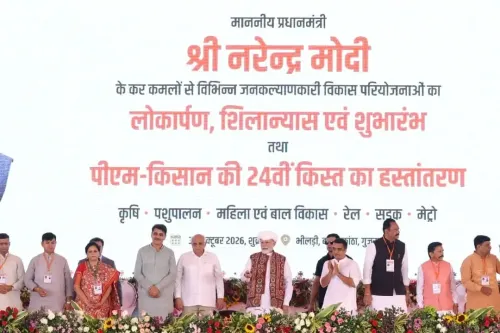
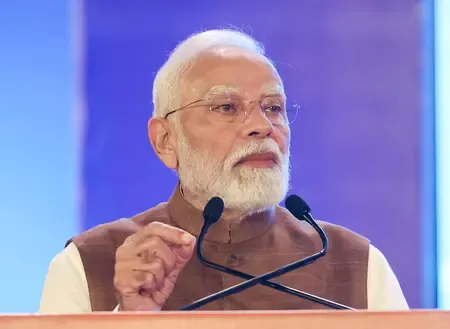
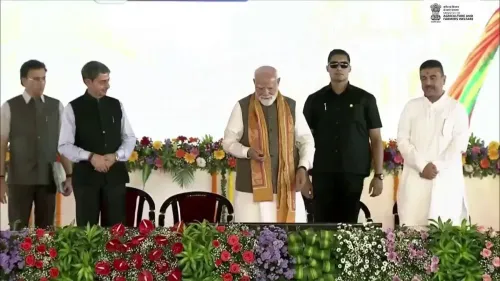
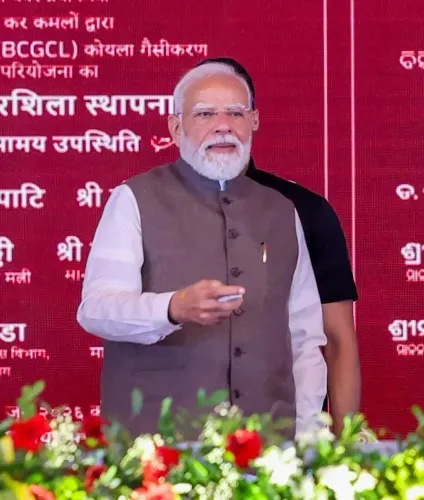
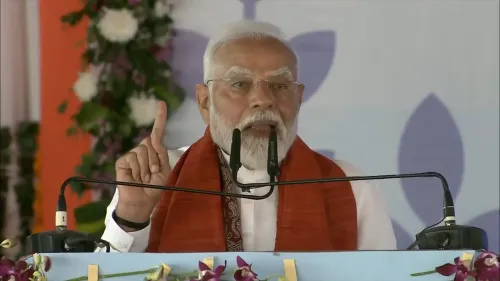
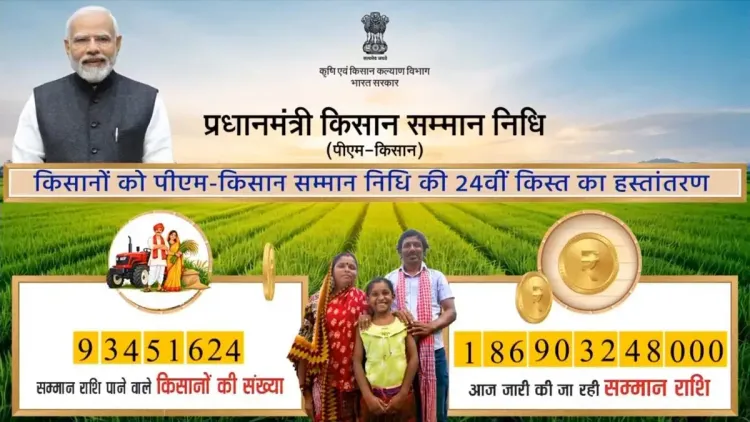
PM Modi released the 24th PM-KISAN instalment from Banaskantha, Gujarat, transferring over ₹18,690 crore to 9.34 crore farmers. CM Yogi Adityanath highlighted that more than 2.24 crore Uttar Pradesh farmers benefited, calling the pre-Diwali transfer a 'gift' and reaffirming the double engine government's commitment to rural welfare.
Key Takeaways
₹18,690 crore transferred to over 9.34 crore farmers nationwide under PM-KISAN's 24th instalment on 30 October 2026 .
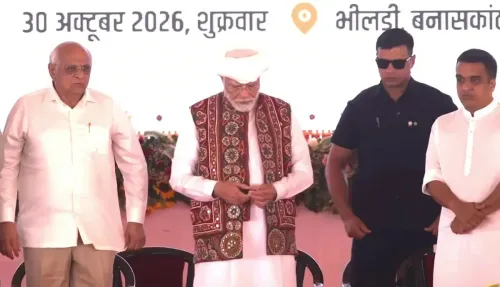
The disbursement was made by PM Narendra Modi from Banaskantha, Gujarat — days before Diwali.
More than 2.24 crore Uttar Pradesh farmers are among the beneficiaries, per CM Yogi Adityanath.
PM-KISAN, launched in December 2018 , provides ₹6,000 per year in three instalments directly to landholding farmers via DBT.
CM Yogi invoked the 'double engine government' model, arguing BJP-led state and central coordination improves welfare delivery speed.
The CM flagged goals of income enhancement and reducing cultivation costs alongside direct income support.
Just days before Diwali 2026, over 9.34 crore farmers across India woke up to a direct deposit in their bank accounts — no middleman, no delay. Prime Minister Narendra Modi released the 24th instalment of the Pradhan Mantri Kisan Samman Nidhi (PM-KISAN) scheme from Banaskantha, Gujarat on 30 October 2026, transferring more than ₹18,690 crore in a single sweep. Uttar Pradesh Chief Minister Yogi Adityanath took to X to acknowledge the transfer, expressing gratitude on behalf of the state's farming community.
UP's 2.24 Crore Farmers Among the Beneficiaries
In his post, CM Yogi noted that more than 2.24 crore farmers from Uttar Pradesh have benefited from this instalment — making the state one of the largest beneficiary pools in the country. He framed the transfer as a 'Diwali se poorv prapt uphar' (a gift received before Diwali), a pointed piece of political timing that the BJP has deployed with precision in previous tranches as well.
CM Yogi's post quoted the governing philosophy driving the programme: 'Kisanon ki khushhaali mein gaanvon ki samriddhi aur gaanvon ki samriddhi mein rashtra ki pragati nihit hai' — 'In the prosperity of farmers lies the wealth of villages, and in the wealth of villages lies the progress of the nation.' That framing is not incidental; it directly positions agricultural welfare as the spine of national development.
PM-KISAN at a Glance: Eight Years of Direct Transfers
Launched in December 2018, PM-KISAN provides landholding farmers ₹6,000 per year in three equal instalments of ₹2,000, credited directly to bank accounts under the government's Direct Benefit Transfer (DBT) architecture. The first instalment went out in February 2019; the 24th marks roughly eight years of the scheme in operation — a cadence of one release roughly every four months.
The scheme's design was built to eliminate leakages that plagued earlier agricultural subsidy pipelines. By routing funds through the Aadhaar-linked banking system, the Centre claims near-real-time delivery to millions of small and marginal farmers who previously depended on state intermediaries.
The 'Double Engine' Framing and What It Signals
CM Yogi's post explicitly invoked the BJP's signature 'double engine government' formulation — the argument that having the same party at the Centre and in state capitals accelerates welfare delivery and reduces political friction. For Uttar Pradesh, which carries one of the country's largest rural populations, that coordination claim has tangible stakes: any delay in beneficiary list updates or bank-seeding failures at the state level directly affects crore-scale numbers.
The CM also flagged three simultaneous goals: bringing positive change to farmers' lives, raising their income, and reducing the cost of cultivation — a nod to the wider agrarian stress that income-support schemes alone do not fully address. The next Union Budget and any revision to per-beneficiary amounts will test how far that commitment extends.
Point of View
Released strategically before Diwali, underscores how the BJP has systematically tied welfare delivery to electoral optics — a pre-festival transfer to crore-scale beneficiaries doubles as a visible governance signal. CM Yogi's post reinforces the 'double engine' narrative that has become the party's central pitch for state-level governance alignment. However, the scheme's ₹2,000-per-instalment structure has faced recurring questions about whether flat income support meaningfully addresses rising input costs, a tension the CM's own language — 'reduce cost of cultivation' — inadvertently acknowledges. The next Budget's treatment of PM-KISAN's per-beneficiary amount will be the real test of that commitment.
NationPress
30 Oct 2026
Frequently Asked Questions
What is PM-KISAN and how much do farmers receive?
PM Kisan Samman Nidhi (PM-KISAN) is a central government scheme launched in December 2018 that provides landholding farmers ₹6,000 per year in three instalments of ₹2,000 each, transferred directly to their bank accounts via the Direct Benefit Transfer system.
How many farmers received the 24th PM-KISAN instalment?
Over 9.34 crore farmers across India received the 24th PM-KISAN instalment on 30 October 2026, with more than 2.24 crore of them from Uttar Pradesh alone, according to CM Yogi Adityanath's post.
How much money was transferred in PM-KISAN's 24th instalment?
Prime Minister Narendra Modi transferred more than ₹18,690 crore in the 24th instalment of PM-KISAN, releasing the funds from Banaskantha, Gujarat.
Why did PM Modi release the instalment from Banaskantha, Gujarat?
Banaskantha in Gujarat was chosen as the ceremonial location for the disbursement event. The district is a significant agricultural hub, and such events are typically held at locations that highlight farming communities.
What does 'double engine government' mean in the context of PM-KISAN?
The 'double engine government' is a BJP formulation referring to the same party being in power at both the Centre and a state government, with the argument that this alignment speeds up scheme implementation and welfare delivery — as CM Yogi cited for Uttar Pradesh's PM-KISAN outreach.