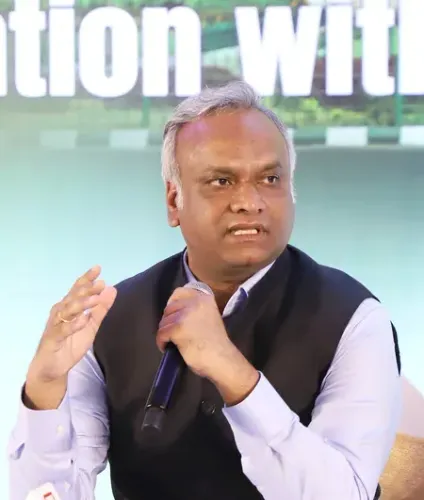
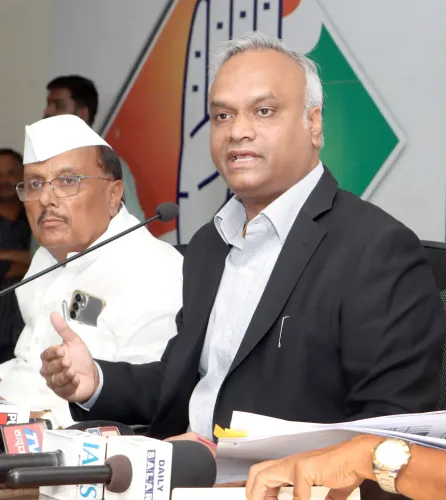
Karnataka Home Minister Priyank Kharge: 'Police not RSS's servant, seek permission'
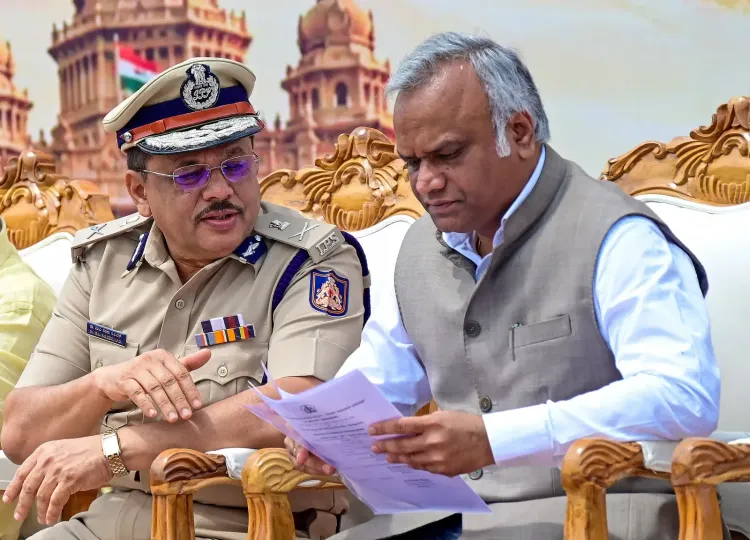
Synopsis
Karnataka Home Minister Priyank Kharge has drawn a hard line against the RSS, declaring the state Police Department is not the organisation's 'domestic servant' after the RSS sent a letter informing police — rather than formally requesting permission — for mass Vijayadashami marches involving over 2 lakh uniformed volunteers. The row touches law, electoral politics, and the limits of organisational privilege in one of India's most politically contested states.
Key Takeaways
Karnataka Home Minister Priyank Kharge on 21 October 2026 demanded the RSS seek formal police permission for its planned Vijayadashami route marches.
The RSS had submitted a letter informing police of the march rather than applying for permission, which Kharge said was procedurally insufficient.
According to the RSS Akhil Bharatiya Pratinidhi Sabha Annual Report 2025-26 , the organisation conducted 562 route marches in Karnataka with 2,21,963 uniformed participants.
Kharge questioned RSS chief Mohan Bhagwat's remarks on regime change and alleged a 'conspiracy' to keep certain forces in power permanently.
He also questioned the judicial immunity of the Chief Election Commissioner and alleged links between an unnamed 'evil force' and Pakistan.
Karnataka Home Minister Priyank Kharge on Wednesday, 21 October 2026, launched a sharp broadside against the Rashtriya Swayamsevak Sangh (RSS), demanding to know whether the state's Police Department was subservient to the organisation after it submitted a letter merely informing police of a proposed march rather than formally seeking permission. The remarks have escalated a brewing political controversy over the RSS's planned Vijayadashami route marches across Karnataka.
The Permission Row
The dispute centres on a letter the RSS sent to police informing them of its planned march — language that Kharge said fell short of a formal permission application. 'The letter says that they are informing the police, not seeking permission. Let them seek permission. Is the Police Department their domestic servant?' he said. A day earlier, on Tuesday, Kharge had formally urged the RSS to follow the prescribed procedure applicable to all organisations and await approval from competent authorities before conducting processions in the state.
Scale of the Planned Marches
Kharge cited the RSS Akhil Bharatiya Pratinidhi Sabha Annual Report 2025-26, which stated that the organisation had conducted 562 route marches across Karnataka involving 2,21,963 uniformed participants. He argued that if lakhs of RSS volunteers intended to march through Karnataka's streets on a single day simultaneously, the Police Department would need to deploy considerable resources — personnel, transportation, food, traffic management, and security — all of which required advance planning and public funds.
Attack on RSS Chief's Remarks
Kharge also took aim at RSS chief Mohan Bhagwat, questioning who had authorised him to speak about regime change and political matters. 'What regime change are they talking about? How can regime change happen? The Chief Election Commissioner is theirs, the EVMs are theirs, and the voter list is theirs,' he said, referring to Forms 6 and 7 associated with electoral rolls. He added: 'There is a conspiracy to ensure that they remain in power permanently. This has already been exposed.' He also questioned why the Chief Election Commissioner enjoyed judicial immunity, a point he said remained unanswered.
Broader Allegations
Pressing further, Kharge challenged the RSS on its historical record of protests and alleged links with external forces, saying: 'Which evil force are we talking about? Who is the one developing links with Pakistan?' He also cautioned against drawing comparisons between protests abroad and those in India, arguing the issues were distinct — noting that demonstrations in France were over price rise and education, whereas protests in India were directed at the Election Commission of India (ECI).
Political Fallout
The controversy has reignited a broader debate about the conditions governing public processions and the extent to which voluntary organisations must comply with standard police-permission protocols. Critics of Kharge's position argue the BJP-aligned RSS has historically been granted informal procedural latitude in some states; supporters say Karnataka's Congress government is simply enforcing a uniform standard. The row is expected to intensify ahead of the Vijayadashami marches, with both sides unlikely to back down before a formal ruling from competent authorities.
Point of View
Allegations about electoral manipulation, and insinuations about Pakistan linkages into one political broadside. That conflation may be tactically potent for the Karnataka Congress base but risks diluting a legitimate governance point: large-scale processions do require coordinated police resources, and a uniform permission standard is defensible. The harder question mainstream coverage is missing is why this procedural norm was apparently not enforced uniformly before — and whether its selective application now, ahead of Vijayadashami, amounts to targeted administrative friction. The BJP and RSS will frame it exactly that way, and the Congress needs a cleaner procedural argument than the one currently on display.
NationPress
21 Oct 2026
Frequently Asked Questions
Why is Karnataka Home Minister Priyank Kharge demanding RSS seek police permission?
Kharge says the RSS submitted a letter merely informing the police of its planned Vijayadashami route marches rather than formally applying for permission as required under prescribed procedure. He argues this is the standard applicable to all organisations and the Police Department cannot function as a logistical arm of any group.
What did Priyank Kharge say about the Police Department and the RSS?
Kharge said, 'Is the Police Department their domestic servant?' — challenging the RSS's approach of informing rather than seeking permission. He insisted the organisation must submit a formal application and await approval from competent authorities before conducting marches.
How large are the RSS's planned Vijayadashami marches in Karnataka?
According to the RSS Akhil Bharatiya Pratinidhi Sabha Annual Report 2025-26 cited by Kharge, the organisation conducted 562 route marches across Karnataka involving 2,21,963 uniformed participants. Kharge said mobilising such numbers simultaneously would require extensive police deployment, transport, and traffic management.
What did Kharge say about RSS chief Mohan Bhagwat?
Kharge questioned who had authorised Bhagwat to comment on regime change and political matters. He alleged there was a 'conspiracy to ensure that they remain in power permanently' and raised the question of why the Chief Election Commissioner enjoys judicial immunity.
What is the broader political significance of this dispute?
The row touches on the conditions governing large public processions, the independence of electoral institutions, and the political relationship between the Congress-led Karnataka government and the RSS ahead of Vijayadashami. It is expected to escalate as the march date approaches and formal permission remains pending.