Kharungpat Bird Sanctuary: A New Era for Conservation and Eco-Tourism in Manipur

Synopsis
The Manipur government is set to create the Kharungpat Bird Sanctuary to enhance biodiversity conservation and eco-tourism. This initiative responds to public demand and aims to protect vital wetlands and waterbird populations while supporting local livelihoods.
Key Takeaways
Development of Kharungpat Bird Sanctuary in Manipur.
Aims to enhance biodiversity and promote eco-tourism.
Spanning approximately 227 hectares of wetland.
Focus on conservation of waterbirds , both resident and migratory.
Community-driven approach to conservation and livelihood.
Imphal, April 17 (NationPress) The government of Manipur has revealed its intention to establish a bird sanctuary at Kharungpat in the Kakching district. This initiative aims to enhance biodiversity conservation and foster eco-tourism within the region, according to officials on Friday.
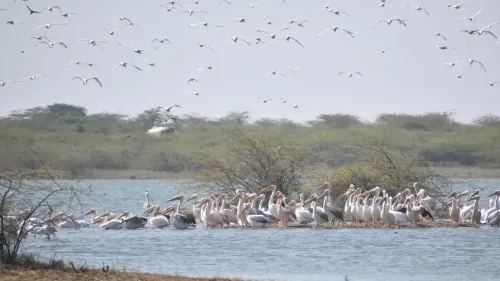
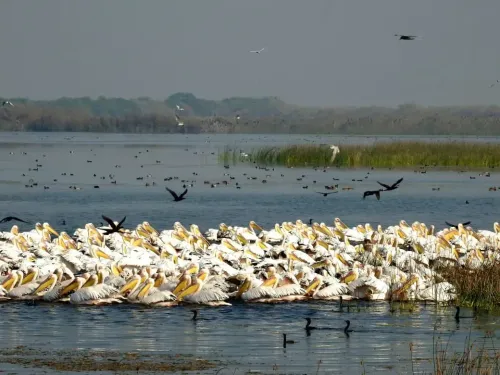
A senior official from the forestry department stated that the planned sanctuary will span approximately 227 hectares, representing nearly 6.7 percent of the entire wetland area. This location is deemed ecologically vital, especially for the preservation of waterbirds, which include both resident and migratory species.
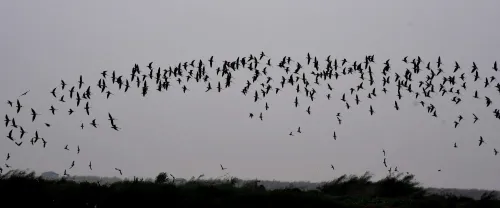
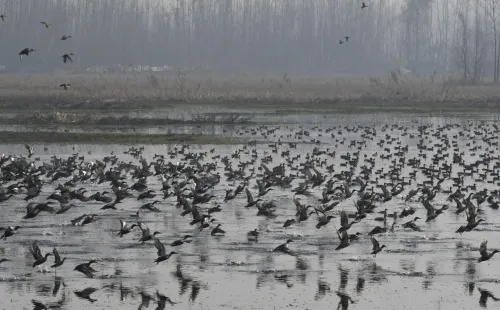
As per the official report, a bird census conducted in 2023 identified around 69 species in the region, with nearly 40 percent classified as migratory birds. However, a recent census in 2025 indicated a concerning drop in the migratory bird population, prompting anxiety within the state government.
The observed decline is attributed to various factors, including habitat loss, diminishing roosting sites, and increasing local disturbances that adversely affect the wetland ecosystem.
In light of public demand, the state government has opted to designate the area as the Kharungpat Bird Sanctuary.
The decision made by the state Cabinet to declare Kharungpat a bird sanctuary under the Wildlife Protection Act of 1972 is a major milestone in Manipur's conservation endeavors.
This initiative follows persistent public advocacy led by local MLA Usham Deben Singh, with the backing of organizations like the Keirak United Development Association, Citizens’ Association for Rural Development, members of the Wabagai Zila Parishad, and the South Tentha Youth Development Organisation.
In addition to conservation efforts, the anticipated sanctuary is expected to become a prominent eco-tourism hub in the area.
Principal Chief Conservator of Forests and Chief Wildlife Warden Anurag Bajpai stated that the Forest Department is set to collaborate with the Union Ministry of Environment, Forest and Climate Change to facilitate development projects associated with the sanctuary.
He added that an Eco-Development Committee comprising local residents will be established to promote eco-tourism and livelihood initiatives, ensuring that conservation efforts are led by the community.
The government perceives this project as a community-focused initiative that aspires to merge ecosystem conservation with sustainable livelihood prospects for local populations.
Bajpai emphasized that the conservation of waterbirds is intrinsically linked to the safeguarding of wetlands, which are essential for maintaining ecological equilibrium.
He noted that, according to Criterion 5 of the Ramsar Convention, a wetland is recognized as internationally significant if it consistently supports 20,000 or more waterbirds.
He also expressed gratitude towards the contributions of the local MLA, Zila Parishad members, community organizations, villagers, and administrative officials, including the Deputy Commissioner, Divisional Forest Officer, and Range Forest Officer, for their efforts in promoting the conservation of the area’s natural heritage.
Point of View
The initiative to create the Kharungpat Bird Sanctuary reflects a growing recognition of the need to protect essential ecosystems. This move aligns with community interests and highlights the importance of integrating local livelihoods with environmental stewardship.
NationPress
19 Sept 2026
Frequently Asked Questions
What is the purpose of the Kharungpat Bird Sanctuary?
The Kharungpat Bird Sanctuary aims to strengthen biodiversity conservation and promote eco-tourism in Manipur.
How large will the sanctuary be?
The sanctuary is set to cover approximately 227 hectares.
What types of birds will be protected?
The sanctuary will focus on conserving both resident and migratory waterbirds.
Who is involved in the advocacy for this sanctuary?
Local MLA Usham Deben Singh and several community organizations have played key roles in advocating for the sanctuary.
How does the government plan to support eco-tourism?
An Eco-Development Committee involving local villagers will be established to promote eco-tourism and livelihood activities.