Kiren Rijiju Issues Stark Warning to Congress: Sikkim Protests Highlight Support for Women's Reservation Bill

Synopsis
In a striking show of support for women's representation, Union Minister Kiren Rijiju shared a protest video from Sikkim, condemning the Opposition following the Women's Reservation Bill's defeat in the Lok Sabha. The political tension escalates as the NDA claims intentional obstruction by the INDIA bloc.
Key Takeaways
Massive support for the Women's Reservation Bill highlighted in Sikkim protests.
Kiren Rijiju's strong warning to the Congress Party.
The Bill proposed 33% reservation for women in Parliament and Assemblies.
Political tensions escalate post-Bill's defeat in Lok Sabha.
The legislation tied to significant delimitation process for constituency redrawing.
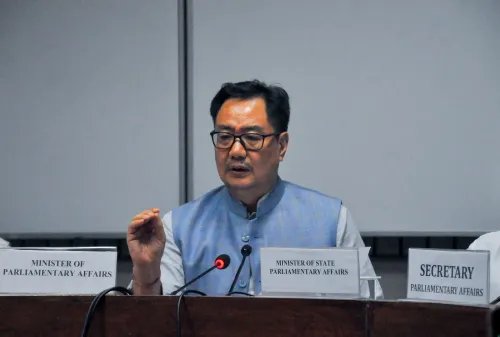
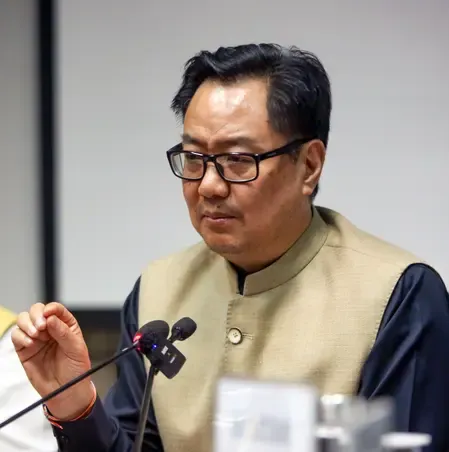
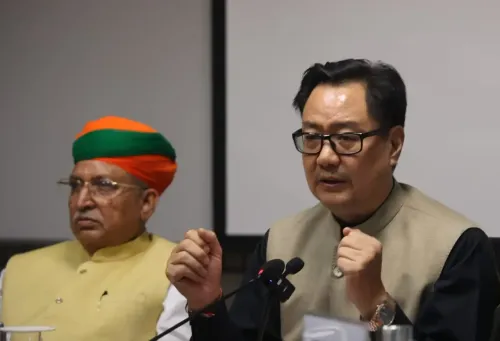
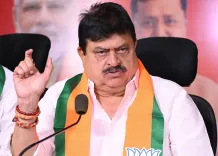
New Delhi, April 18 (NationPress) On Saturday, Union Minister of Parliamentary Affairs, Kiren Rijiju, shared a video showcasing protests in Sikkim that underline the public's backing for the Women’s Reservation Bill while vehemently criticizing the Opposition following its failure in the Lok Sabha.
He remarked, “This serves as a significant warning to the Congress Party. Witness the overwhelming support for the Women's reservation in both Parliament and Assemblies from the beautiful and small state of Sikkim!!”
This reaction came after the Constitution (131st Amendment) Bill, 2026 did not achieve the necessary two-thirds majority in the Lok Sabha, despite having majority support. The Bill aimed to provide a 33 percent reservation for women in both Parliament and state Assemblies and was rejected in a closely monitored vote, sparking intense political debate between the ruling party and the Opposition.
The NDA has accused the INDIA coalition of intentionally obstructing a landmark reform aimed at enhancing women's representation in legislative assemblies.
On the other hand, the Opposition is challenging the connection of the women’s reservation Bill to the expansion of Parliament based on the 2011 Census and the delimitation process.
In a follow-up post, Rijiju reaffirmed the government's dedication to this reform, stating, “We will persist in our efforts for the women of India! The Opposition failed to support this historic Bill that honors women. Under the leadership of Prime Minister @narendramodi ji, our government will relentlessly work for the respect of women.”
The Bill garnered 298 votes in favor and 230 against in the Lok Sabha, falling short of the two-thirds majority constitutionally required for a constitutional amendment.
In addition to the reservation provision, the legislation proposed increasing the Lok Sabha's strength from 543 to 850 seats, tied to a long-awaited delimitation process designed to redraw constituencies based on population shifts since the 1971 Census.
While the government defended the Bill as a necessary corrective measure to address representation imbalances and fulfill long-overdue women’s reservation, Opposition parties contended that it was linked to political redistribution that could favor certain regions while disadvantaging others. They also raised alarms regarding federal balance and electoral fairness.
The Bill’s rejection has deepened the political rift, with the government accusing the Opposition of obstructing a historic reform while the Opposition questions the intent and timing of the legislation.
Point of View
The recent developments surrounding the Women's Reservation Bill highlight a critical juncture in Indian politics. The stark divide between the ruling party and the Opposition reflects deep-seated ideological differences and raises important questions about representation and gender equity in legislative processes.
NationPress
18 Sept 2026
Frequently Asked Questions
What is the Women's Reservation Bill?
The Women's Reservation Bill aims to provide 33% reservation for women in both Parliament and state Assemblies.
Why was the Women's Reservation Bill defeated?
The Bill failed to secure the two-thirds majority needed in the Lok Sabha, receiving 298 votes in favor and 230 against.
What are the political implications of the Bill's defeat?
The defeat has intensified political tensions, with the NDA accusing the Opposition of obstructing a key reform aimed at enhancing women's representation.
What changes were proposed in the Bill aside from women's reservation?
The Bill also proposed increasing the Lok Sabha's strength from 543 to 850 seats, linked to a delimitation process based on population changes.
How did the Opposition respond to the Bill?
The Opposition expressed concerns over the Bill's linkage to political redistribution and its potential impact on federal balance and fairness in elections.