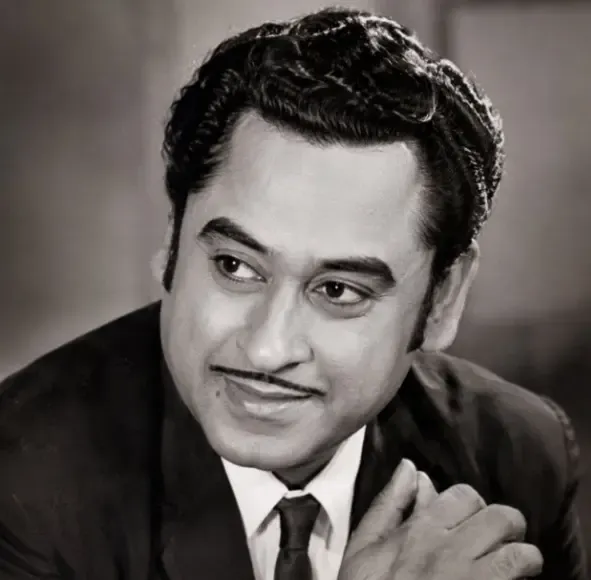
Kishore Kumar banned from All India Radio during 1975 Emergency: What happened
Synopsis
When a Ministry official called Kishore Kumar during the 1975 Emergency and demanded he fly to Delhi for a government show, the legendary singer refused — flatly and without apology. Within two hours, his songs were wiped off All India Radio and Doordarshan. His son Amit Kumar's account of that phone call reveals the collision of artistic defiance and state power at one of India's most turbulent political moments.
Key Takeaways
Kishore Kumar was banned from All India Radio and Doordarshan during the Emergency (1975–1977) after refusing a government performance request.
A Ministry official called him and demanded he fly to Delhi for a show; he declined unless a representative was sent to meet him first.
The ban came within two hours of the phone call and lasted for nearly a year, until the Emergency was lifted.
His son Amit Kumar recounted the episode on Kapil Sharma's television show.
Despite the ban, Kishore Kumar's popularity remained unaffected; his debut song was for the film 'Ziddi' (1948) , launched by music director Khemchand Prakash .
Legendary playback singer Kishore Kumar was banned from All India Radio (AIR) and Doordarshan for nearly a year after he refused to perform at a government-organised event during the Emergency period (1975–1977) imposed by then Prime Minister Indira Gandhi. The ban, which came within hours of a single phone call, is one of the most striking acts of artistic defiance in Indian music history.
The Phone Call That Started It All
According to Amit Kumar, Kishore Kumar's son, the sequence of events began when an official from the Ministry in Delhi called the singer shortly after the Emergency was declared in 1975. At the time, Kishore Kumar was at the very peak of his career as a playback singer.
Amit Kumar, who recounted the episode during an appearance on Kapil Sharma's show, recalled his father's account of the exchange: the Ministry official told Kishore Kumar, 'We are sending your ticket. You come from tomorrow's evening flight. You have a show the day after tomorrow.'
Kishore Kumar, however, was unwilling to comply on those terms. He told the official to first send a representative to meet him before any commitment could be made. 'Only then would I be able to come, and not otherwise. If God also comes and tells me, I will not be able to come,' Amit Kumar quoted his father as saying.
The Ban and Its Immediate Impact
The blunt refusal reportedly left the Ministry official deeply aggrieved. Within two hours of that phone call, Kishore Kumar's songs were formally banned from broadcast on both All India Radio and Doordarshan — the only two mass-broadcast platforms available to Indian audiences at the time. The ban effectively silenced his voice on state media for the duration of the Emergency.
Notably, the ban did not diminish his stature in the film industry or among listeners. His recordings continued to feature in Hindi films throughout the period, and music lovers found other ways to access his songs. The Emergency, widely seen as one of the most contested chapters in post-Independence Indian political history, became a backdrop against which Kishore Kumar's refusal stood out as a rare act of non-compliance.
Return After the Emergency
Once the Emergency was lifted — after nearly a year — Kishore Kumar's songs returned to All India Radio and Doordarshan. His popularity had remained entirely unaffected throughout the ban, a testament to his deep roots in the popular imagination. Music lovers continue to recall his melodies with great fondness.
A Career That Defined an Era
Kishore Kumar received his first singing opportunity from music director Khemchand Prakash, who cast him to sing 'Marne Ki Duayen Kyon Mangu' for the film 'Ziddi' (1948). Over the following decades, he went on to deliver some of Hindi cinema's most enduring songs, including 'Ek Ladki Bheegi Bhagi Si', 'Mere Sapno Ki Rani', 'Yeh Shaam Mastani', 'O Mere Dil Ke Chain', 'Hamen Tumse Pyar Kitna', 'Pal Pal Dil Ke Paas', and 'Zindagi Ek Safar Hai Suhana'.
His defiance during the Emergency is now remembered not merely as a footnote in broadcasting history, but as a defining moment that illustrated how creative independence and political pressure collided in one of India's most turbulent periods.
Point of View
A two-hour turnaround, and a blanket broadcast ban. It illustrates how the Emergency weaponised access to public platforms. That his popularity survived the ban intact is the real headline — it underscores that state-controlled radio, for all its reach, could not manufacture or erase public affection. The story also surfaces a recurring gap in how the Emergency is taught: its cultural dimension, the coercion of artists and entertainers, rarely gets the same attention as its political detentions and press censorship.
NationPress
20 Sept 2026
Frequently Asked Questions
Why was Kishore Kumar banned from All India Radio?
Kishore Kumar was banned from All India Radio and Doordarshan during the Emergency (1975–1977) after he refused to perform at a government-organised show in Delhi. A Ministry official called him demanding he travel the next day; he declined unless a representative was sent first, and the ban followed within two hours.
Who revealed the story of Kishore Kumar's AIR ban?
Kishore Kumar's son, Amit Kumar, revealed the account during an appearance on Kapil Sharma's television show. He recounted the phone conversation between his father and the Ministry official word for word.
How long was Kishore Kumar banned from All India Radio?
The ban lasted for nearly a year — for the duration of the Emergency period imposed by the Indira Gandhi government between 1975 and 1977. Once the Emergency was lifted, his songs returned to both All India Radio and Doordarshan.
Did the ban affect Kishore Kumar's popularity?
No. Despite being barred from state broadcasting platforms, Kishore Kumar's popularity remained entirely unaffected. His songs continued to feature in Hindi films, and audiences found other means to access his music throughout the ban.
When did Kishore Kumar begin his singing career?
Kishore Kumar got his first singing break from music director Khemchand Prakash, who gave him the opportunity to sing 'Marne Ki Duayen Kyon Mangu' for the film 'Ziddi' in 1948. He went on to deliver some of Hindi cinema's most beloved songs over the following decades.