South Korea, Cambodia police detain 289 scam suspects in a year
Synopsis
A year-long joint crackdown has led to 289 arrests, and distress reports from Koreans in Cambodia have fallen from 477 to just 33. However, a government audit has found that Seoul's foreign ministry ignored repeated embassy warnings and raised the Cambodia travel alert only after a student was tortured to death.
Key Takeaways
South Korean and Cambodian police detained 289 scam suspects in the year since a joint task force launched in December 2025 .
256 suspects ( 88.5% ) were linked to online scams, including 103 tied to no-show reservation scams.
The task force ran more than 70 joint operations and rescued 10 Korean nationals from scam centres.
Kidnapping and detention reports to the Korean Embassy in Cambodia fell from 477 to 33 .
A 5 November audit found the foreign ministry delayed raising the Cambodia travel alert despite embassy warnings in April and July 2024 .
The audit agency recommended disciplinary action against three ministry officials .
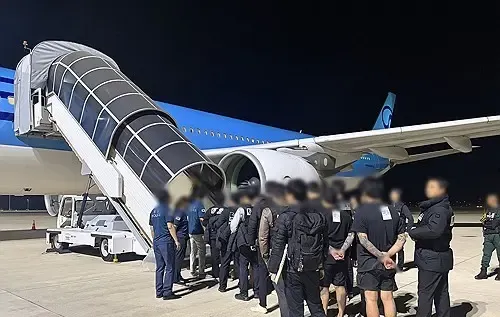
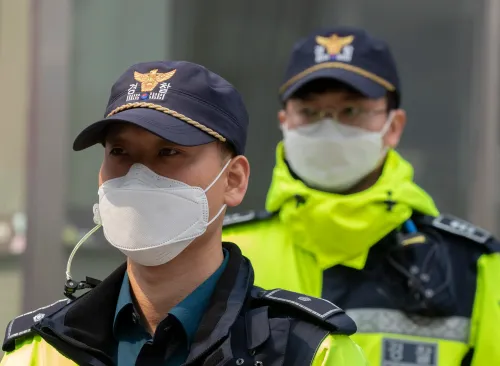
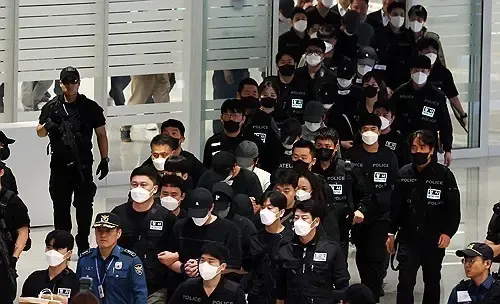
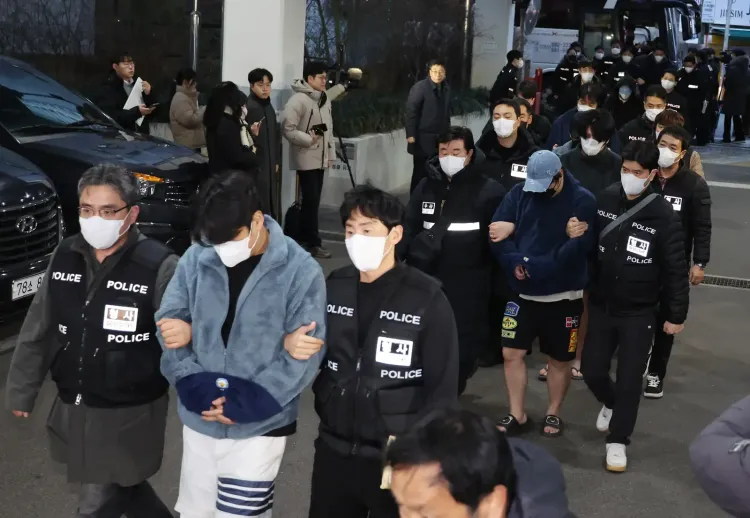
South Korean and Cambodian police have detained 289 suspects linked to online scams over the past year through a joint crackdown on transnational crime targeting Korean nationals, officials in Seoul said on Sunday, 29 November 2026. The arrests were made by the Cambodian-Korean Joint Task Force for Koreans, which has carried out more than 70 joint operations in Cambodia since its launch in December 2025.
The task force was set up after a Korean college student was tortured to death by a scam ring in Cambodia, a case that caused widespread public outrage in South Korea.
Key Developments
Of the 289 people detained, 256, or 88.5 per cent, were involved in online scams, according to South Korea's National Police Agency (NPA). The largest group, 103 suspects, was linked to so-called no-show reservation scams.
Another 64 were involved in investment scams run through group chats. The NPA said 54 were tied to romance scams and 26 to voice phishing cases.
The joint team also rescued 10 Korean nationals who had been held against their will at scam centres in Cambodia.
Sharp Drop in Kidnapping Reports
Police said the most striking result was a fall in distress reports. Cases of Korean nationals kidnapped or detained in scam-related incidents, as reported to the Korean Embassy in Cambodia, dropped from 477 before the task force was launched to just 33 in the one-year period from December 2025.
Officials presented the drop as evidence that police cooperation across borders is having an effect. Even so, the scam categories show that the networks are using a wide range of methods, from fake reservations to fake romantic relationships.
Audit Faults Foreign Ministry Response
The figures come weeks after a critical government audit. On 5 November, South Korea's Board of Audit and Inspection (BAI) said the foreign ministry did not raise the travel alert for Cambodia or take other necessary steps in time, even though it knew that job scams targeting South Koreans were getting worse.
According to the BAI, the ministry learned after December 2023, through overseas diplomatic missions and private firms, that South Koreans were falling victim to job scams and kidnappings in Cambodia. It also learned that the crimes were becoming increasingly brutal.
The embassy in Cambodia repeatedly recommended a higher travel alert in April and July 2024. The ministry declined, saying the situation fell short of the criteria for a special travel alert, among other reasons.
The ministry moved to upgrade the alert only after media outlets reported on the crimes in August. The alert was finally raised in September, after the student's death became public, the audit agency said.
Accountability and What Comes Next
The BAI also said the ministry should have considered activating a task force to protect Korean nationals abroad. It found that the ministry did not even hold a meeting on the matter.
The audit agency has advised the ministry to take disciplinary action against three officials for failing to act in time, officials said.
The student's case brought to light a series of similar incidents. In those cases, young South Koreans were lured to Cambodia with promises of high-paying jobs and then kidnapped.
With the joint task force now in its second year, attention is likely to turn to whether Seoul and Phnom Penh can keep the pressure on scam networks. They will also need to close the gaps in diplomatic warning systems that the audit exposed.
Point of View
But it raises an uncomfortable question. Why did it take a student's death to trigger cooperation that clearly works? The audit shows the warnings had been coming in since late 2023, and the ministry rejected them over procedural thresholds. For India, whose own citizens have been trafficked into Southeast Asian scam compounds, the lesson is clear: travel advisories and embassy alerts must respond to evidence, not wait for headlines.
NationPress
29 Nov 2026
Frequently Asked Questions
How many scam suspects have South Korea and Cambodia detained?
A joint police task force has detained 289 scam suspects in the year since it was launched in December 2025. Of these, 256 were involved in online scams.
What types of scams were the suspects involved in?
The largest group, 103 suspects, was linked to no-show reservation scams. Another 64 were involved in group-chat investment scams, 54 in romance scams and 26 in voice phishing cases, according to South Korea's National Police Agency.
Why was the Cambodian-Korean Joint Task Force set up?
It was launched after a South Korean college student was tortured to death by a scam ring in Cambodia, which caused widespread public outrage. The case exposed a pattern of young Koreans being lured to Cambodia with promises of high-paying jobs and then kidnapped.
Has the task force reduced kidnappings of Koreans in Cambodia?
Yes. According to police, reports of Koreans kidnapped or detained in scam-related cases dropped from 477 to 33. The task force also rescued 10 Korean nationals from scam centres.
What did South Korea's audit agency find about the foreign ministry?
The Board of Audit and Inspection found that the foreign ministry failed to raise the Cambodia travel alert in time despite embassy recommendations in April and July 2024. The alert was raised only in September, after the student's death became public, and the agency advised disciplinary action against three officials.