India electronics growth must shift to product ownership: CII

Synopsis
India now makes ₹13.11 lakh crore worth of electronics, yet only 23% of a mobile phone's value was added domestically in 2023-24. A new CII report warns India is weak in critical components for nine of ten priority products — and says the next leap must come from owning designs, IP and components, not just assembly.
Key Takeaways
A CII report released on 29 November 2026 urges India to focus on Indian-owned electronics products, components and IP.
India's electronics production reached ₹13.11 lakh crore in 2025-26 , with exports of ₹4.24 lakh crore .
Domestic value addition in mobile phone manufacturing was 23 per cent in 2023-24 .
The study shortlisted 10 priority products , including smartphones, laptops, servers and smart meters.
India is weak in critical components for nine of the ten, while design and IP capabilities are emerging in eight .
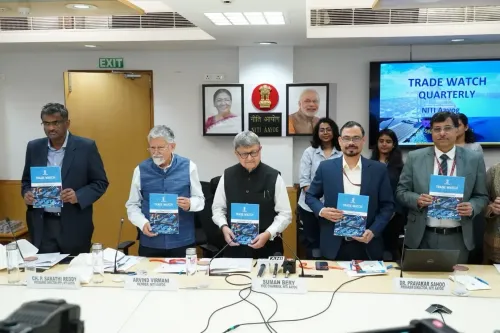
The report was unveiled by MeitY Joint Secretary Sushil Pal at the 9th Electronics Summit in New Delhi .
India's electronics manufacturing sector must now pivot from assembling devices to owning the products, technologies, components and intellectual property behind them, according to a report released by the Confederation of Indian Industry (CII) in New Delhi on Sunday, 29 November 2026. The study argues that this shift is essential if India is to capture a larger share of the value created within its fast-growing electronics industry.
The report, titled “Making India a Product Nation: From Making Electronics to Owning More of What Is Made”, was unveiled by Sushil Pal, Joint Secretary at the Ministry of Electronics and Information Technology (MeitY), at the 9th Electronics Summit in the national capital.
Key Findings of the CII Report
The summit was held under the theme “India@500B: From Local to Global – Realizing Atmanirbhar Electronics for Global Leadership.” According to the study, India's electronics production reached ₹13.11 lakh crore in 2025-26, while exports climbed to ₹4.24 lakh crore.
However, the report cautioned that this manufacturing growth has not been matched by domestic ownership of critical technologies, components, design capabilities and intellectual property. Notably, domestic value addition in mobile phone manufacturing stood at just 23 per cent in 2023-24, a figure the report cited to underline the need for India to strengthen its position across the value chain.
Ten Priority Products Identified
To pinpoint the segments with the highest potential, the study assessed 23 electronics product categories, consolidated from 30 categories identified by MeitY. It weighed parameters such as demand prospects, existing domestic capability, scalability, import dependence and ownership potential.
Based on this assessment, it shortlisted 10 priority products for deeper analysis: smartphones, chargers and power supply systems, laptops and notebooks, industrial control systems, air conditioners, micro and small motors, servers, audio products and hearables, security cameras, and smart metering systems.
According to the report, manufacturing capabilities already exist or are emerging across all ten segments. But India remains weak in producing critical components for nine of them. At the same time, design and intellectual property capabilities are beginning to take shape in eight of the ten categories, opening a window for greater technological ownership.
Four Pathways and Five Capability Clusters
The report argues that a one-size-fits-all policy will not work across such varied categories. It instead proposes four distinct pathways: consolidating and owning existing strengths, building product-development capabilities, leveraging standards and public procurement, and adopting a component-led approach where domestic gaps remain significant.
It also identified critical capability clusters that could lift multiple product segments at once. These include firmware and cybersecurity technologies, power electronics, displays and optics, sensors, compute and memory technologies, and motors, magnets and advanced materials.
What It Means for the Industry
This comes amid the Centre's broader push for self-reliance in electronics under the Atmanirbhar framework, reflected in the summit's own theme. The report's central message is that scale alone does not translate into value retention if components and IP continue to be sourced from abroad.
The study emphasised that deeper domestic capabilities must be commercially viable. It said they need to be backed by strong demand creation, investment in research and development, testing infrastructure, skilled workforce development and stable policy frameworks.
How policymakers and industry respond to these recommendations could shape whether India's next phase of electronics growth is defined by assembly volumes or by products the country genuinely owns.
Point of View
Not an industrial base. The insistence on commercial viability is the right caution — subsidised ownership that cannot survive market competition would simply repeat old mistakes. The real test will be whether policy shifts from rewarding output volumes to rewarding domestic design, components and IP.
NationPress
29 Nov 2026
Frequently Asked Questions
What is the CII report 'Making India a Product Nation' about?
It is a CII study arguing that India's next phase of electronics growth should focus on Indian-owned products, technologies, components and intellectual property. It was released on 29 November 2026 at the 9th Electronics Summit in New Delhi.
How much electronics does India produce?
India's electronics production reached ₹13.11 lakh crore in 2025-26, according to the report. Exports rose to ₹4.24 lakh crore in the same period.
Which products did the CII report prioritise?
The report shortlisted 10 priority products: smartphones, chargers and power supply systems, laptops and notebooks, industrial control systems, air conditioners, micro and small motors, servers, audio products and hearables, security cameras, and smart metering systems.
Why does domestic value addition matter in electronics?
It determines how much of the value from manufacturing stays within India. The report noted domestic value addition in mobile phone manufacturing was only 23 per cent in 2023-24, highlighting dependence on imported components and IP.
What does the report recommend for policy?
It recommends four distinct pathways instead of a uniform policy, ranging from consolidating existing strengths to a component-led approach. It also stresses demand creation, R&D investment, testing infrastructure, skilled workforce development and stable policy frameworks.