Stalin invokes Kattabomman to defend DMK delimitation stand
Synopsis
Stalin turned Rahul Gandhi’s own ‘Ettappan’ jibe back on the debate, declaring the DMK will be remembered as Kattabommans for backing the revised delimitation Bill. The DMK says the Centre accepted its seat-share demands, but Gandhi warns that expanding the Lok Sabha to 850 seats hands the BJP control over the electoral map.
Key Takeaways
Stalin invoked Veerapandiya Kattabomman on 29 November 2026 to defend the DMK’s backing of the revised delimitation Bill.
The post on X responded to Rahul Gandhi’s appeal for the DMK to join the Opposition in defeating the Bill.
DMK MPs adopted a resolution in Chennai backing the Bill, with Stalin saying the Centre accepted two of the party’s demands.
Tamil Nadu elects 39 of 543 Lok Sabha members, about 7.18 per cent ; the DMK sought to retain that share for 25 years based on the 1971 Census .
Gandhi argued that expanding the Lok Sabha to 850 seats would let the BJP and RSS reshape the electoral map.
Parliament holds a special sitting on Monday , where DMK MPs will explain the party’s position.
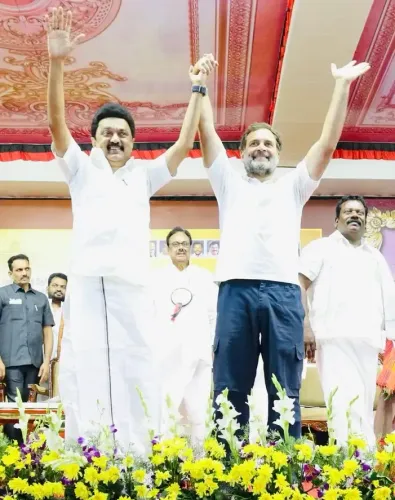
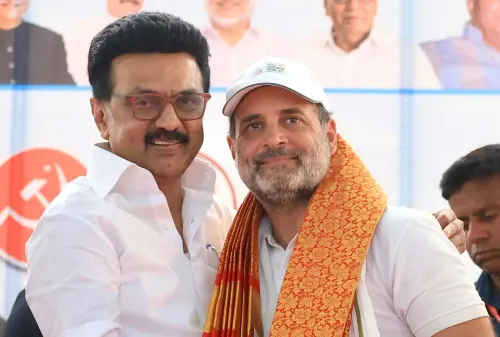
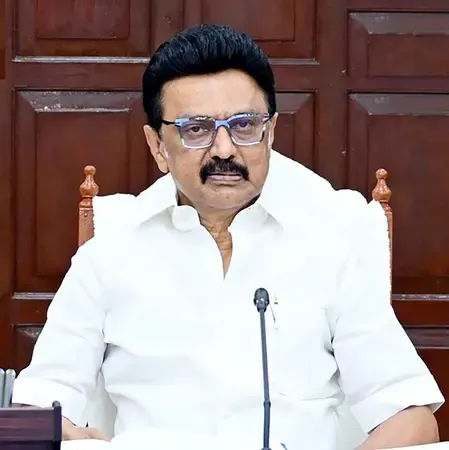
Dravida Munnetra Kazhagam (DMK) President M.K. Stalin on Sunday, 29 November 2026, invoked Tamil resistance hero Veerapandiya Kattabomman to defend his party’s decision to back the revised delimitation Bill. He was responding from Chennai to Congress leader Rahul Gandhi, who had urged him to join the Opposition in defeating the legislation.
The exchange came on the eve of a special sitting of Parliament on Monday. It exposed a rare public split between two key Opposition allies on how Lok Sabha seats should be redrawn and redistributed.
Stalin’s Response to Rahul Gandhi
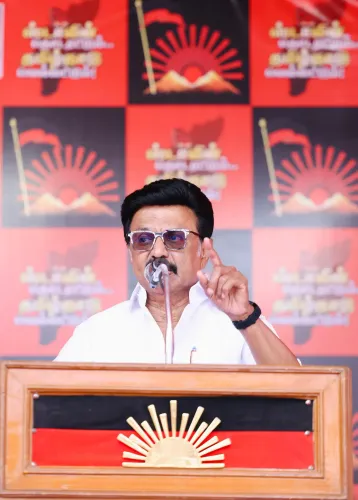
Stalin thanked Gandhi for recognising the DMK’s role in defending the Constitution. He said Tamil Nadu’s interests had guided the party’s decision.
“We will not compromise on this path and I’m confident that history will judge us as Kattabommans and not Ettappans,” Stalin wrote in a post on X.
Addressing Gandhi as “brother”, the DMK chief said the interests of Tamil Nadu and its people had been the party’s foremost consideration in every decision it had taken.
The Kattabomman and Ettappan Reference
Stalin’s choice of names recalled a remark Gandhi made in August, when the Congress leader described those backing the proposed delimitation exercise as “21st-century Ettappans”.
Kattabomman is remembered in Tamil Nadu for resisting the British East India Company in the late 18th century. In popular accounts, Ettappan, the ruler of Ettayapuram, is associated with his betrayal. By reversing the analogy, Stalin cast the DMK’s support for the Bill as an act of defending the state rather than yielding.
Why the DMK Backed the Revised Bill
The remarks came a day after DMK MPs adopted a resolution in Chennai backing the revised Bill. Stalin, who chaired the meeting, said the Centre had accepted two demands the party had pressed in its campaign over how seats would be distributed among states in an expanded Lok Sabha.
Tamil Nadu currently elects 39 of the Lok Sabha’s 543 members, a share of about 7.18 per cent. The DMK sought to retain that share and to preserve, for another 25 years, the relative representation of states based on the 1971 Census.
For Tamil Nadu, the distinction is significant. A state can gain seats in an enlarged House and still lose voting strength if its share of the total falls.
Rahul Gandhi’s Concerns Over Boundary Drawing
Gandhi’s appeal focused on a different question: who would draw the new constituency boundaries. He argued that expanding the Lok Sabha to 850 seats would give the Bharatiya Janata Party (BJP) and the RSS scope to reshape the electoral map to their advantage.
Recalling Stalin’s record of standing up for Tamil interests, Gandhi urged him to oppose the measure on constitutional grounds.
What Happens Next in Parliament
Both leaders set out their positions ahead of Monday’s special sitting of Parliament. Stalin has asked DMK MPs to explain in the House why the party believes the revised proposal protects Tamil Nadu’s representation.
The debate will test how far the Opposition can hold together on delimitation, and whether the DMK’s focus on seat share can be reconciled with the Congress’s concerns over the boundary-drawing process.
Point of View
Keeping Tamil Nadu’s roughly 7.18 per cent share, while the Congress is warning about process, specifically who redraws the boundaries in an 850-seat House. A protected share does not answer how constituencies inside the state get carved, and that is precisely where gerrymandering risks would sit. If the Opposition cannot agree on which question matters more, the Centre gets a delimitation Bill with a fractured resistance, and Tamil Nadu may find that holding its share was only half the battle.
NationPress
29 Nov 2026
Frequently Asked Questions
Why did Stalin invoke Kattabomman?
Stalin invoked Kattabomman to defend the DMK’s support for the revised delimitation Bill after Rahul Gandhi urged him to oppose it. He wrote on X that history would judge the DMK as Kattabommans and not Ettappans, echoing Gandhi’s August remark about ‘21st-century Ettappans’.
Why is the DMK supporting the revised delimitation Bill?
The DMK says the Centre accepted two of its demands on how seats would be distributed among states in an expanded Lok Sabha. The party sought to retain Tamil Nadu’s roughly 7.18 per cent share and preserve relative representation based on the 1971 Census for another 25 years.
What is Rahul Gandhi’s objection to the delimitation Bill?
Rahul Gandhi is concerned about who will draw the new constituency boundaries. He argued that expanding the Lok Sabha to 850 seats would give the BJP and RSS scope to reshape the electoral map to their advantage.
How many Lok Sabha seats does Tamil Nadu currently have?
Tamil Nadu currently elects 39 of the Lok Sabha’s 543 members, about 7.18 per cent of the House. The state could gain seats in an enlarged House but still lose voting strength if its share falls.
What happens next on the delimitation Bill?
Parliament holds a special sitting on Monday, where the Bill is expected to be debated. Stalin has asked DMK MPs to explain in the House why the party believes the revised proposal protects Tamil Nadu’s representation.