Delimitation bill: CPI-M asks Stalin to reveal assurances
Synopsis
The DMK's backing of the Centre's delimitation Bill has opened a fresh crack among Tamil Nadu's parties. The CPI-M wants Stalin to reveal exactly what guarantees protect the state's 7.18% Lok Sabha share. It has also confirmed that the Left will vote against the Bill and is rallying opposition nationwide.
Key Takeaways
CPI-M state Secretary P.
Shanmugam on 28 November 2026 sought an explanation from DMK President M.K.
Stalin on backing the Centre's delimitation Bill .
Shanmugam said Tamil Nadu's 7.18 per cent share of Lok Sabha seats is non-negotiable.
The CPI-M and other Left parties will vote against the Bill in Parliament.
The Left wants proportional representation of all states, based on the 1971 Census , preserved.
Shanmugam called the CRPF deployment and judicial supervision at Tirupparankundram a serious challenge to federalism.
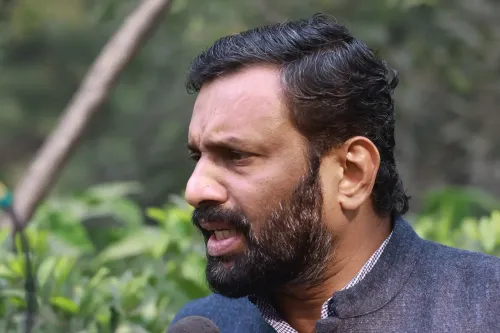
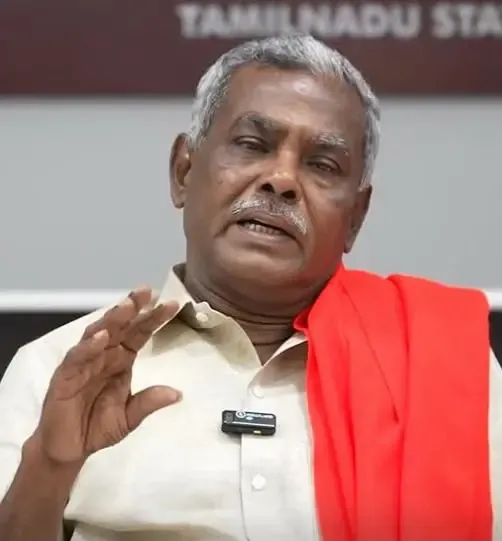
The Communist Party of India (Marxist) on Saturday, 28 November 2026, sharply questioned the Dravida Munnetra Kazhagam (DMK) over its decision to back the Centre's proposed delimitation Bill. It demanded that DMK President M.K. Stalin explain what safeguards, if any, had been offered to protect Tamil Nadu's existing representation in the Lok Sabha. Speaking in Chennai, CPI-M state Secretary P. Shanmugam said the DMK owed the people of the state an explanation for its stance.
Key Developments
Shanmugam told reporters that Tamil Nadu's current 7.18 per cent share of Lok Sabha seats was non-negotiable. He sought clarity on whether the Bharatiya Janata Party (BJP)-led Union government had given concrete guarantees to protect the state's interests.
He confirmed that the CPI-M and other Left parties would vote against the Bill in Parliament. According to Shanmugam, the Left's national leadership is mobilising opposition to the proposed legislation across the country.
The CPI-M leader made the remarks after taking part in a protest organised by the Left parties against the Supreme Court's directive on the lighting of the ceremonial lamp at Tirupparankundram in Madurai district.
The All-Party Consensus at Stake
Shanmugam pointed to the resolution adopted at an all-party meeting convened by the previous DMK government. He said the political consensus at that meeting was that Tamil Nadu's proportional representation in Parliament must remain intact, whatever the increase in the number of constituencies.
That collective stand had been taken earlier by political parties against any reduction in the state's parliamentary representation. The CPI-M argues that the DMK's support for the Bill now sits uneasily with that shared position.
The Left parties, he said, remain firm in their demand that the existing proportional representation of all states, based on the 1971 Census, should be preserved.
What Stalin Said
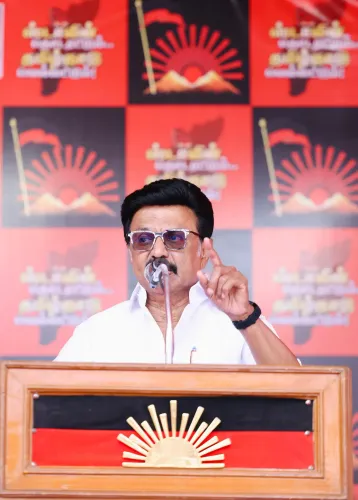
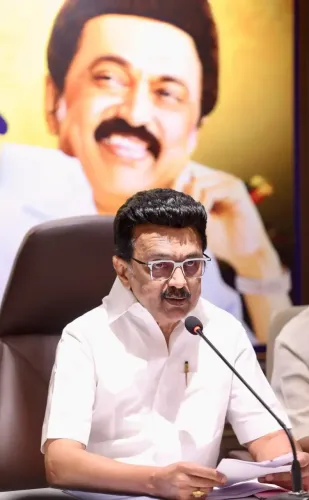
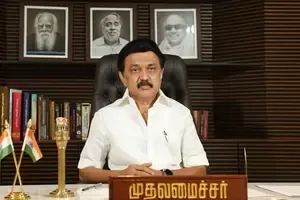
After the decision to support the delimitation proposals, Stalin issued a detailed statement. He maintained that the DMK remained committed to protecting Tamil Nadu's interests and that its ideological position had not changed.
Shanmugam, however, said that statement was not enough. He insisted that the DMK President should disclose the specific assurances received from the Union government before the party decided to back the legislation.
Tirupparankundram Row and Federalism Concerns
Shanmugam also attacked the DMK over its response to the Supreme Court's 20 November order on the lighting of the ceremonial lamp at Tirupparankundram. He alleged that the DMK had failed to address the implications of the judicial directive and had instead questioned the Tamil Nadu government's proposed course of action.
He described the deployment of Central Reserve Police Force (CRPF) personnel and the decision to place the hill under judicial supervision as a serious challenge to federalism. Such interventions, he maintained, undermined the rights of an elected state government.
What Happens Next
The rift points to growing strain within Tamil Nadu's opposition camp on two fronts: delimitation and the Tirupparankundram dispute. As the Bill moves towards a parliamentary vote, pressure on the DMK to make public the guarantees it says protect the state is likely to intensify.
Point of View
The simplest way to settle the matter is to publish the assurances; silence will only feed suspicion that the state's leverage was traded away.
NationPress
28 Nov 2026
Frequently Asked Questions
Why is the CPI-M questioning the DMK on the delimitation Bill?
The CPI-M wants DMK President M.K. Stalin to explain why the party backed the Centre's delimitation Bill and what safeguards protect Tamil Nadu's Lok Sabha representation. It says the move departs from an earlier all-party consensus against any reduction in the state's parliamentary share.
What is Tamil Nadu's current share of Lok Sabha seats?
Tamil Nadu currently holds 7.18 per cent of Lok Sabha seats, according to CPI-M state Secretary P. Shanmugam. He described this share as non-negotiable.
Will the CPI-M vote for the delimitation Bill?
No. Shanmugam confirmed that the CPI-M and other Left parties will vote against the Bill in Parliament, and that their national leadership is mobilising opposition across the country.
How has Stalin responded to concerns over the delimitation Bill?
Stalin issued a detailed statement saying the DMK remains committed to protecting Tamil Nadu's interests and that its ideological position is unchanged. The CPI-M says he must also disclose the specific assurances received from the Union government.
What is the Tirupparankundram issue raised by the CPI-M?
It concerns the Supreme Court's 20 November order on the lighting of the ceremonial lamp at Tirupparankundram in Madurai district. The CPI-M called the CRPF deployment and the decision to place the hill under judicial supervision a serious challenge to federalism.