Delimitation Bill brought 4 times since Independence: Ram Kadam
Synopsis
BJP's Ram Kadam says the Delimitation Bill has come four times since Independence and praises Sharad Pawar for putting national interest first. His remarks expose an apparent rift between the NCP (SP) and Congress. The bills, which propose a 50% rise in Lok Sabha seats and 33% women's reservation, will be tabled when Parliament meets on 30 November.
Key Takeaways
BJP leader Ram Kadam said on 28 November 2026 that the Delimitation Bill has been brought four times since Independence.
Kadam cited growth in the electorate from 17 crore in 1952 to 98 crore today.
He backed Sharad Pawar 's position and said Congress leaders in Maharashtra are unnecessarily worried .
The proposed bills seek a 50 per cent increase in Lok Sabha and Assembly seats for every state and Union Territory.
The package aims to help implement 33 per cent reservation for women.
The bills will be introduced in the special session of Parliament beginning 30 November .
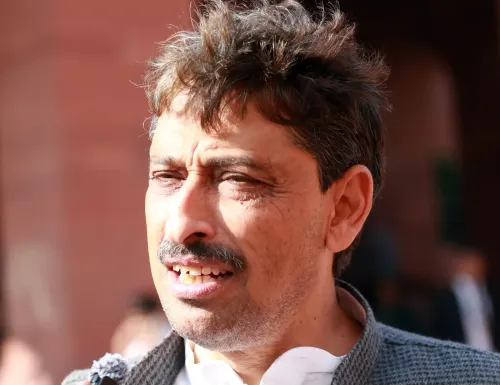
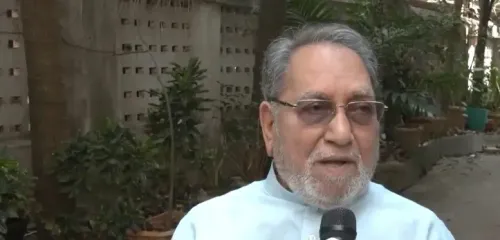
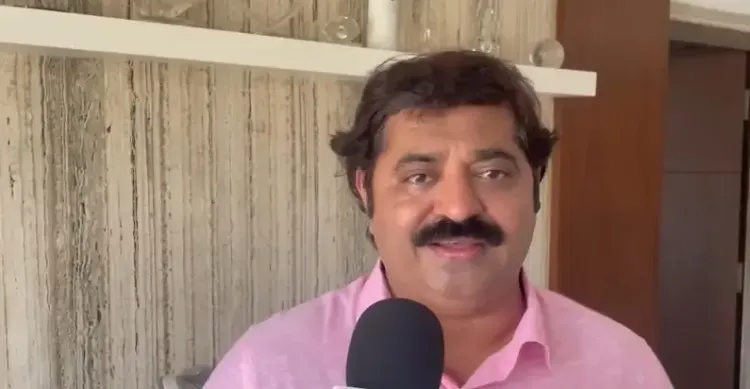
Bharatiya Janata Party (BJP) leader Ram Kadam on Saturday, 28 November 2026, defended the proposed Delimitation Bill in Mumbai. He said the legislation is not new and that a similar bill has been brought four times since Independence. Kadam also criticised Congress leaders in Maharashtra for opposing the proposal and backed NCP (SP) chief Sharad Pawar's stand on the issue.
His remarks come two days before a special session of Parliament begins on 30 November. The Centre plans to introduce fresh legislation on delimitation and women's reservation during that session.
What Ram Kadam Said
Kadam argued that the exercise has precedent and would benefit every state. “The Delimitation Bill is not being introduced for the first time. It has been brought four times since Independence. In 1952, India had 17 crore voters, while today the number has reached 98 crore,” he said.
He added: “This will lead to an increase in the number of MPs across all states, irrespective of which party is in power.”
Notably, India has constituted Delimitation Commissions four times, in 1952, 1963, 1973 and 2002. This appears to be the history Kadam was pointing to. According to his figures, the electorate has grown from 17 crore to 98 crore since 1952. That jump sits at the centre of the BJP's argument for expanding representation.
Congress Under Fire, Pawar Backed
Kadam targeted Congress leaders, particularly in Maharashtra, over their objections. “Congress leaders, especially in Maharashtra, are unnecessarily worried,” he said.
He praised Pawar's position. “Sharad Pawar is an experienced leader who has studied various issues. His party is independent, and he has the right to make his own decisions. He has placed national interest above party interests. Unfortunately, Congress leaders are upset with his decision,” Kadam said.
The remarks point to a possible strain within the Opposition camp in Maharashtra. Kadam's comments suggest that the NCP (SP) chief's position on delimitation differs from that of his Congress allies.
Key Provisions of the Proposed Bills
The Union Cabinet has approved the legislative package. It includes two bills:
- The Constitution (One Hundred and Thirty-Second Amendment) Bill, 2026
- The Delimitation (Second) Bill, 2026
The revised proposals seek a 50 per cent increase in the Lok Sabha seats allocated to every state and Union Territory. They also propose a corresponding increase in the total seats in state and Union Territory Legislative Assemblies.
The bill comes with a statement of reasons. According to that statement, the uniform increase is meant to enhance representation while keeping the existing relative distribution of seats among states unchanged. The package also seeks to help implement 33 per cent reservation for women in the Lok Sabha and state Legislative Assemblies.
How the Delimitation Process Will Work
The Delimitation (Second) Bill provides for a Delimitation Commission to be set up once the legislation comes into force. The Commission will redraw constituencies and allocate seats.
Under the proposed framework, each state's and Union Territory's existing seat count will rise by 50 per cent during the first delimitation exercise under the new constitutional provisions. Territorial constituencies will be drawn using the latest published Census figures.
What Happens Next
The uniform 50 per cent formula appears designed to address a long-standing concern. Some states, especially in the south, have argued that a purely population-based redistribution could reduce their relative weight in Parliament.
Whether the formula wins over these states, and whether Opposition parties stay united on the issue, will become clearer once the bills are tabled in the special session starting 30 November.
Point of View
Since it protects the relative share of southern states while raising every state's absolute count. However, a much larger Parliament brings its own questions about cost, physical capacity and legislative effectiveness. The bigger political story may be Pawar: if the NCP (SP) breaks ranks with the Congress on a constitutional amendment, the Opposition's floor arithmetic for the special session could weaken considerably.
NationPress
28 Nov 2026
Frequently Asked Questions
What did Ram Kadam say about the Delimitation Bill?
BJP leader Ram Kadam said the Delimitation Bill is not new and has been brought four times since Independence. He noted that voters grew from 17 crore in 1952 to 98 crore today, and said the bill would increase the number of MPs across all states.
Why did Ram Kadam back Sharad Pawar?
Kadam said Sharad Pawar is an experienced leader who has placed national interest above party interests on the delimitation issue. He added that Congress leaders were upset with Pawar's decision.
What does the Delimitation (Second) Bill, 2026 propose?
It proposes setting up a Delimitation Commission and raising the number of Lok Sabha and Assembly seats for every state and Union Territory by 50 per cent. Constituencies would be redrawn using the latest published Census figures.
When will the Delimitation Bill be introduced in Parliament?
The Centre is set to introduce the bills during the special session of Parliament beginning 30 November 2026. The Union Cabinet has already approved them.
How is the Delimitation Bill linked to women's reservation?
The legislative package aims to facilitate 33 per cent reservation for women in the Lok Sabha and state Legislative Assemblies. It includes the Constitution (One Hundred and Thirty-Second Amendment) Bill, 2026.