CM Himanta hails Cabinet nod for 33% women's quota
Synopsis
Assam Chief Minister Himanta Biswa Sarma on 28 November 2026 hailed Union Cabinet approval of the 132nd Constitutional Amendment Bill as a decisive step to realise 33 percent reservation for women in the Lok Sabha and state assemblies, crediting Prime Minister Narendra Modi and saying nari shakti's voice would now be louder in national decisions.
Key Takeaways
Assam CM Himanta Biswa Sarma on 28 November 2026 hailed Cabinet approval of the 132nd Constitutional Amendment Bill.
He said the Bill would realise 33 percent reservation for women in the Lok Sabha and state assemblies.
He credited Prime Minister Narendra Modi for the Cabinet decision.
Women's reservation was first moved as the 81st Amendment Bill in 1996; the Rajya Sabha passed a version in 2010 that later lapsed.
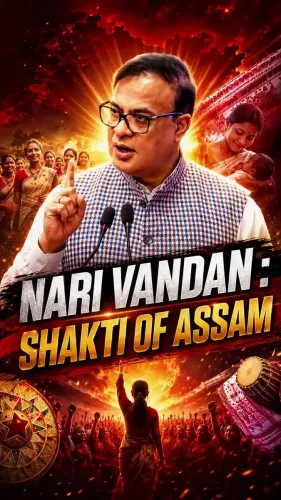
Parliament in 2023 passed the Nari Shakti Vandan Adhiniyam as the 128th Constitutional Amendment, with implementation tied to census and delimitation.
Assam Chief Minister Himanta Biswa Sarma on Saturday, 28 November 2026 said the Union Cabinet under Prime Minister Narendra Modi had cleared the 132nd Constitutional Amendment Bill, a move he called historic, to lock in 33 percent reservation for women in the Lok Sabha and state assemblies. A three-decade fight for nari shakti in India's legislatures, he argued, had just taken its decisive step.
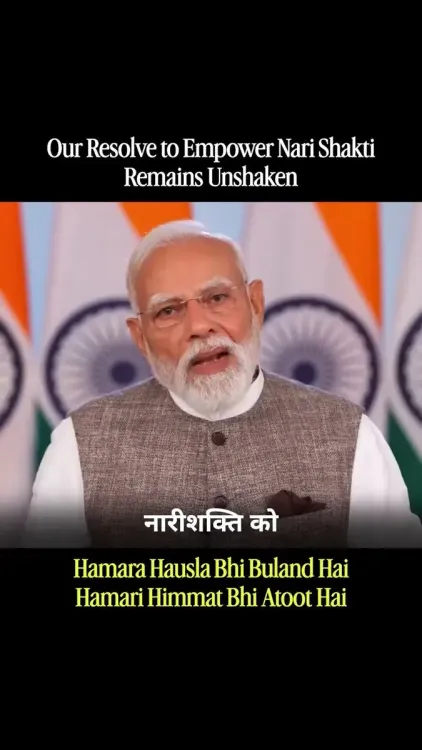
Posting on X, Sarma called it 'a historic step toward taking women's participation in democracy to new heights.' Cabinet approval of the Bill, he wrote, was a decisive initiative to make the quota real. Ab desh ki neetiyon aur nirnayon mein nari shakti ki awaaz aur adhik buland hogi (now the voice of women's power will be even louder in the nation's policies and decisions).
Sarma's 33 percent pitch from Assam
The Assam chief minister, who convenes the North-East Democratic Alliance, did not bury the credit. He named Modi's leadership as the force that had moved the file through Cabinet and presented the 132nd Bill as the instrument that would turn one-third reservation from a statute on paper into seats in the Lok Sabha and Vidhan Sabhas.
The post lists no clauses, no Rajya Sabha date, and no delimitation calendar. What it does is plant a political flag: the ruling alliance wants the unfinished women's quota treated as live executive business, not a closed 2023 chapter.
From the 81st Bill to Nari Shakti Vandan
India's first serious constitutional attempt arrived as the 81st Constitutional Amendment Bill in 1996. It was reintroduced across later Lok Sabhas and never became law. In 2010 the Rajya Sabha passed a version; that Bill lapsed when the Lower House was dissolved.
The logjam broke in 2023. Parliament approved the Nari Shakti Vandan Adhiniyam, recorded as the 128th Constitutional Amendment, to reserve one-third of seats for women in the Lok Sabha and state legislative assemblies. That law was written to take effect only after a census and a fresh delimitation of constituencies. That is why political leaders still speak of making the quota real, rather than of seats already marked on a map.
Census, delimitation and the wait for seats
Women candidates and every national party sit inside this change. A one-third floor rewrites ticket distribution, winnability maths, and the gender mix of ministries drawn from assemblies. Sarma did not spell out how a 132nd Amendment would sit beside the 128th. That drafting question belongs to Parliament.
The next public tests are concrete: the Union parliamentary timetable, the census-to-delimitation pipeline, and whether any reserved constituency list appears before a coming general election. Three decades of drafts taught India how easily this reform stalls. The test now is not another salute to nari shakti, but the first map that actually marks the seats.
Point of View
Or whether the 128th already carries the quota, is a legal question Parliament must answer in the open. The political signal is simpler: the ruling alliance wants women's reservation treated as unfinished business that it is finishing.
NationPress
28 Nov 2026
Frequently Asked Questions
What did Assam CM Himanta Biswa Sarma say about the 132nd Amendment Bill?
He said the Union Cabinet had approved the 132nd Constitutional Amendment Bill under Prime Minister Narendra Modi, calling it a decisive step to realise 33 percent reservation for women in the Lok Sabha and Vidhan Sabhas.
What is the Women's Reservation Bill in India?
It is a long-running proposal to reserve one-third of seats for women in the Lok Sabha and state legislative assemblies. Parliament passed the Nari Shakti Vandan Adhiniyam as the 128th Constitutional Amendment in 2023, with implementation linked to a census and delimitation.
When was women's reservation first introduced in Parliament?
The first major attempt was the 81st Constitutional Amendment Bill in 1996. Later versions returned several times, and the Rajya Sabha passed a bill in 2010 that later lapsed.
Is 33 percent reservation for women already in force in the Lok Sabha?
No. The 2023 constitutional amendment provides for the quota, but it has not yet been applied to an election because it is tied to a census and a delimitation exercise.
Who is Himanta Biswa Sarma?
He is the Chief Minister of Assam and a BJP leader who also convenes the North-East Democratic Alliance (NEDA).