CM Himanta Backs Women's Reservation Bill, Cites Assam's Legacy
Synopsis
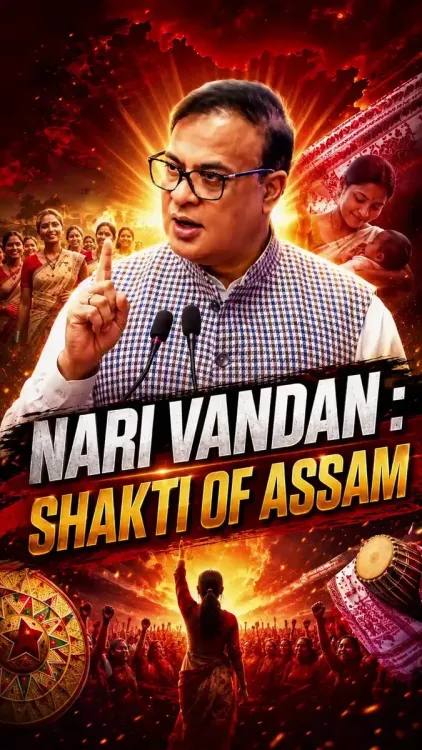
Assam Chief Minister Himanta Biswa Sarma on May 27, 2026 invoked the legacy of Sati Joymoti, Mula Gabharu and Kanaklata Barua to demand swift enforcement of the Women's Reservation Bill, warning against any attempt to delay women's rightful political representation in legislative bodies.
Key Takeaways
CM Himanta Biswa Sarma publicly backed the Women's Reservation Bill on May 27, 2026 , demanding it be implemented without delay.
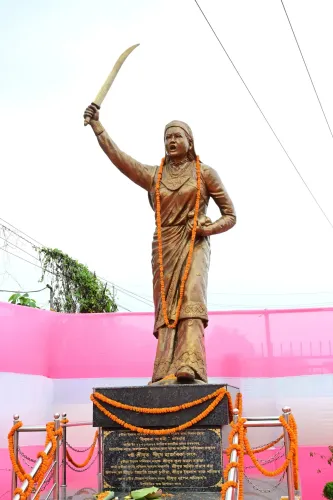
He cited Sati Joymoti , Mula Gabharu , and Kanaklata Barua as symbols of Assam's tradition of women's strength and sacrifice.
The 128th Constitutional Amendment , passed in September 2023 , reserves one-third of seats in Parliament and state assemblies for women.
Implementation remains contingent on the completion of a fresh national census and delimitation exercise.
The statement signals BJP's continued push to link women's reservation messaging to Northeast India's historical narratives ahead of upcoming elections.
Women's representation in the Assam Legislative Assembly currently falls well below the one-third threshold the bill would mandate.
Assam Chief Minister Himanta Biswa Sarma on Wednesday, May 27, 2026, invoked the state's deep tradition of women's sacrifice and leadership to make a forceful case for the swift implementation of the Women's Reservation Bill, warning that no attempt to delay or deny women their rightful political representation would be tolerated.
Context
In his post, CM Sarma drew on three towering figures from Assam's history — Sati Joymoti, the 17th-century Ahom princess celebrated for her courage and sacrifice; Mula Gabharu, the medieval Ahom warrior-queen; and Kanaklata Barua, the teenage freedom fighter martyred during the 1942 Quit India Movement. He also invoked the blessings of Maa Kamakhya and Maa Durga, deities central to Assamese cultural identity, framing women's political empowerment as both a spiritual and historical imperative.
The Chief Minister stated directly: 'We will not allow any attempt to delay or deny their rightful representation. It is time this strength is reflected in our decision making spaces through the Women's Reservation Bill.'
Policy Backdrop
The Women's Reservation Bill — enacted as the 128th Constitutional Amendment in September 2023 — reserves one-third of seats in the Lok Sabha and all state legislative assemblies for women. The legislation ended a nearly three-decade wait: earlier versions were first introduced as far back as 1996 and repeatedly lapsed without passage.
However, the law's implementation is contingent on the completion of a fresh national census and subsequent delimitation of constituencies. This has left the precise timeline for enforcement open-ended, drawing criticism from women's rights advocates and opposition politicians who argue the delay effectively defers meaningful change.
BJP leaders across the country have increasingly tied the bill's narrative to regional histories of women's agency, a messaging strategy that has been particularly prominent in Northeast India, where states like Assam have rich traditions of women's participation in anti-colonial and social movements.
Stakeholders and Impact
For women politicians and assembly aspirants in Assam, full implementation of the reservation law would structurally transform the composition of the Assam Legislative Assembly, guaranteeing a minimum of one-third women members. Currently, women's representation in most state assemblies, including Assam's, remains well below that threshold.
Civil society groups and women's organisations in the state have long highlighted the gap between historical reverence for figures like Kanaklata Barua and the ground reality of limited female participation in formal politics. CM Sarma's statement directly addresses that tension, signalling political will at the state level even as the central implementation mechanism awaits census completion.
What's Next
The critical path to enforcement runs through the next national census — delayed from its scheduled 2021 cycle — and the delimitation exercise that follows. Observers tracking the 2026–2029 election cycle in Assam and other Northeast states will watch for any central government announcements on census scheduling, which would set a firm clock on when reserved seats must be notified.
CM Sarma's public statement, framed around both devotion and historical legacy, is likely to intensify pressure on the central government to provide a concrete implementation roadmap, particularly as state assembly elections draw closer across the region.
Point of View
Using Assam's iconic women figures to build moral urgency around a law that exists on paper but remains unimplemented. By explicitly warning against attempts to 'delay or deny' representation, he positions himself as an advocate for women's empowerment while implicitly directing accountability toward the census-delimitation bottleneck at the central level. This fits a broader BJP pattern of keeping the Women's Reservation Bill in active public discourse ahead of election cycles, ensuring the party retains credit for the legislation's passage. For Northeast India specifically, anchoring the quota debate in local historical heroines is a distinct and effective regional messaging strategy that differentiates it from the national conversation.
NationPress
10 Oct 2026
Frequently Asked Questions
What is the Women's Reservation Bill and has it been passed?
Yes, the Women's Reservation Bill was passed as the 128th Constitutional Amendment in September 2023 , reserving one-third of seats in the Lok Sabha and all state assemblies for women. However, it will only come into effect after the next national census and delimitation exercise are completed.
Why is CM Himanta Biswa Sarma talking about the Women's Reservation Bill?
CM Himanta Biswa Sarma invoked the bill on May 27, 2026 , linking it to Assam's legacy of women leaders and freedom fighters, and warning that no attempt to delay women's rightful political representation would be tolerated.
Who is Kanaklata Barua?
Kanaklata Barua was a teenage Assamese freedom fighter who was martyred during the 1942 Quit India Movement when she was shot while leading a procession to hoist the national flag. She is one of Assam's most celebrated martyrs.
Who is Sati Joymoti?
Sati Joymoti was a 17th-century Ahom princess of Assam revered for her extraordinary courage and sacrifice. She refused to betray her husband under torture and is celebrated as a symbol of resistance and devotion in Assamese culture.
When will the Women's Reservation Bill actually be implemented?
The law's implementation depends on the completion of India's next national census — delayed from its 2021 schedule — followed by a delimitation exercise. No firm date has been announced, making the timeline uncertain for the 2026–2029 election cycle.