CM Himanta Slams Congress Over Women's Quota Walkout in Assam Assembly
Synopsis
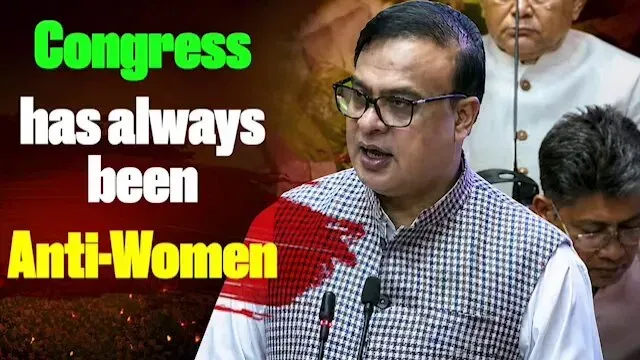
Assam Chief Minister Himanta Biswa Sarma accused Congress of walking out of the Assam Assembly when the House moved to support Women's Reservation, calling it evidence of a three-decade-old anti-women political stance stretching back to the bill's first introduction in 1996.
Key Takeaways
CM Himanta Biswa Sarma alleged Congress walked out of the Assam Assembly during a vote supporting Women's Reservation on 26 May 2026 .
He linked the walkout to Congress's record since 1996 , when the Women's Reservation Bill was first tabled in Parliament.
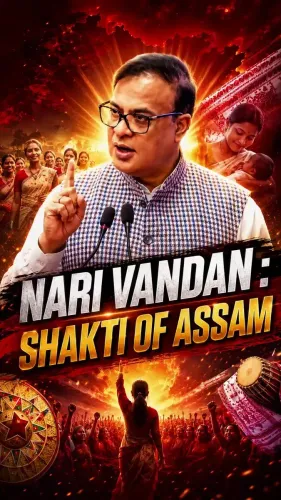
The Nari Shakti Vandan Adhiniyam , enacted in September 2023 , guarantees 33 per cent reservation for women in the Lok Sabha and state assemblies.
The Women's Reservation Bill passed the Rajya Sabha in 2010 under UPA but was never taken up in the Lok Sabha during Congress-led rule.
BJP-ruled states have used assembly resolutions endorsing the 2023 law as a platform to highlight Congress's legislative history on the issue.
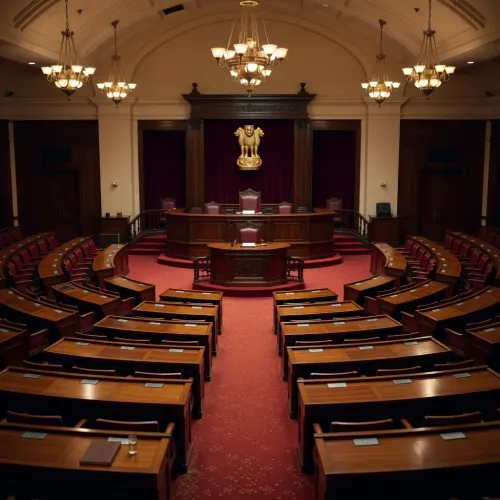
Assam Chief Minister Himanta Biswa Sarma on Tuesday, 26 May 2026, accused the Congress party of walking out of the Assam Legislative Assembly during a vote on support for Women's Reservation, charging that the opposition's decades-long record on women's political representation stands 'exposed yet again.'
Context
In a post on X, CM Sarma stated: 'When the House stood to support Women's Reservation, the Congress chose to walk out instead of standing with Bharat's Nari Shakti.' The remark was directed at Congress legislators in the Assam Assembly, whom he accused of abandoning the chamber at a moment of symbolic consensus on women's political empowerment.
The Chief Minister drew a direct line from the present incident back to 1996, when the Women's Reservation Bill was first introduced in Parliament, arguing that Congress's 'anti-women mindset' has remained unchanged across three decades of Indian politics.
Policy Backdrop
The Women's Reservation Bill was first tabled in the Lok Sabha in September 1996 and lapsed repeatedly over subsequent sessions. The Rajya Sabha passed a version of the bill in March 2010 under the UPA government, but it was never taken up in the Lok Sabha, effectively stalling the legislation for over a decade.
The Nari Shakti Vandan Adhiniyam was finally enacted by Parliament in September 2023 after fresh introduction by the NDA government, providing 33 per cent reservation for women in the Lok Sabha and state legislative assemblies. BJP-ruled states, including Assam, have since passed or supported resolutions endorsing the central law, using such occasions to contrast their position with Congress's legislative history on the issue.
Stakeholders and Impact
The immediate stakeholders are women political aspirants across Assam and the broader northeast, for whom implementation of the 33 per cent quota in state assemblies carries direct electoral consequence. The walkout, as characterised by CM Sarma, provides the ruling BJP a fresh political data point ahead of any forthcoming state electoral cycle.
Opposition parties, including Congress, have historically argued that procedural and substantive objections — including the demand for simultaneous Other Backward Classes sub-quotas — drove their positions on the bill, a counter-narrative CM Sarma's post does not engage with. The broader pattern of BJP-ruled assemblies adopting pro-reservation resolutions and spotlighting Congress's record is consistent with the party's national gender-welfare messaging.
What's Next
Attention will now turn to whether the Assam Assembly passes a formal resolution in support of the Nari Shakti Vandan Adhiniyam and whether other North-East Democratic Alliance (NEDA)-governed states follow with parallel motions. Congress is expected to respond to CM Sarma's charge, potentially offering its account of the walkout and its reasons. The episode is likely to shape political messaging around women's representation in the run-up to the next round of northeastern state elections.
Point of View
Converting a procedural assembly moment into a national-level gender-politics narrative. By anchoring the charge in 1996 — the year the bill first lapsed — he frames Congress's walkout not as a one-off but as ideological continuity, which is a more durable attack than a single-session controversy. The move also reinforces CM Sarma's role as a combative BJP voice in the northeast, using the Assam Assembly as a stage for messages that travel well beyond state borders. With delimitation required before the women's quota takes effect, the political salience of this issue is only set to grow, making such exchanges a preview of a larger electoral battleground.
NationPress
16 Sept 2026
Frequently Asked Questions
Why did Congress walk out of the Assam Assembly on Women's Reservation?
According to CM Himanta Biswa Sarma , Congress legislators walked out when the House moved to express support for Women's Reservation. Congress has not yet issued an official response to his specific characterisation of the walkout.
What is the Nari Shakti Vandan Adhiniyam?
The Nari Shakti Vandan Adhiniyam is a central law enacted in September 2023 that reserves 33 per cent of seats for women in the Lok Sabha and state legislative assemblies. It will take effect after the next delimitation exercise.
When was the Women's Reservation Bill first introduced in India?
The Women's Reservation Bill was first introduced in the Lok Sabha in September 1996 . It lapsed multiple times before being passed as the Nari Shakti Vandan Adhiniyam in 2023 .
Did Congress ever support the Women's Reservation Bill?
The Rajya Sabha passed a version of the Women's Reservation Bill in March 2010 under the UPA government led by Congress, but the bill was never brought to a vote in the Lok Sabha during that government's tenure.
What is NEDA and what role does CM Himanta play in it?
NEDA , the North-East Democratic Alliance, is a BJP-led coalition of political parties governing states across northeast India. CM Himanta Biswa Sarma serves as its convenor and is one of the most prominent BJP leaders in the region.