Korean War separated family reunites in third country for first time
Synopsis
For the first time in about two years, a Korean War-separated family was reunited — and unusually, the request came from the North Korean side. With only 32,948 of 134,848 registered separated South Koreans still alive and two-thirds aged 80 or older, every passing year closes the window on reconciliation for thousands of families caught in a conflict that technically never ended.
Key Takeaways
Two second-generation relatives from a Korean War-separated family met in a third country in September 2026 — the first government-assisted private reunion in about two years .
The reunion was initiated by the North Korean relative , an unusual reversal of the typical pattern where South Koreans seek northern kin through brokers.
South Korea's Unification Ministry located a 65-year-old cousin in Gyeonggi Province after the originally sought uncle was found to have died 30 years earlier .
Of 134,848 South Koreans registered as having separated family members, only 32,948 remain alive, with roughly two-thirds aged 80 or older .
Government-arranged reunions have been suspended since August 2018 ; privately arranged cases fell to zero from 2020–2023 .
President Lee Jae Myung called resolving the separated families issue the first priority for inter-Korean engagement in September 2026 .
Two relatives from a family torn apart by the 1950–53 Korean War met face-to-face in a third country in September 2026, in a rare privately arranged reunion that highlights the enduring humanitarian toll of the divided Korean Peninsula. The meeting — the first such government-assisted reunion reported in about two years — was facilitated by South Korea's Unification Ministry after an unusual request originated from the North Korean side.
How the Reunion Came About
The process began five months before the meeting, when the Unification Ministry received a request relayed by a North Korean defector living in South Korea. The North Korean member of the separated family was seeking to locate a maternal uncle in the South. Ministry officials traced the uncle through their database of separated families, only to discover he had died 30 years earlier.
Undeterred, officials used database records to reach out to the deceased uncle's children and eventually made contact with a 65-year-old cousin living in Gyeonggi Province near Seoul. The South Korean cousin agreed without hesitation, citing the wishes of their late parents, who had longed until their final days to reconnect with family left behind in the North.
The Meeting Itself
The two second-generation relatives first connected through a mobile messaging app before meeting in person in a third country in September. It was not immediately clear how the North Korean relative travelled abroad for the encounter. The reunion brought together two people who had never previously met, united only by the shared tragedy of a family divided across a sealed border for over seven decades.
A Frozen Humanitarian Crisis
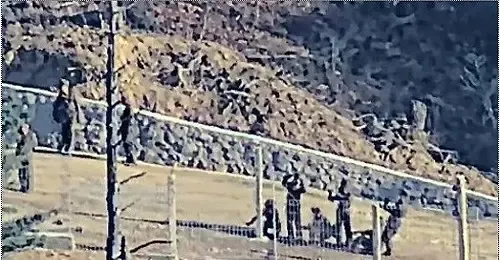
The story unfolds against a backdrop of deeply strained inter-Korean relations. North Korean leader Kim Jong-un has explicitly ruled out dialogue with South Korea and characterised bilateral ties as those between 'two states hostile to each other.' The inter-Korean border remains sealed, with no direct postal, telephone, or digital communication channels available to ordinary citizens on either side. Technically, the two countries remain at war — the Korean War concluded with an armistice in 1953, not a peace treaty.
Government-arranged reunions — previously held around major Korean holidays such as Chuseok — have been frozen since August 2018, when the two sides last met at the Mount Kumgang resort on North Korea's east coast during a brief diplomatic thaw. That period also saw North Korea send athletes to the PyeongChang Winter Olympics and dispatch a high-level delegation including Kim Yo-jong, Kim Jong-un's sister, to the opening ceremony.
Scale of the Crisis and Political Response
As of late August 2026, a total of 134,848 South Koreans had registered as having separated family members in the North, according to ministry data submitted to Rep. Woo Won-shik of the ruling Democratic Party. Of those, only 32,948 remained alive — and roughly two-thirds of surviving registered members are aged 80 or older.
South Korean President Lee Jae Myung, speaking in September on the fourth Separated Families Day, called the issue the first priority for inter-Korean engagement. 'Eight years have passed since the last reunion, and we can no longer afford to delay this,' Lee said. 'Families should be able to reach and see one another, no matter where in the world they live.'
The Broader Pattern of Private Reunions
Privately arranged reunions — typically facilitated by brokers and initiated from the South Korean side — peaked at 283 cases in 2003 before declining sharply to seven in 2010 and one case each in 2017, 2018, and 2019. No such reunions were reported from 2020 through 2023, as severed inter-Korean ties compounded North Korea's border closure during the COVID-19 pandemic. The last documented private reunion before the current case occurred in October 2024, when an octogenarian South Korean living overseas visited the North to meet a nephew with assistance from an overseas pro-North Korean organisation.
Notably, the September 2026 case is unusual in that it was initiated from the North Korean side — a reversal of the typical pattern — and culminated with direct South Korean government assistance rather than a broker network. With time running out for aging survivors, advocates say this model could offer a template for future reunions if political conditions allow.
Point of View
000 registered separated South Koreans still alive and most in their eighties, the window for any reconciliation is closing faster than diplomacy can move. The fact that this case was initiated from the North Korean side is a detail that deserves more scrutiny: it suggests informal channels persist even as Pyongyang publicly hardens its posture. Seoul should examine whether this model — North Korean-initiated contact routed through defector networks and formalised by the Unification Ministry — can be institutionalised quietly, outside the grand diplomatic theatre that Kim Jong-un has closed off.
NationPress
1 Nov 2026
Frequently Asked Questions
What happened in the Korean War separated family reunion in September 2026?
Two second-generation relatives from a family separated during the 1950–53 Korean War met in person in a third country in September 2026. The reunion was facilitated by South Korea's Unification Ministry after a North Korean family member sought help locating a relative in the South — an unusual case where the request originated from the North Korean side.
Why is this reunion considered significant?
It is the first privately arranged family reunion reported to the South Korean government in about two years, amid a prolonged freeze in inter-Korean exchanges. It is also notable because the initial request came from the North Korean relative rather than from the South, reversing the typical pattern.
How many Korean War-separated families are still waiting to reunite?
As of late August 2026, a total of 134,848 South Koreans had registered as having separated family members in the North, but only 32,948 were still alive. Roughly two-thirds of surviving registered members are aged 80 or older, making the issue increasingly urgent.
When did South and North Korea last hold official government-arranged reunions?
The two sides last held official reunions at Mount Kumgang resort in August 2018, during a brief diplomatic thaw. Those exchanges have been suspended since then, with inter-Korean relations deteriorating sharply after North Korean leader Kim Jong-un declared South Korea a 'hostile state.'
What has the South Korean government said about the separated families issue?
South Korean President Lee Jae Myung, speaking in September 2026 on the fourth Separated Families Day, called resolving the issue the first priority for inter-Korean engagement. He said, 'Eight years have passed since the last reunion, and we can no longer afford to delay this.'