Karnataka not bankrupt, says Parameshwara; Finance Dept advice routine
Synopsis
Karnataka's Deputy CM Parameshwara took the floor of the Legislative Assembly to rebut Opposition claims of state bankruptcy — citing nearly identical Finance Department advisories issued under three successive BJP governments. With fiscal deficit at 2.95% and total liabilities at 24.94% of GSDP, the numbers are tight but within limits, making the political battle as much about optics as about the state's actual financial headroom.
Key Takeaways
Parameshwara clarified on 24 September 2026 that Finance Department advisories urging fiscal caution are routine, not a sign of bankruptcy.
Karnataka's fiscal deficit for 2026–27 stands at 2.95 per cent , within the 3 per cent FRBM ceiling; total liabilities are at 24.94 per cent of GSDP .
Revenue deficit is reported at ₹22,957 crore ; Finance Dept flagged a proposed ₹1,000 crore scheme as requiring prior earmarking.
Similar advisories were issued under B.S.
Yediyurappa (January 2020), Basavaraj Bommai (February 2022), and the Seventh Pay Commission consideration (February 2023) — all under BJP rule.
Karnataka recorded a 36 per cent rainfall deficit; 177 taluks declared drought-hit; government released ₹117 crore for drinking water with ₹420 crore available in SDRF accounts.
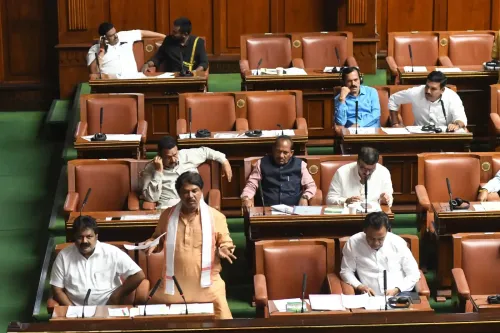
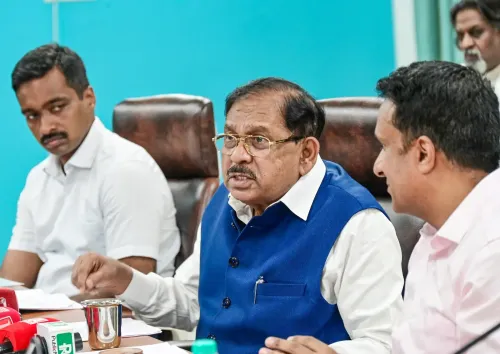
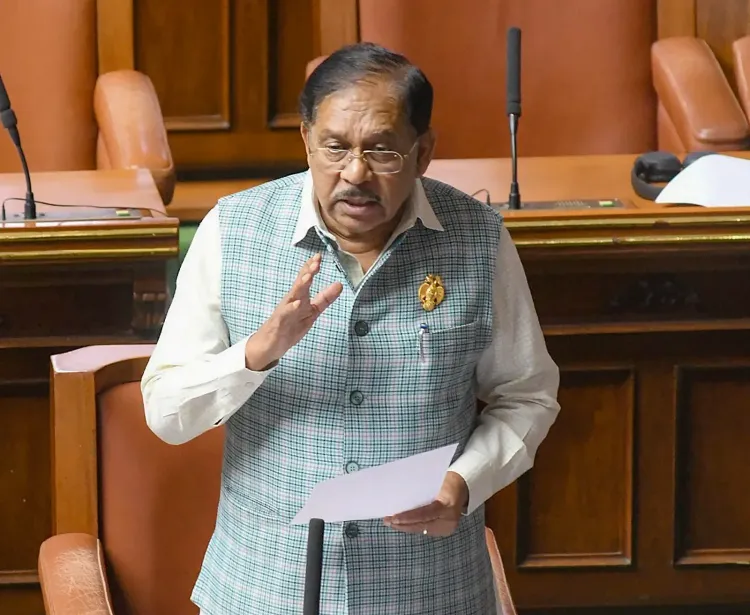
Deputy Chief Minister and Revenue Minister G. Parameshwara on Thursday, 24 September 2026, firmly rejected Opposition claims that Karnataka was facing a financial crisis, clarifying in the Legislative Assembly that advisory notes issued by the Finance Department urging fiscal discipline are standard practice and must not be read as evidence that the state government is bankrupt or cash-strapped.
What Parameshwara Said in the Assembly
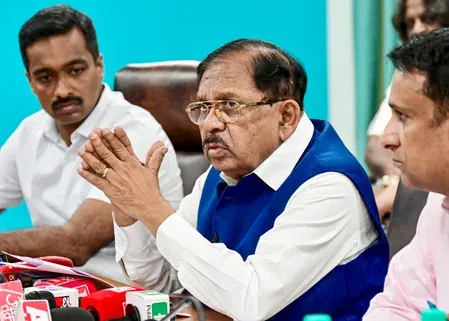
Responding on behalf of the government during a debate on the drought situation, Parameshwara argued that the Finance Department's role is precisely to flag when proposed expenditure exceeds Budget allocations. 'If expenditure beyond the allocation provided in the Budget is proposed, the Finance Department naturally asks where the additional funds will come from. If additional expenditure is required, a supplementary Budget must be presented, and the approval of the Legislature obtained,' he said.
He stressed that such cautionary notes are a feature of every government's functioning, not a distress signal unique to the current administration.
Historical Precedents Cited
To undercut the Opposition's framing, Parameshwara cited three earlier instances when similar advisories were issued under Bharatiya Janata Party (BJP) governments. In January 2020, during the B.S. Yediyurappa administration, the department flagged that revenue collections had fallen to around 70 per cent of the target. In February 2022, under the Basavaraj Bommai government, it warned that rising committed expenditure and limited revenue options could make a revenue-surplus Budget difficult to present. In February 2023, the department cautioned that immediate implementation of the Seventh Pay Commission could breach FRBM limits and necessitate additional borrowing.
'Can we therefore say that the government was bankrupt? Such advice is part of the Finance Department's normal functioning,' Parameshwara said.
Karnataka's Current Fiscal Position
On the state's finances, Parameshwara disclosed that the fiscal deficit for 2026–27 stood at 2.95 per cent, within the 3 per cent ceiling prescribed under the Fiscal Responsibility and Budget Management (FRBM) framework. The revenue deficit was reported at ₹22,957 crore, while total liabilities were at 24.94 per cent of GSDP — close to, but still within, the 25 per cent prescribed limit. He acknowledged that the Finance Department had specifically advised caution over a proposed scheme requiring ₹1,000 crore across 2026–27 and 2027–28, suggesting funds be earmarked or reallocated before rollout. 'This is financial advice. It is not a statement that the Government has no money,' he said.
Drought Response: Government's Account
Parameshwara also defended the government's handling of the drought, saying it acted within three days of receiving the India Meteorological Department's warning on 13 April that the southwest monsoon could fall five per cent below normal. Then Chief Minister Siddaramaiah convened a meeting on 16 April with Deputy Commissioners and Zilla Panchayat CEOs, attended by ministers including D.K. Shivakumar, with departments directed to roll out precautionary measures.
Karnataka recorded an overall rainfall deficit of 36 per cent, with 177 taluks declared drought-hit. Drinking water problems were reported in 531 villages across 111 taluks and 81 wards in 15 urban local bodies. The government released ₹117 crore for drinking water needs and provided an additional ₹189 crore through MLAs, with each MLA allocated ₹1 crore. Around ₹420 crore was available in PD accounts under the State Disaster Response Fund (SDRF) for drinking water and fodder requirements.
'There is no shortage of water. If routine or administrative problems arise, they must be resolved separately,' Parameshwara said, adding that field-level monitoring and district coordination were ongoing.
Political Context
The Opposition had used the Finance Department's advisory — which reportedly cautioned against unbudgeted spending — as ammunition to allege fiscal mismanagement by the Congress-led government. Parameshwara's pushback is aimed at neutralising that narrative ahead of upcoming Budget discussions. Notably, with Karnataka's total liabilities at 24.94 per cent of GSDP, the state has limited headroom for additional borrowing, making the Finance Department's caution structurally significant even if politically routine.
Point of View
But it does not address the structural constraint: Karnataka's total liabilities at 24.94 per cent of GSDP leave barely any borrowing headroom. The Congress government's five guarantee schemes — while electorally popular — have added structural pressure to committed expenditure, which is precisely what the Finance Department is flagging. Whether the advisory is 'routine' or a genuine warning depends on whether the revenue trajectory improves in the second half of the fiscal year. That number will tell the real story.
NationPress
24 Sept 2026
Frequently Asked Questions
Why did Karnataka's Deputy CM say the state is not bankrupt?
Deputy CM G. Parameshwara clarified in the Legislative Assembly on 24 September 2026 that a Finance Department advisory urging fiscal caution was being misread by the Opposition as evidence of financial distress. He argued such notes are a standard part of fiscal management and have been issued under every previous government, including BJP administrations.
What is Karnataka's current fiscal deficit?
Karnataka's fiscal deficit for 2026–27 stands at 2.95 per cent, within the 3 per cent limit prescribed under the FRBM framework. The revenue deficit is ₹22,957 crore, and total liabilities are 24.94 per cent of GSDP — close to the 25 per cent prescribed ceiling.
What specific Finance Department advice triggered the controversy?
The Finance Department advised caution regarding a proposed scheme requiring ₹1,000 crore over 2026–27 and 2027–28, suggesting that funds be earmarked or reallocated from existing heads before implementation. Parameshwara described this as standard financial prudence, not a signal that the government lacked funds.
How has the Karnataka government responded to the 2026 drought?
The government acted within three days of the IMD's 13 April warning about a below-normal monsoon. Karnataka recorded a 36 per cent rainfall deficit, with 177 taluks declared drought-hit. The government released ₹117 crore for drinking water, provided ₹189 crore through MLAs, and has ₹420 crore available in SDRF accounts for drinking water and fodder needs.
Were similar Finance Department advisories issued under previous BJP governments in Karnataka?
Yes. In January 2020 under B.S. Yediyurappa, the department warned that revenue collections had dropped to around 70 per cent of target. In February 2022 under Basavaraj Bommai, it cautioned about limited revenue options affecting a revenue-surplus Budget. In February 2023, it flagged that immediate Seventh Pay Commission implementation could breach FRBM limits.