Rajnath Singh hails Akash, BrahMos as symbols of Atmanirbhar defence
Synopsis
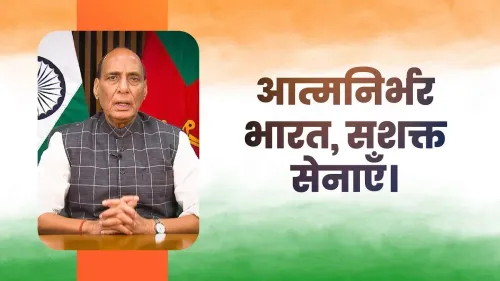
Union Defence Minister Rajnath Singh invoked the Akash missile system and BrahMos cruise missile as proof of India's growing technological self-reliance, declaring that India's defence forces are fully prepared to meet any challenge under the Atmanirbhar Bharat framework.
Key Takeaways
Rajnath Singh named the Akash missile system and BrahMos as symbols of Atmanirbhar Bharat's defence success on 24 September 2026 .
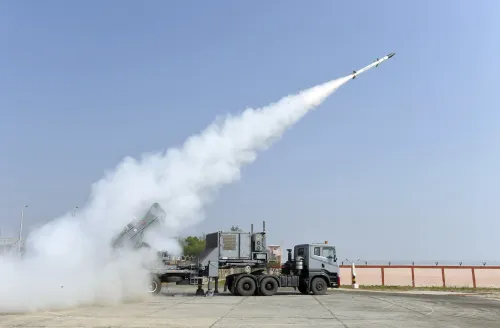
The Akash is a DRDO-developed surface-to-air missile inducted into both the Indian Army and Air Force.
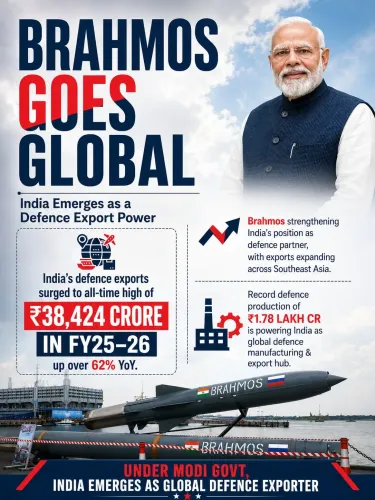
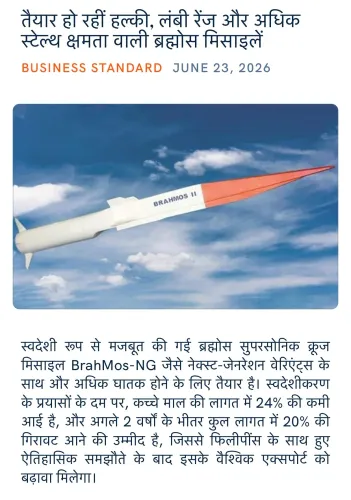
BrahMos , a supersonic cruise missile exceeding Mach 2.8 , is a joint Indo-Russian venture now deployed across land, sea, and air platforms.
The Atmanirbhar Bharat Abhiyan , launched in May 2020 , introduced positive indigenisation lists placing rolling import bans on systems India can produce domestically.
Singh declared India's defence system is 'fully prepared to face any kind of challenge,' framing indigenisation as operational reality rather than aspiration.
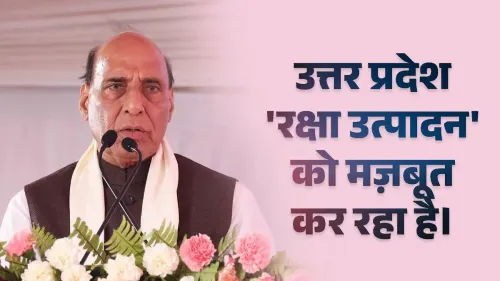
Two missile systems — one a homegrown surface-to-air shield, the other a supersonic strike weapon born of Indo-Russian engineering — have become the twin faces of India's drive to arm itself on its own terms. On Thursday, 24 September 2026, Union Defence Minister Rajnath Singh invoked both by name to make a pointed declaration about where Indian defence manufacturing now stands.
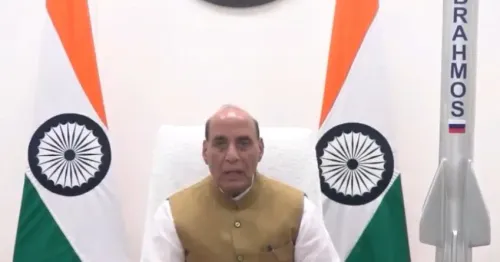
Posting in Hindi, Singh wrote: 'Akash missile system aur BrahMos hamari badhti technological capability aur Atmanirbhar Bharat ki shakti ke pratik hain.' — 'The Akash missile system and BrahMos are symbols of our growing technological capability and the strength of Atmanirbhar Bharat.' He added that India's defence system is today 'fully prepared to face any kind of challenge.'
What Akash and BrahMos represent in India's arsenal
The Akash missile system is a medium-range surface-to-air missile developed by the Defence Research and Development Organisation (DRDO) and inducted into the Indian Army and Indian Air Force. Designed to intercept aircraft, helicopters, and low-flying missiles, it is one of the most visible products of India's push to stop buying air-defence systems abroad. The BrahMos, a supersonic cruise missile developed by BrahMos Aerospace — a joint venture between India and Russia — travels at speeds exceeding Mach 2.8 and has been integrated across land, sea, and air platforms. Together, they anchor India's current argument that indigenisation is no longer an aspiration; it is operational reality.
Atmanirbhar Bharat's defence chapter — six years and counting
The Atmanirbhar Bharat Abhiyan was launched in May 2020 with defence as one of its most strategically charged pillars. The government introduced positive indigenisation lists — essentially rolling import bans on weapons systems that India can now make at home — and set rising targets for domestic defence procurement in successive budgets. Akash and BrahMos have been held up as flagship proof-points of that policy ever since: one is purely indigenous, the other a technology-absorption success that has evolved into a system India now exports.
Singh's post arrives with a video attached, signalling the statement is part of a broader communication push rather than a casual observation. As one of the BJP's most senior figures and the minister who has overseen several rounds of defence reform, his framing of these two platforms as 'symbols of strength' carries both policy weight and political messaging ahead of future budget and procurement cycles.
The stakes behind the confidence
India's defence indigenisation story still has distance to travel — import dependence remains significant across several categories of equipment. But the minister's pointed choice of Akash and BrahMos as standard-bearers is deliberate: they are systems that actually exist, are deployed, and in BrahMos's case, are being sold to partner nations. The next test of that confidence will come in the form of concrete targets — fresh indigenisation lists, export order disclosures, or the next iteration of BrahMos variants — expected to emerge from upcoming defence-production policy announcements.
India's strategic ambition is now inseparable from what it builds inside its own borders. Rajnath Singh's message today is that the hardware is ready — and the doctrine is following.
Point of View
Deployed systems rather than speaking in policy abstractions, he anchors the Atmanirbhar Bharat narrative in hardware that soldiers actually use. This matters politically because the indigenisation push is approaching a credibility test — import bills remain high in several equipment categories, and the next budget will be scrutinised for whether domestic procurement targets are being met. Foregrounding Akash and BrahMos also serves an export-diplomacy purpose, as BrahMos deals with partner nations have become a soft-power lever in India's strategic relationships. The timing and the video attachment suggest this is coordinated communication, not a spontaneous post.
NationPress
24 Sept 2026
Frequently Asked Questions
What is the Akash missile system and who developed it?
The Akash missile system is a medium-range surface-to-air missile developed by India's Defence Research and Development Organisation (DRDO). It is designed to intercept aircraft, helicopters, and low-flying missiles and is inducted into both the Indian Army and the Indian Air Force.
What is BrahMos and is it fully Indian?
BrahMos is a supersonic cruise missile developed by BrahMos Aerospace, a joint venture between India and Russia. It travels at speeds exceeding Mach 2.8 and has been integrated onto land, sea, and air platforms. While not purely indigenous, it represents a major technology-absorption achievement for India.
What is Atmanirbhar Bharat in defence?
Atmanirbhar Bharat Abhiyan, launched in May 2020, includes a defence pillar that aims to reduce India's dependence on weapons imports. Key measures include positive indigenisation lists — rolling bans on importing systems India can manufacture domestically — and rising domestic procurement targets in successive defence budgets.
Why did Rajnath Singh mention Akash and BrahMos specifically?
Singh cited the Akash missile system and BrahMos as flagship examples of India's growing defence self-reliance under the Atmanirbhar Bharat framework. Both are deployed systems — not prototypes — and BrahMos is also being exported to partner nations, making them tangible proof-points of indigenisation success.
Is India still dependent on foreign weapons despite Atmanirbhar Bharat?
India has made measurable progress in indigenising key platforms like Akash and BrahMos, but significant import dependence remains across several equipment categories. Future budget announcements and updated indigenisation lists will be the clearest indicators of how far the policy has advanced.