Kishan Reddy Hails India's Rise as Defence Export Powerhouse
Synopsis
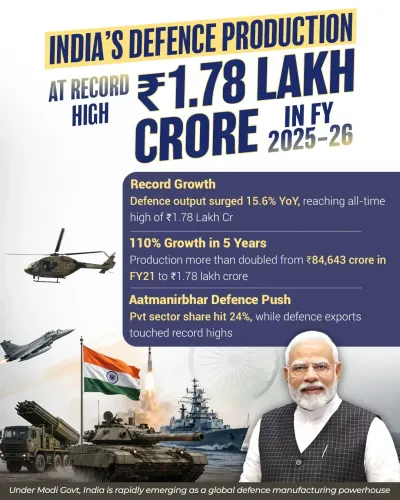
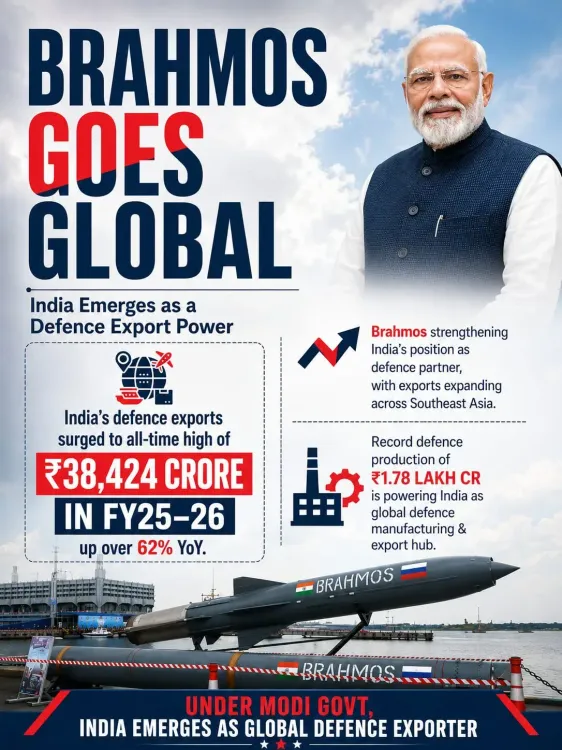
Union Minister G. Kishan Reddy on 27 July 2026 hailed India's transformation into a global defence manufacturing and export powerhouse under PM Modi, citing the BrahMos missile system as a flagship symbol of the Atmanirbhar Bharat push toward strategic self-reliance.
Key Takeaways
Union Coal and Mines Minister G.
Kishan Reddy credited PM Narendra Modi for India's emergence as a global defence manufacturing and export hub.
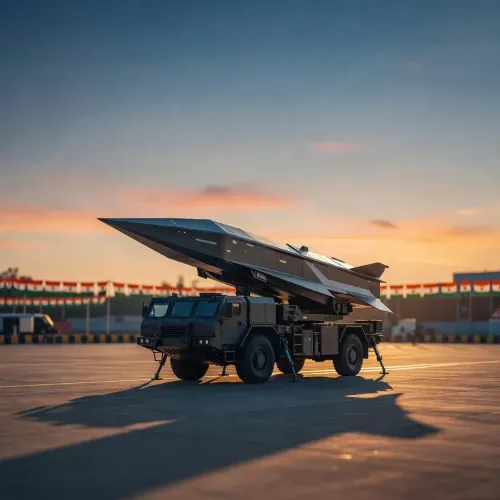
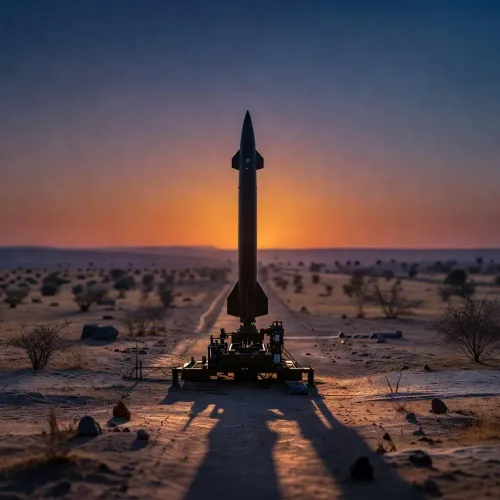
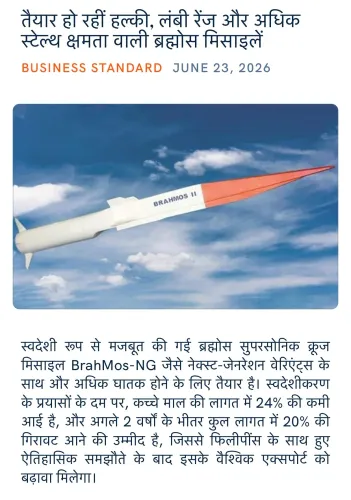
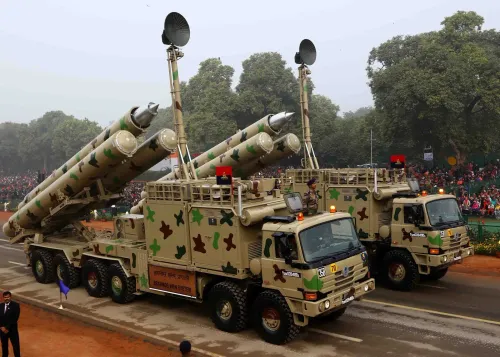
The BrahMos supersonic cruise missile, a joint venture established in 1998 , was cited as the flagship symbol of India's strategic capabilities reaching global markets.
The Atmanirbhar Bharat initiative, launched in May 2020 , forms the policy backbone of India's push to reduce defence import dependence and grow exports.
India's Make in India programme (2014) and a revised Defence Procurement Procedure (2020) created the structural framework for domestic production and third-country sales.
India has historically been one of the world's largest arms importers; the current policy direction marks a structural shift toward becoming a supplier and security partner.
Progress on additional BrahMos export contracts and updates to the Defence Production and Export Promotion Policy targets will be key indicators to watch.
Union Coal and Mines Minister G. Kishan Reddy on Monday, 27 July 2026 credited Prime Minister Narendra Modi's leadership for transforming India into a trusted global defence manufacturing and export hub, pointing to the BrahMos supersonic cruise missile system as a symbol of the country's shift from a major arms importer to a key security partner worldwide.
Context
In his post on X, Kishan Reddy wrote that India has achieved a 'historic transformation' under Modi's 'visionary leadership,' emerging as a 'trusted global defence manufacturing and export powerhouse.' He specifically cited the BrahMos missile system as evidence of strategic capabilities 'reaching global frontiers,' framing it as a concrete outcome of the Atmanirbhar Bharat initiative.
The BrahMos programme is a joint venture between India and Russia, established in 1998, to develop and produce supersonic cruise missiles. It has become one of the most cited examples of India's defence indigenisation and technology collaboration story, particularly after export agreements began extending the system's reach to third countries.
Policy Backdrop
The policy architecture underpinning Kishan Reddy's remarks stretches back to the Make in India programme launched in 2014, which placed domestic defence production at its centre. The Atmanirbhar Bharat initiative, announced in May 2020, deepened this push with targeted measures to reduce import dependence and scale up indigenous output.
A revised Defence Procurement Procedure in 2020 further prioritised Made-in-India equipment and technology, creating a structured pathway for domestic manufacturers and joint ventures to compete for both national and international contracts. These successive policy layers have been designed to position India not merely as a consumer of global defence technology but as a supplier and partner.
India has historically been among the world's largest arms importers. The sustained policy shift toward domestic production and export capacity represents a structural change in the country's defence economy, with joint ventures such as BrahMos illustrating how technology collaboration is being leveraged for third-country sales.
Stakeholders and Impact
The primary beneficiaries of this policy direction include domestic defence manufacturers, public sector undertakings, and private sector firms that have entered the defence supply chain under liberalised foreign direct investment norms. Arms exporters and strategic partners stand to gain as India's export portfolio expands.
For recipient countries, India's emergence as a defence supplier introduces a new option in a market historically dominated by a handful of major powers. The BrahMos system, in particular, has drawn interest from several nations in Southeast Asia and beyond, underscoring India's growing role as a security partner rather than a passive buyer.
What's Next
Attention will remain on the progress of additional BrahMos or comparable export contracts and any updates to India's Defence Production and Export Promotion Policy targets. The government has set ambitious goals for defence exports, and milestones in those numbers will be closely watched as a measure of whether the policy transformation Kishan Reddy describes is translating into sustained commercial and strategic outcomes.
As India's defence export ambitions grow, the diplomatic and industrial frameworks supporting them — including joint venture structures, offset policies, and bilateral security agreements — will increasingly define the country's standing in the global arms market.
Point of View
One that has bipartisan roots but has been most aggressively pursued under the Modi government since 2014. By anchoring the narrative around BrahMos — a visible, internationally recognised programme — the statement connects the abstract Atmanirbhar Bharat slogan to a tangible export product, which is politically effective messaging. The framing of India as a 'key security partner' rather than merely a buyer signals an ambition that extends well beyond economics into strategic diplomacy. Whether the export targets set under the Defence Production and Export Promotion Policy are being met will ultimately determine how durable this transformation narrative proves to be.
NationPress
26 Oct 2026
Frequently Asked Questions
What is the BrahMos missile system?
BrahMos is a supersonic cruise missile developed through a joint venture between India and Russia, established in 1998. It is one of the fastest cruise missiles in the world and has become a centrepiece of India's defence export ambitions, with agreements to supply it to partner nations.
What is Atmanirbhar Bharat and how does it relate to defence?
Atmanirbhar Bharat, or Self-Reliant India, is an initiative announced by PM Narendra Modi in May 2020. In the defence sector, it includes targeted measures to reduce dependence on arms imports, boost domestic manufacturing, and grow India's defence export capacity.
Has India started exporting defence equipment?
Yes, India has been expanding its defence exports under successive policy reforms including Make in India (2014) and Atmanirbhar Bharat (2020). The BrahMos missile system is among the most prominent examples of Indian defence technology being supplied to other countries.
Why is G. Kishan Reddy commenting on defence if he is the Coal and Mines Minister?
G. Kishan Reddy is also the BJP Telangana state president, and ministers routinely amplify the ruling party's broader policy achievements on social media. His post is a political communication endorsing the Modi government's defence transformation record.
What is India's Defence Production and Export Promotion Policy?
India's Defence Production and Export Promotion Policy sets targets and provides a framework for scaling up domestic defence manufacturing and exports. It is a key instrument in the government's effort to shift India from a major importer to a significant exporter of defence equipment.