BrahMos missile powers India's defence export ambitions in Southeast Asia
Synopsis
The BrahMos missile is no longer just a defence asset — it is India's most powerful foreign policy handshake. With the Philippines already a customer, Vietnam in active talks, and Indonesia on the brink of a deal, Southeast Asia is becoming the proving ground for India's ₹50,000 crore export ambition. Rajnath Singh's ongoing Vietnam-South Korea tour signals this is a strategic push, not just a sales trip.
Key Takeaways
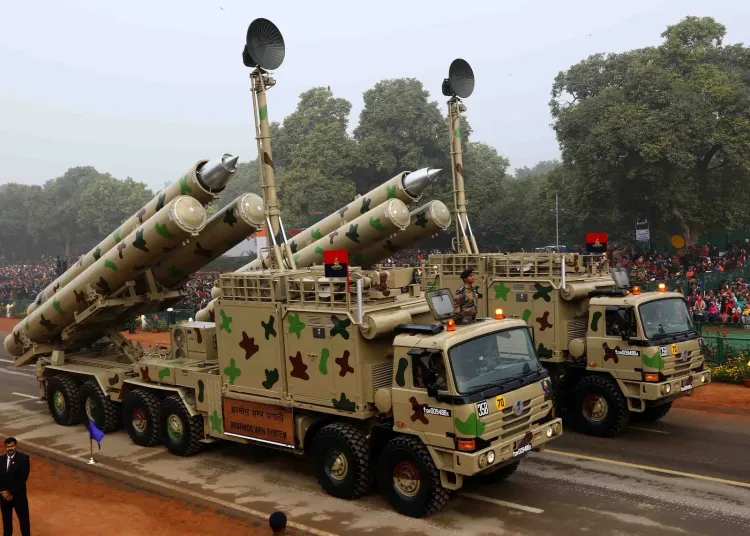
BrahMos supersonic cruise missile, jointly developed with Russia , can hit targets beyond 400 km at speeds of Mach 2.8 to Mach 3 .
The Philippines received its first BrahMos batch in 2024 and a second in April 2025 , making it India's first missile export customer.
Vietnam discussed a BrahMos deal during President To Lam's visit to India from 5–7 May 2025 ; Indonesia is also reportedly close to a procurement decision.
Defence Minister Rajnath Singh is on a two-nation tour of Vietnam and South Korea to advance strategic and industrial defence ties.
India targets ₹50,000 crore in total defence exports by 2030 , with BrahMos as a key driver.
The BrahMos supersonic cruise missile is emerging as the centrepiece of India's push to become a major global arms exporter, with Southeast Asia rapidly becoming its most consequential defence market, according to a report published on Monday, 18 May 2025. The missile's growing traction — particularly among South China Sea littoral states — is reinforcing India's Defence Atmanirbharta (self-reliance) agenda while expanding its strategic footprint across the Global South.
BrahMos: The Missile Driving India's Export Push
The BrahMos missile, jointly developed with Russia, is a supersonic cruise missile capable of reaching speeds between Mach 2.8 and Mach 3 — significantly faster than most conventional cruise missiles deployed by naval forces worldwide. It can strike targets at ranges exceeding 400 kilometres and is operable from land, sea, air, and submarine platforms. This combination of speed, precision, and versatility has made it a sought-after deterrent, particularly for nations seeking to bolster anti-access/area denial (A2/AD) capabilities.
According to the report, the missile's appeal is directly linked to China's assertive naval posture in the South China Sea, where Beijing's territorial claims overlap with those of several littoral states. Nations in the region are increasingly looking to the BrahMos as a cost-effective means of strengthening coastal defence.
Southeast Asia: India's Newest Defence Market
The Philippines became India's first BrahMos customer, receiving its first missile batch in 2024. A second batch was delivered in April 2025, cementing the bilateral defence relationship. The Philippines acquisition is considered one of the most strategically significant coastal-defence deals in recent Southeast Asian history.
Indonesia is reportedly on the verge of its own BrahMos procurement decision, which analysts describe as a potential A2/AD breakthrough for the archipelago nation. Meanwhile, Vietnam is identified as another likely customer. According to the report, India and Vietnam formally discussed a BrahMos deal during Vietnamese President To Lam's state visit to India from 5 to 7 May 2025, as part of the broader India-Vietnam Comprehensive Strategic Partnership.
Rajnath Singh's Diplomatic Push
Defence Minister Rajnath Singh is currently on a two-nation tour covering Vietnam and South Korea, focused on deepening strategic military ties, defence industrial partnerships, and maritime security cooperation in the Indo-Pacific region. In a post on X, Singh stated: 'I will focus on deepening strategic military cooperation, strengthening defence industrial partnerships, boosting maritime collaboration, and promoting peace and stability in the Indo-Pacific region.'
Singh has previously voiced confidence that India's total defence exports will reach ₹50,000 crore by 2030, a target that the BrahMos pipeline is expected to materially support.
India's Broader Defence Export Strategy
Defence exports have increasingly functioned as a foreign policy instrument for New Delhi, enabling it to build diplomatic leverage and deepen partnerships in strategically important regions. The Global South, in particular, has become a focal point of this outreach, with India positioning itself as a credible alternative to Western and Chinese defence suppliers.
This comes amid a sustained expansion in India's domestic defence manufacturing ecosystem, with the BrahMos programme serving as a flagship example of the country's missile production capabilities. As procurement pipelines in Southeast Asia mature and new markets in the Global South open up, India's defence export trajectory is expected to steepen further in the years ahead.
Point of View
000 crore export target by 2030 demands far more than one marquee missile system; it requires supply chain depth, after-sales infrastructure, and political will to navigate complex end-user agreements. The Philippines deal is a template, but Vietnam and Indonesia present different geopolitical sensitivities that New Delhi will need to manage carefully. India's window is real, but so is the competition from established arms exporters who are watching this space closely.
NationPress
6 Oct 2026
Frequently Asked Questions
What makes BrahMos attractive to Southeast Asian countries?
BrahMos is a supersonic cruise missile capable of speeds between Mach 2.8 and Mach 3 and strikes at ranges exceeding 400 kilometres from land, sea, air, and submarine platforms. For South China Sea littoral states like the Philippines, Vietnam, and Indonesia, it offers a credible anti-access/area denial capability against assertive naval postures in the region.
Which countries have bought or are considering buying BrahMos from India?
The Philippines was India's first BrahMos customer, receiving the first batch in 2024 and a second in April 2025. Vietnam is in active discussions following President To Lam's visit to India in May 2025, and Indonesia is reportedly on the verge of a procurement decision.
What is India's defence export target and when does it apply?
Defence Minister Rajnath Singh has stated that India aims to reach ₹50,000 crore in defence exports by 2030. The BrahMos missile is considered one of the primary drivers of this target, alongside other defence manufacturing initiatives under India's Atmanirbharta policy.
Why is Rajnath Singh visiting Vietnam and South Korea?
Singh is on a two-nation tour to deepen strategic military cooperation, strengthen defence industrial partnerships, and advance maritime security collaboration in the Indo-Pacific region. The visit follows active BrahMos discussions with Vietnam and is part of India's broader defence diplomacy push.
What is India's Defence Atmanirbharta and how does BrahMos fit in?
Defence Atmanirbharta refers to India's self-reliance policy in defence manufacturing, aimed at reducing import dependence and building indigenous production capacity. BrahMos — jointly developed with Russia but manufactured in India — is a flagship example of this approach and is now being leveraged as a foreign policy and export tool.