PM Modi: World's confidence in India's defence tech rising after BrahMos-Astra deal
Synopsis
On Kargil Vijay Diwas, PM Modi used Mann Ki Baat to do more than pay tribute — he signalled India's emergence as a credible defence exporter. The BrahMos and Astra deals with Indonesia, combined with INS Mahendragiri's induction and the Pinaka LRGR-120's development, mark a rare convergence of military commemoration and strategic capability showcase.
Key Takeaways
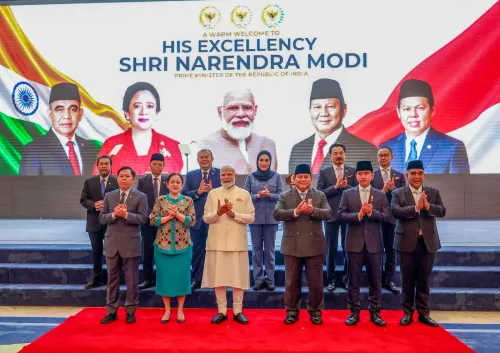
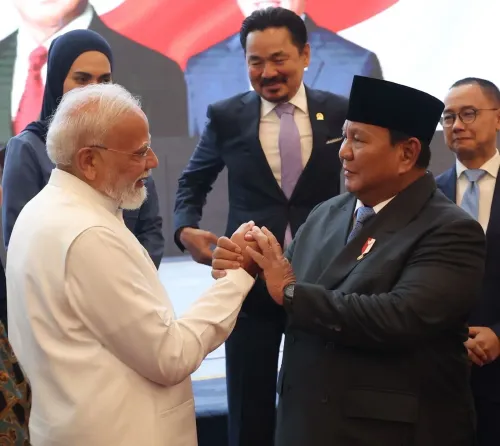
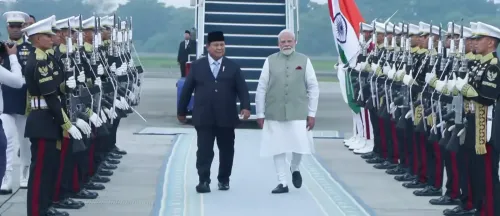
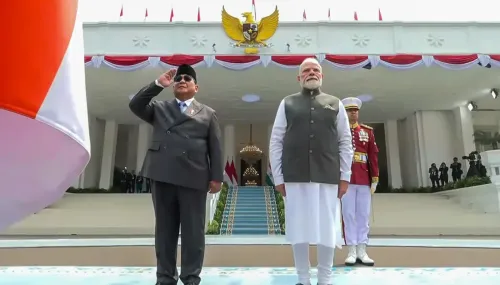
PM Modi highlighted the BrahMos and Astra missile agreement signed with Indonesia during his visit earlier in July 2025 .
Indonesia becomes a recipient of India's supersonic BrahMos cruise missiles and indigenously developed Astra air-to-air missiles.
The Astra missile, developed by DRDO , is a beyond-visual-range system designed to intercept highly manoeuvrable enemy aircraft.
INS Mahendragiri was inducted into the Indian Navy with over 75% indigenous content, cited as a symbol of Atmanirbhar Bharat .
DRDO 's Pinaka LRGR-120 rocket system has a maximum range of 120 km and a validated minimum range of 60 km .
Modi paid tribute to Kargil martyrs on Kargil Vijay Diwas (26 July) and referenced the 'Saurya Vijay Yatra' motorcycle expedition from Delhi to Drass.
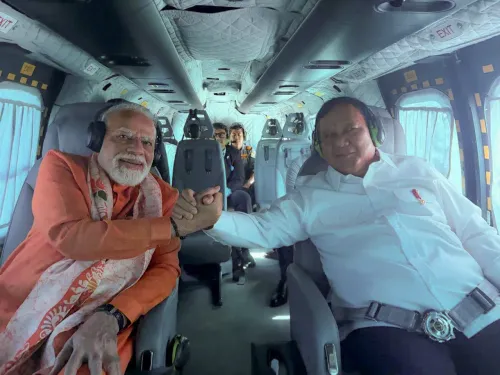
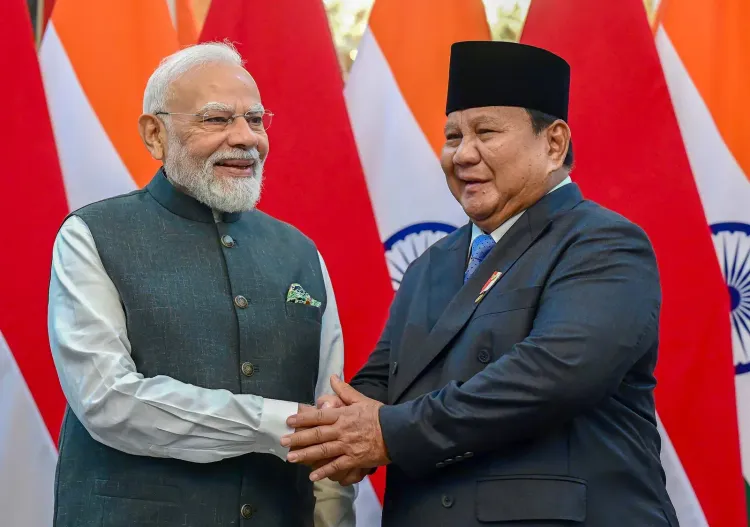
Prime Minister Narendra Modi on 26 July 2025 highlighted the world's growing confidence in India's defence equipment and technology, pointing to the landmark agreement on BrahMos and Astra missiles signed during his visit to Indonesia earlier this month. Speaking on the 136th episode of his monthly radio programme 'Mann Ki Baat', Modi framed the deals as evidence of India's rising stature in global defence exports and political partnerships.
The Indonesia Defence Agreements
India and Indonesia signed an agreement for the supply of BrahMos supersonic cruise missiles to the Indonesian military, along with additional batteries of the system. Indonesia is also set to import India's indigenously developed Astra air-to-air missiles — a beyond-visual-range missile developed by the Defence Research and Development Organisation (DRDO), designed to track and destroy highly manoeuvrable enemy aircraft. The two nations additionally finalised a framework for maritime safety and security cooperation.
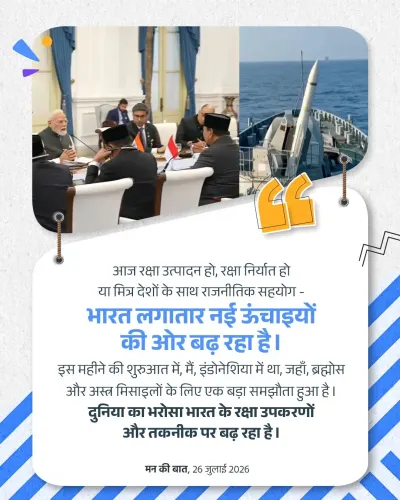
'Whether it is defence production, exports or political cooperation with the friendly nations, India is continuously scaling new heights,' Modi said. 'At the beginning of this month, I was in Indonesia, where a major agreement was signed for BrahMos and Astra missiles. The world's confidence is increasing towards India's defence equipment and technology.'
Kargil Vijay Diwas Tribute
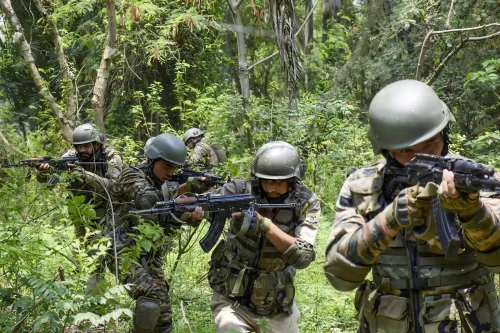
The broadcast also marked Kargil Vijay Diwas, observed annually on 26 July to commemorate India's victory in the 1999 Kargil War. Modi paid tribute to the soldiers who fought in the conflict, calling the date one that 'fills us with pride and reminds us of the extraordinary courage of our brave soldiers.'
'The towering peaks of Kargil, harsh weather, the challenges posed by the enemy — our soldiers faced every such circumstance, yet their morale was greater than any challenge. They sacrificed everything for protecting the motherland,' he said. Modi also highlighted a special motorcycle expedition — 'Saurya Vijay Yatra' — that began on 14 July from Delhi's National War Memorial and is set to conclude at the Kargil War Memorial in Drass, under the theme 'One ride, one nation, one salute.'
New Defence Inductions and Milestones
Modi cited several recent milestones in India's indigenous defence build-up. He highlighted the induction of INS Mahendragiri into the Indian Navy, a warship designed and manufactured in India with more than 75 per cent indigenous content, calling it 'a symbol of the growing strength of Atmanirbhar Bharat.'
He also referenced the Pinaka Long Range Guided Rocket (LRGR-120), a precision-guided artillery rocket system developed by DRDO with a maximum strike range of approximately 120 kilometres and a validated minimum range of 60 kilometres. Additionally, he noted the successful flight test of the Khusha Missile, crediting the achievements to 'the collective hardwork of our scientists and engineers.'
Broader Strategic Context
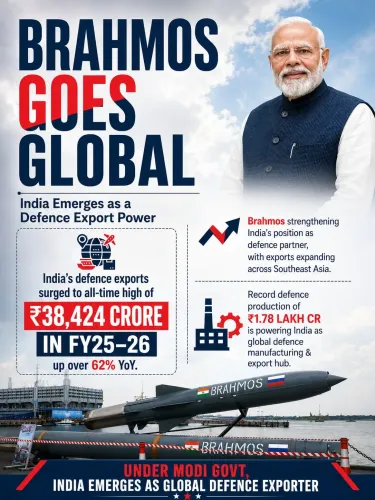
India's defence exports have grown substantially over the past decade, with the government setting a target of ₹50,000 crore in exports by 2029. The BrahMos deal with Indonesia — the first such export of the supersonic cruise missile to a Southeast Asian nation — is widely seen as a strategic signal in the Indo-Pacific. This comes amid heightened maritime competition in the region, where India has been deepening defence ties with ASEAN partners. The Astra missile export marks another first for India's domestic aerospace sector, reinforcing the DRDO's commercial viability alongside its strategic mandate.
As India approaches the 26th anniversary of the Kargil victory, Modi's address wove together the themes of military sacrifice and technological self-reliance — a framing that underscores the government's 'Atmanirbhar Bharat' defence narrative heading into a period of active procurement decisions across the region.
Point of View
But the real test is whether it signals a repeatable pipeline or remains a one-off diplomatic win. India's defence export targets have historically outpaced actual delivery timelines, and the Astra's commercial debut will be watched closely by other potential buyers in the Indo-Pacific. The conflation of sacrifice and self-reliance in one broadcast is effective political messaging, but the credibility of 'Atmanirbhar Bharat' in defence will ultimately be measured in delivery schedules, not announcements.
NationPress
24 Oct 2026
Frequently Asked Questions
What defence agreement did India sign with Indonesia?
India and Indonesia signed an agreement for the supply of BrahMos supersonic cruise missiles and Astra air-to-air missiles to the Indonesian military, along with a framework for maritime safety and security cooperation. The deals were signed during PM Modi's visit to Indonesia in July 2025.
What is the Astra missile developed by DRDO?
The Astra is an indigenously developed, beyond-visual-range air-to-air missile built by the Defence Research and Development Organisation (DRDO). It is designed to track and destroy highly manoeuvrable enemy aircraft and marks India's first such missile export.
What is Kargil Vijay Diwas and why is it observed on 26 July?
Kargil Vijay Diwas is observed every year on 26 July to mark India's victory in the 1999 Kargil War against Pakistan. The date commemorates the day Indian forces recaptured all occupied positions in the Kargil sector of Jammu and Kashmir.
What is the Pinaka LRGR-120 rocket system?
The Pinaka Long Range Guided Rocket (LRGR-120) is a precision-guided artillery rocket system developed indigenously by DRDO, with a maximum strike range of approximately 120 kilometres and a validated minimum range of 60 kilometres. PM Modi cited it as a key example of India's growing indigenous defence capability.
What is INS Mahendragiri and why was it highlighted by PM Modi?
INS Mahendragiri is a modern warship designed and built in India, recently inducted into the Indian Navy with more than 75 per cent indigenous content. Modi cited it as a symbol of the 'Atmanirbhar Bharat' initiative's progress in domestic defence manufacturing.