Modi in Indonesia: Defence deals, BrahMos expansion, Sabang Port on agenda
Synopsis
PM Modi's Jakarta visit isn't a routine diplomatic stopover — it's a strategic consolidation. Indonesia is set to buy Astra missiles and expand its BrahMos fleet post-Operation Sindoor, while joint development of Sabang Port would give India a maritime anchor just miles from the Strait of Malacca. Add critical minerals investment and EVM cooperation, and this visit redraws the India-Indonesia partnership at every level.
Key Takeaways
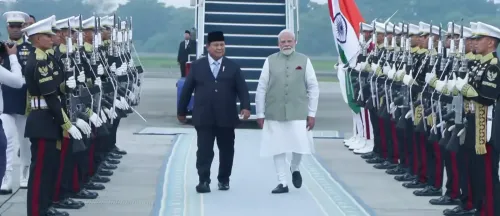
PM Modi arrived in Jakarta on 7 July for a state visit focused on defence, maritime strategy, and critical minerals.
Indonesia has decided to procure India's indigenous Astra BVRAAM missiles, reportedly influenced by their performance in Operation Sindoor .
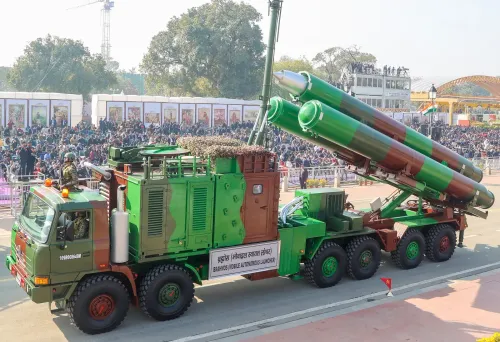
Indonesia is also expanding its BrahMos supersonic cruise missile inventory, with India expected to supply additional batteries.
India and Indonesia are set to advance joint development of Sabang Port , located 104 nautical miles from India's Indira Point near the Strait of Malacca .
India plans to invest in steel , nickel , and rare earth permanent magnet manufacturing in Indonesia to secure critical mineral supply chains.
India will support development of Indonesia-specific EVMs , marking an endorsement of India's election management model.
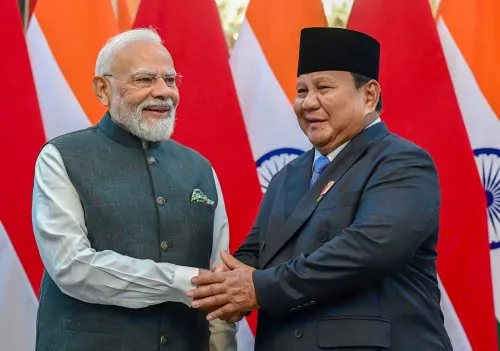
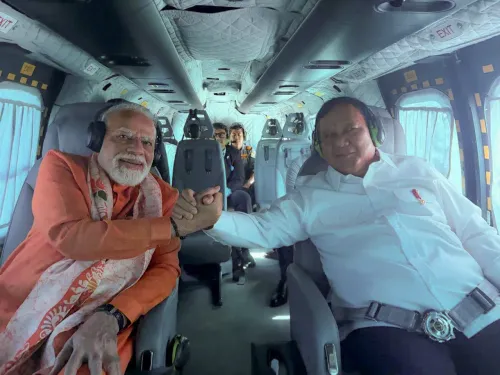
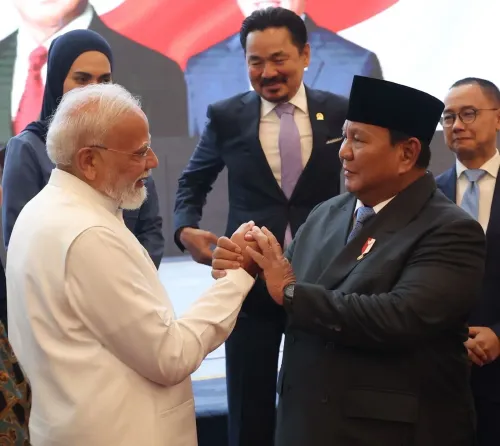
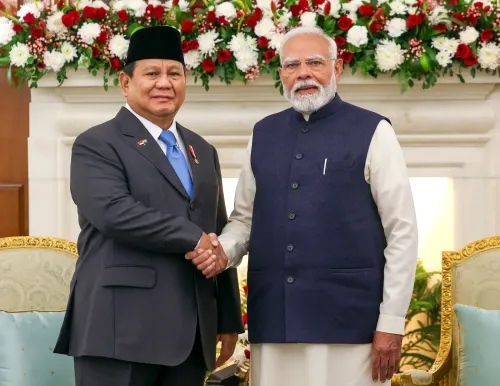
Prime Minister Narendra Modi arrived in Jakarta on 7 July for a high-stakes state visit to Indonesia, with a packed agenda spanning defence procurement, strategic port development, and critical minerals supply chains. The visit, which included bilateral talks with Indonesian President Prabowo Subianto, is expected to yield several concrete outcomes under the two nations' Comprehensive Strategic Partnership.
Defence Deals: Astra Missiles and BrahMos Expansion
Among the most significant anticipated outcomes is Indonesia's decision to procure India's indigenous Astra air-to-air missiles, according to sources. The move follows the demonstrated effectiveness of India's missile capabilities during Operation Sindoor. The Astra is a Beyond-Visual-Range Air-to-Air Missile (BVRAAM) developed by the Defence Research and Development Organisation (DRDO) for deployment by the Indian Air Force and the Indian Navy.
Separately, Indonesia has also decided to expand its inventory of BrahMos supersonic cruise missiles, with India expected to supply additional missile batteries as part of the proposed cooperation. Regarded as the world's fastest operational supersonic cruise missile, the BrahMos travels at speeds of up to Mach 2.8, carries a heavy warhead, and can strike targets at ranges exceeding 290 kilometres. Operating on the 'fire and forget' principle, it can be launched from warships, submarines, aircraft including the Su-30MKI, and land-based mobile launchers.
Sabang Port: A Strategic Maritime Foothold
India and Indonesia are also expected to advance joint development plans for Sabang Port, a deep-water facility on Weh Island off the northern tip of Sumatra. Located approximately 104 nautical miles from India's Indira Point and around 500 kilometres from the Strait of Malacca, the port is considered a strategically vital maritime hub. Notably, it sits roughly 100 miles from India's Great Nicobar port project, making it a complementary node in the two countries' broader Indo-Pacific maritime architecture.
Critical Minerals and Industrial Investment
To strengthen the critical minerals supply chain, India is expected to invest in the manufacturing of steel, nickel, and rare earth permanent magnets in Indonesia. The investment signals India's intent to secure upstream access to materials essential for its domestic electronics, EV, and defence manufacturing ambitions. This comes amid a global scramble for critical mineral supply chains as major economies seek to reduce dependence on single-source suppliers.
EVM Support and Temple Restoration
India is also expected to support the development of Indonesia-specific Electronic Voting Machines (EVMs) — a move sources described as a significant endorsement of India's election management model. Additionally, India's Ambassador to Indonesia Sandeep Chakravorty confirmed that both leaders are expected to announce the commencement of restoration work at a temple complex during the visit.
Bilateral Talks and What Comes Next
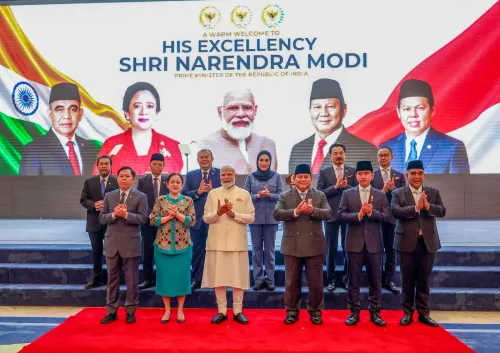
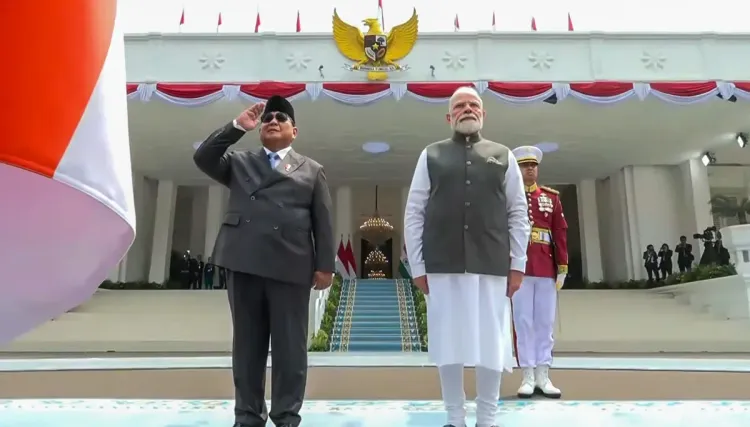
The bilateral summit between Modi and Subianto is expected to review progress under the Comprehensive Strategic Partnership, which the two countries elevated in May 2018. The agenda covers energy, trade, maritime cooperation, defence, food security, and the digital economy. Modi received a ceremonial welcome in Jakarta at the outset of the visit. With defence exports, port access, and mineral security all on the table, the outcomes of this visit are poised to reshape the India-Indonesia bilateral relationship for years ahead.
Point of View
But the Sabang Port development may be the more durable strategic win. A deep-water facility just 100 miles from Great Nicobar — and 500 kilometres from the Strait of Malacca — gives India a dual-node maritime presence at one of the world's most critical chokepoints. The BrahMos and Astra deals are commercially significant, but they also validate India's post-Operation Sindoor positioning as a credible defence exporter in Southeast Asia. The critical minerals angle is equally telling: Indonesia holds some of the world's largest nickel reserves, and India's manufacturing ambitions — in EVs, electronics, and defence — are directly contingent on securing that supply chain. What this visit signals, cumulatively, is that India is no longer content with declaratory partnerships in the Indo-Pacific; it is building physical and industrial anchors.
NationPress
6 Oct 2026
Frequently Asked Questions
What are the key outcomes expected from PM Modi's Indonesia visit?
PM Modi's visit to Indonesia on 7 July is expected to yield defence procurement agreements including Indonesia's purchase of Astra air-to-air missiles and expansion of its BrahMos missile fleet, joint development of Sabang Port, Indian investment in critical minerals manufacturing, and support for Indonesia-specific Electronic Voting Machines.
What is the Astra missile and why is Indonesia buying it?
The Astra is an indigenous Beyond-Visual-Range Air-to-Air Missile developed by DRDO for the Indian Air Force and Indian Navy. Indonesia's decision to procure it reportedly follows the demonstrated effectiveness of India's missile capabilities during Operation Sindoor.
Why is Sabang Port strategically important for India?
Sabang Port on Weh Island, Sumatra, is located approximately 104 nautical miles from India's Indira Point and around 500 kilometres from the Strait of Malacca — one of the world's busiest maritime chokepoints. It sits roughly 100 miles from India's Great Nicobar port project, making it a key node in bilateral maritime cooperation.
What is the BrahMos missile and how fast does it travel?
The BrahMos is regarded as the world's fastest operational supersonic cruise missile, capable of travelling at speeds up to Mach 2.8 and striking targets beyond 290 kilometres. It can be launched from warships, submarines, aircraft, and land-based mobile launchers.
What is the Comprehensive Strategic Partnership between India and Indonesia?
The Comprehensive Strategic Partnership is the framework governing India-Indonesia bilateral relations, elevated in May 2018. It covers defence, maritime cooperation, energy, trade, food security, and the digital economy. PM Modi and President Prabowo Subianto are expected to review progress and announce fresh initiatives under this framework during the July 2025 visit.