BrahMos Missile deal: Modi and Prabowo elevate India-Indonesia defence ties
Synopsis
India and Indonesia have moved well beyond diplomatic pleasantries — the BrahMos Missile System cooperation and a new Air-to-Air Missile Agreement signal that Jakarta is now a serious node in India's defence export network. Backed by MRO facilities, R&D collaboration, and a Coast Guard-BAKAMLA arrangement, this is the most operationally specific India-Indonesia defence framework to date.
Key Takeaways
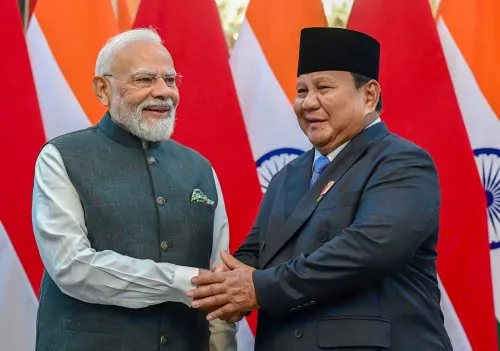
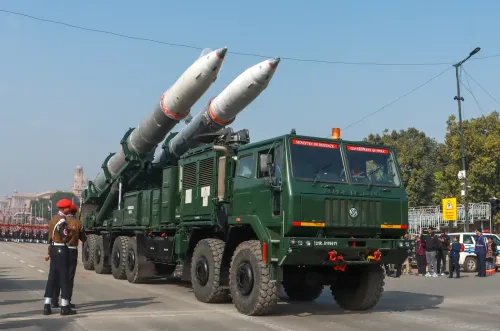
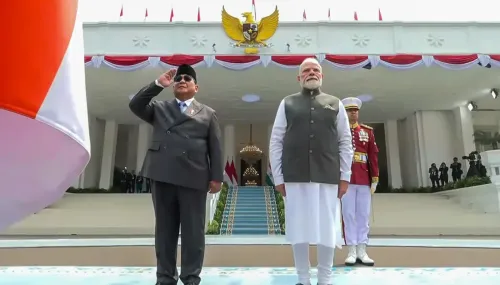
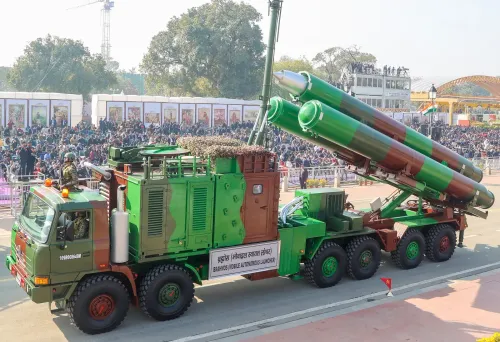
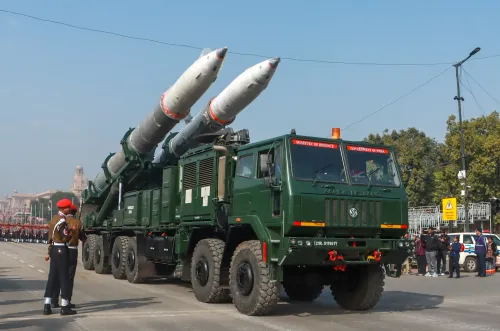
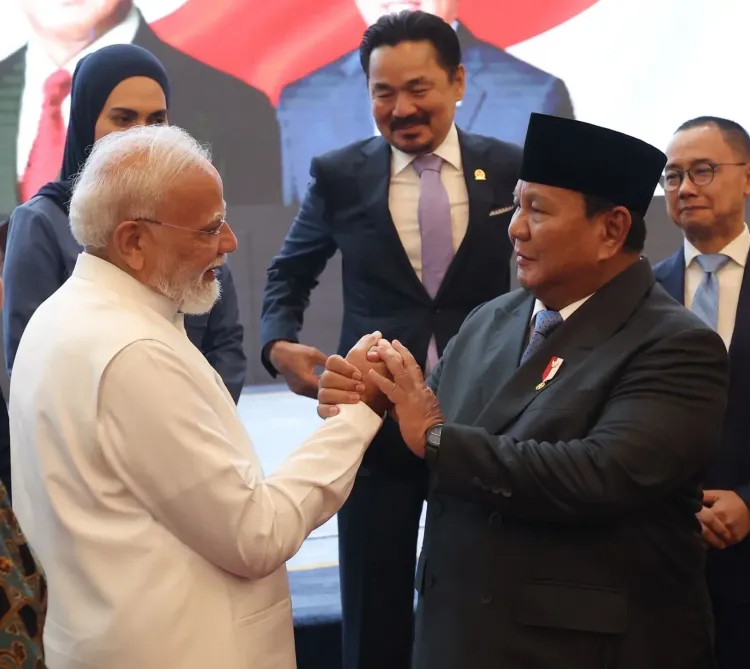
PM Narendra Modi and Indonesian President Prabowo Subianto welcomed defence cooperation including the BrahMos Missile System and a new Air-to-Air Missile Cooperation Agreement on 7 July in Jakarta .
Both leaders agreed to expand collaboration in joint production , technology transfer , ship-building , and establishment of MRO facilities .
A renewed MoU on Maritime Safety and Security and an Implementing Arrangement between BAKAMLA RI and the Indian Coast Guard were concluded.
Cooperation was also agreed across Maritime Domain Awareness , HADR , coastal surveillance, and Search and Rescue operations in the Indo-Pacific.
Both sides welcomed progress in pharmaceutical collaboration between the Armed Forces Medical Establishments of the two countries on supply of military medicines.
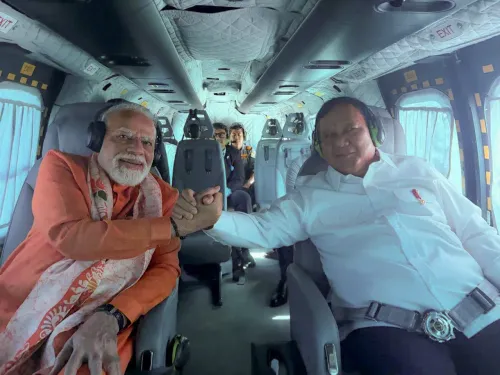
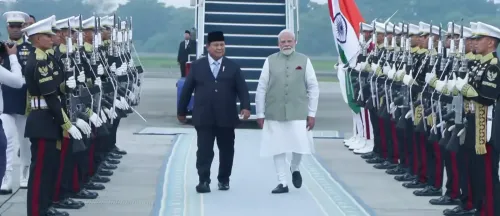
Prime Minister Narendra Modi and Indonesian President Prabowo Subianto on Tuesday, 7 July jointly welcomed a significant elevation in bilateral defence cooperation, anchored by collaboration on the BrahMos Missile System and a new Air-to-Air Missile Cooperation Agreement. The announcements emerged from the India-Indonesia Joint Statement issued in Jakarta, marking a deepening of the two nations' strategic partnership.
Key Defence Agreements
The joint statement identified defence industry and technology collaboration as a priority area, with both leaders agreeing to expand cooperation across joint production of equipment, technology transfer, technical assistance, and capacity building. The two sides also agreed to explore the sourcing of defence equipment, including cooperation in ship-building and the establishment of Maintenance, Repair, and Overhaul (MRO) facilities for shared defence platforms.
Both leaders further agreed to explore the establishment of defence Research and Development (R&D) initiatives and to strengthen the overall defence supply chain ecosystem between the two countries.
Maritime and Naval Cooperation
Modi and Prabowo underscored the strategic and operational importance of joint exercises and defence training programmes, agreeing to strengthen existing naval cooperation. The two leaders noted the importance of constructive discussions on maritime issues in accordance with respective national laws and the principles of international law, including the 1982 United Nations Convention on the Law of the Sea (UNCLOS).
Both sides welcomed continued maritime cooperation covering Maritime Domain Awareness (MDA), maritime connectivity, coastal surveillance, Humanitarian Assistance and Disaster Relief (HADR), pollution control, and Search and Rescue (SAR) operations — areas seen as contributing to stability across the broader Indo-Pacific region.
New MoUs and Institutional Arrangements
The two leaders welcomed the renewal of the Memorandum of Understanding (MoU) on Maritime Safety and Security Cooperation. They also welcomed the conclusion of an Implementing Arrangement between Indonesia's maritime security agency BAKAMLA RI (Badan Keamanan Laut Republik Indonesia) and the Indian Coast Guard (ICG) — a step that institutionalises operational coordination between the two agencies.
On the health front, both leaders welcomed progress in pharmaceutical collaboration between the Armed Forces Medical Establishments of India and Indonesia on the supply of military medicines, broadening the scope of the defence partnership beyond hardware and technology.
Broader Engagement Framework
The two sides agreed to further strengthen cooperation across both traditional and emerging areas, including regular defence dialogue, joint exercises, staff talks, joint research, co-production of new defence technologies, port calls, peacekeeping activities, information sharing, hydrography, capacity building, cadet training and exchanges, and defence industrial cooperation.
This comes amid India's broader push to deepen strategic ties with ASEAN nations, with Indonesia — the region's largest economy — emerging as a key partner in New Delhi's Act East Policy. The BrahMos cooperation, in particular, signals a significant step in India's defence export ambitions, as the supersonic cruise missile system has drawn interest from multiple countries in the Indo-Pacific. All outcomes are subject to formal ratification and implementation timelines yet to be disclosed by either government.
Point of View
R&D linkages, Coast Guard arrangements, and pharmaceutical supply chains together suggest a partnership designed for durability, not optics. The real test will be implementation timelines and whether joint production commitments translate into actual transfer of technology or remain aspirational. India's Act East Policy has produced many joint statements; this one carries more operational specificity than most.
NationPress
6 Oct 2026
Frequently Asked Questions
What is the BrahMos Missile cooperation between India and Indonesia?
India and Indonesia have agreed to cooperate on the BrahMos Missile System as part of an elevated bilateral defence partnership announced in Jakarta on 7 July. The BrahMos is a supersonic cruise missile jointly developed by India and Russia, and its cooperation with Indonesia marks a significant step in India's defence export ambitions in the Indo-Pacific.
What did the India-Indonesia Joint Statement cover on defence?
The joint statement covered cooperation on the BrahMos Missile System, an Air-to-Air Missile Cooperation Agreement, joint production, technology transfer, ship-building, MRO facility establishment, defence R&D, and strengthening of the defence supply chain ecosystem.
What maritime agreements were signed between India and Indonesia?
Both sides renewed an MoU on Maritime Safety and Security Cooperation and concluded an Implementing Arrangement between Indonesia's BAKAMLA RI and the Indian Coast Guard. They also agreed to cooperate on Maritime Domain Awareness, HADR, coastal surveillance, and Search and Rescue operations.
Why does the India-Indonesia defence deal matter for the Indo-Pacific?
Indonesia is the largest economy in ASEAN and a key maritime nation in the Indo-Pacific. Deepening defence ties — particularly on missile systems and maritime security — strengthens India's Act East Policy and contributes to regional stability at a time of heightened strategic competition in the Indo-Pacific.
What is BAKAMLA RI and what is its role in this agreement?
BAKAMLA RI (Badan Keamanan Laut Republik Indonesia) is Indonesia's national maritime security agency. Under the new Implementing Arrangement, it will coordinate directly with the Indian Coast Guard on maritime safety and security, institutionalising operational cooperation between the two agencies.