India-Indonesia BrahMos deal: Ex-Army officers call it befitting reply to China
Synopsis
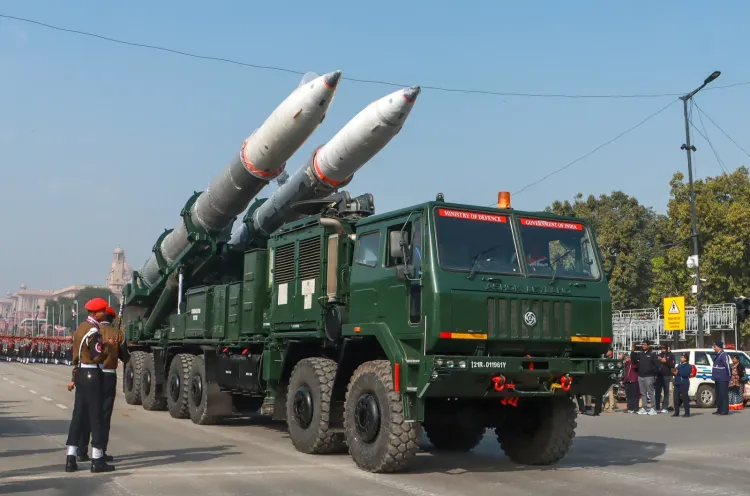
As India seals a BrahMos missile deal with Indonesia, retired generals are reading it as more than a weapons sale — it is India's most explicit strategic counter to China's 'String of Pearls' encirclement. With the Philippines, Vietnam, and now Indonesia armed with BrahMos, New Delhi is quietly building its own 'Necklace of Diamonds' across Asia's most contested waters.
Key Takeaways
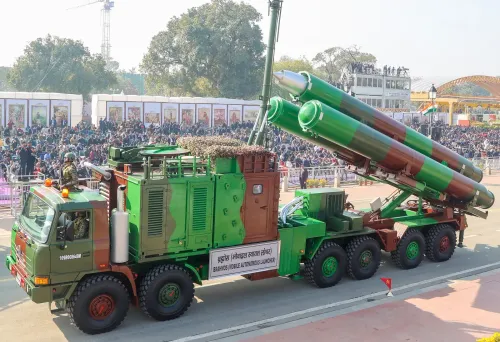
India and Indonesia signed a defence agreement for the BrahMos Missile System on 8 July , welcomed by retired Army officers as a counter to China's 'String of Pearls' strategy.
Retired officers framed India's BrahMos exports to Philippines , Vietnam , and Indonesia as a 'Necklace of Diamonds' counter-strategy.
India's defence exports have grown from approximately ₹1,400 crore pre-2014 to ₹25,000–₹26,000 crore , with a target of ₹50,000 crore in three to four years, according to Major General P.K.
BrahMos was cited for its performance during Operation Sindoor , in which Pakistan's eleven airfields were reportedly destroyed using the system.
Indonesia also procured India's indigenous air-to-air missile and concluded a Sabang Port deal, deepening bilateral strategic ties.
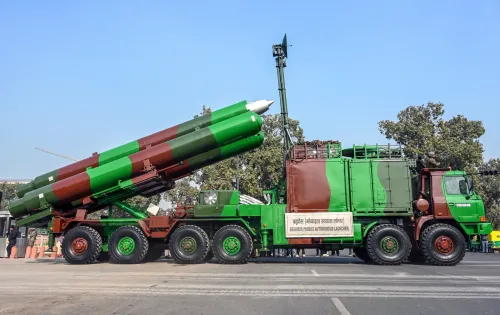
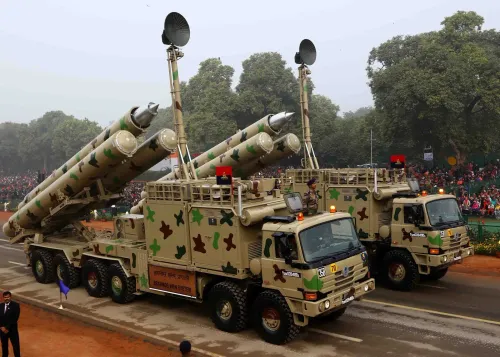
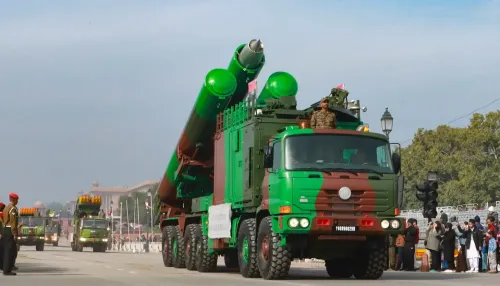
India's defence agreement with Indonesia on the BrahMos Missile System has drawn strong praise from retired Army officers, who on Wednesday, 8 July described the deal as a direct counter to China's 'String of Pearls' strategy — Beijing's long-running effort to encircle India through a network of strategic partnerships across the Indo-Pacific.
Why the BrahMos-Indonesia Deal Matters
Defence expert Major General P.K. Sehgal (retd.) called Indonesia's decision to acquire BrahMos 'very important' from India's strategic standpoint. He pointed to the deal's dual significance: it strengthens regional deterrence while simultaneously advancing the Atmanirbhar Bharat and Make in India defence manufacturing agenda.
'Before 2014, India's total defence exports were approximately ₹1,400 crore; today, it is approximately ₹25,000 to ₹26,000 crore. In the next three to four years, it could be approximately ₹50,000 crore,' he said.
Major Gen Sehgal also highlighted BrahMos's battlefield credentials, citing its deployment during Operation Sindoor, in which, according to him, Pakistan's eleven airfields were destroyed using the missile system.
India's 'Necklace of Diamonds' vs China's 'String of Pearls'
Major General Sanjay Soi (retd.) framed India's growing BrahMos export network — spanning the Philippines, Vietnam, and now Indonesia — as a deliberate strategic counter to Beijing's expansionist posture. 'This means that if China is attempting to surround India through 'String of Pearls', then the latter is also countering through 'Necklace of Diamonds',' he said.
Major Gen Sehgal echoed this, noting that China has disputes with Indonesia, the Philippines, and Vietnam in the South China Sea and East China Sea. 'Beijing has issues with Indonesia, Philippines and Vietnam in the South China Sea and East China Sea, and these nations have been provided the missile by India, which reflects that India has replied to China in the language which it understands,' he said.
BrahMos as a Strategic Deterrent
Major General Dhruv Katoch (retd.) described BrahMos as a 'strategic weapon' that has 'significantly strengthened India's defence relationships with other countries.' He argued that the missile gives smaller nations a credible option when facing pressure from larger powers.
'What happens is when these countries have disputes with other nations, say China puts pressure on them, and the former does not have a system to fight back, then the pressure remains. But (now with BrahMos) they will have an option,' he said. He was careful to add that possessing the weapon does not imply its use, but ensures a meaningful deterrent exists.
Broader India-Indonesia Defence Ties
Beyond BrahMos, Indonesia has also procured India's indigenous air-to-air missile for its air force, which, according to Major Gen Sehgal, 'will facilitate its coastal and maritime defence.' The two countries have also concluded a deal involving Sabang Port, which analysts see as a signal of deepening strategic convergence in the Indo-Pacific.
Major Gen Sehgal said the Sabang Port agreement sends a clear message: 'India cannot be ignored in the Indo-Pacific region.' With Indonesia now joining the Philippines and Vietnam as a BrahMos operator, India's defence export footprint in Asia is expanding at a pace that would have been unthinkable a decade ago.
Point of View
And the 'Necklace of Diamonds' framing is rhetorically powerful — but the strategic picture is more complex. Arms sales create dependencies, not alliances; the Philippines and Vietnam have their own hedging calculus with Beijing that no missile deal fully overrides. The more consequential signal is India's defence export trajectory: from ₹1,400 crore to ₹25,000 crore in a decade is a structural shift, not a blip. If the ₹50,000 crore target is met, India becomes a meaningful arms exporter — with all the geopolitical leverage and responsibility that entails. The Sabang Port deal, less discussed, may ultimately matter more than the missiles.
NationPress
7 Oct 2026
Frequently Asked Questions
What is the India-Indonesia BrahMos missile deal?
India and Indonesia signed a defence agreement for the supply of the BrahMos Missile System, making Indonesia the latest country after the Philippines and Vietnam to acquire the supersonic cruise missile. The deal also includes India's indigenous air-to-air missile for the Indonesian air force.
Why do retired Indian Army officers call it a reply to China?
Retired generals argue that China's 'String of Pearls' strategy seeks to encircle India through strategic partnerships across the Indo-Pacific. By arming Indonesia, the Philippines, and Vietnam — all of which have disputes with China in the South China Sea — with BrahMos, India is building what officers describe as a 'Necklace of Diamonds' counter-network.
How has India's BrahMos export record grown?
According to Major General P.K. Sehgal (retd.), India's total defence exports stood at approximately ₹1,400 crore before 2014 and have since risen to ₹25,000–₹26,000 crore. He projects the figure could reach ₹50,000 crore within three to four years.
What role did BrahMos play in Operation Sindoor?
Major General Sehgal stated that BrahMos was used during Operation Sindoor, in which Pakistan's eleven airfields were reportedly destroyed. The operation has been cited by Indian defence officials as a demonstration of the missile system's operational effectiveness.
What is the significance of the Sabang Port deal between India and Indonesia?
The Sabang Port agreement, concluded alongside the BrahMos deal, gives India strategic access in the eastern Indian Ocean. Retired officers say it signals that India is asserting itself as an indispensable power in the Indo-Pacific region.