Dr. Jitendra Singh Highlights India's Defence Export Rise
Synopsis
Union Minister Dr. Jitendra Singh amplified PM Modi's Mann Ki Baat remarks on July 26, 2026, highlighting a major BrahMos and Astra missile agreement with Indonesia as a milestone in India's surging defence exports and growing global trust in Indian defence technology.
Key Takeaways
PM Modi, quoted by Dr.
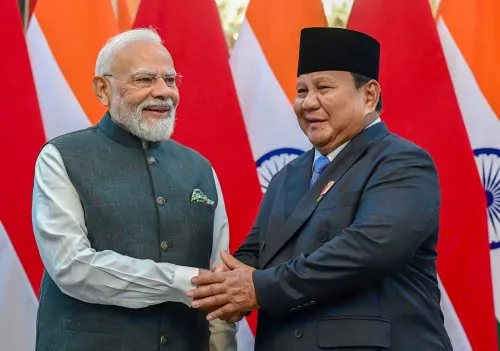
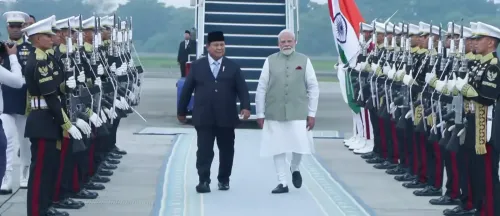
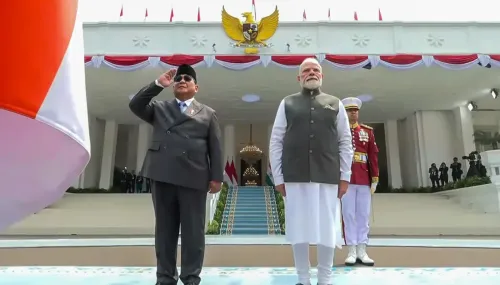
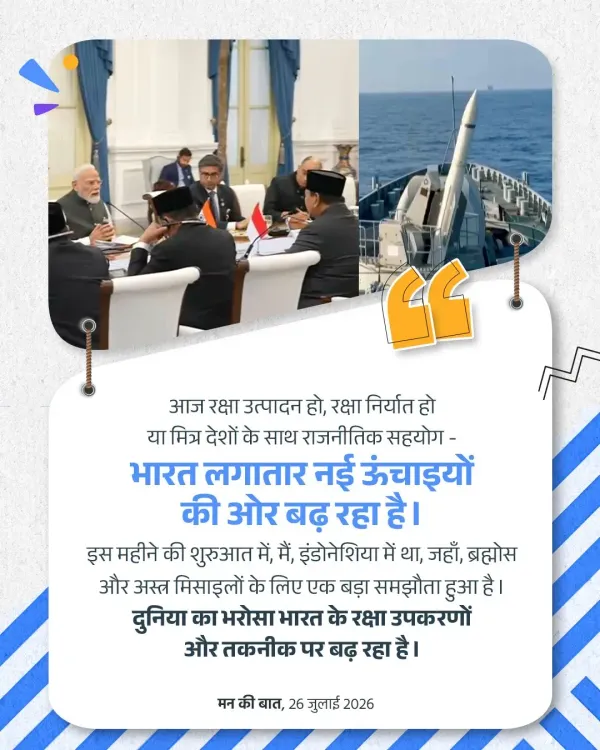
Jitendra Singh, confirmed a major BrahMos and Astra missile agreement with Indonesia concluded during his visit there earlier in July 2026.
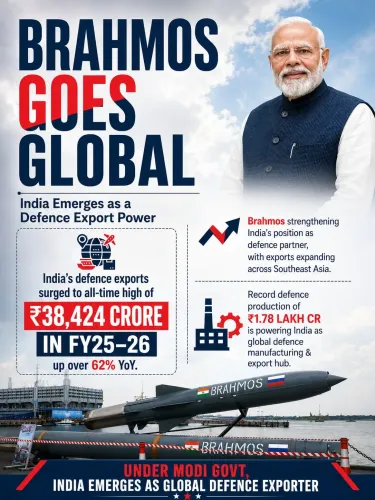
India's defence exports have grown from under ₹1,000 crore in 2014 to over ₹20,000 crore by 2024-25 .
The Defence Production and Export Promotion Policy (2020) targets ₹35,000 crore in annual defence exports by 2025.
India's first BrahMos export contract was signed with the Philippines in 2022 , opening the door for further overseas deals.
The Indonesia agreement, if confirmed at scale, would be one of India's largest single-country defence export deals.
The deal reinforces India's positioning as a credible defence supplier in the Indo-Pacific under the Atmanirbhar Bharat framework.
Union Science and Technology Minister Dr. Jitendra Singh on Sunday, July 26, 2026, shared remarks by Prime Minister Narendra Modi from Mann Ki Baat, underscoring India's accelerating strides in defence production, defence exports, and political cooperation with friendly nations.
Context
In the quoted remarks, PM Modi stated: 'Whether it is defence production, defence exports, or political cooperation with friendly nations — India is continuously scaling new heights.' The Prime Minister specifically referenced a major agreement for BrahMos and Astra missiles concluded during his visit to Indonesia earlier this month, describing it as evidence of the world's growing trust in India's defence equipment and technology.
Dr. Jitendra Singh amplified the remarks on X (formerly Twitter), signalling the government's intent to keep India's defence export momentum in public focus.
Policy Backdrop
India's defence export journey has been one of the most striking transformations of the past decade. Exports that stood at under ₹1,000 crore in 2014 have climbed to over ₹20,000 crore by 2024-25, driven by missiles, aircraft, and naval systems supplied to friendly nations.
The Defence Production and Export Promotion Policy of 2020 set an ambitious target of ₹35,000 crore in annual defence exports by 2025, a benchmark that has shaped procurement and indigenisation decisions across the sector. The BrahMos supersonic cruise missile — a joint venture between India and Russia — became the flagship export product after India concluded its first BrahMos export contract with the Philippines in 2022, paving the way for further deals.
The Astra beyond-visual-range air-to-air missile, developed indigenously by the Defence Research and Development Organisation (DRDO), represents India's expanding portfolio of domestically produced advanced weapons systems now entering export markets.
Stakeholders and Impact
Indonesia, a key ASEAN member and strategic partner, deepening its defence ties with India reflects a broader Indo-Pacific realignment. For Indian defence manufacturers — both public sector undertakings and private firms in the aerospace and missile supply chains — export contracts translate into scale, technology maturation, and foreign exchange earnings.
The agreement, if formalised at the scale suggested, would mark one of India's largest single-country defence export deals and reinforce Atmanirbhar Bharat as a credible geopolitical brand, not merely a domestic manufacturing slogan. Friendly nations across Southeast Asia and beyond are increasingly evaluating Indian platforms as alternatives to Western and Chinese suppliers.
What's Next
Analysts will watch for formal confirmation and contract details from the Ministry of Defence regarding the Indonesia BrahMos and Astra agreement, as well as parliamentary updates on progress toward the ₹35,000 crore export target. Further announcements are expected at upcoming ASEAN-India defence dialogues and bilateral summits.
India's trajectory as a net defence exporter — once a distant aspiration — is now a live policy reality, and the Indonesia deal, when confirmed, could serve as a template for similar arrangements across the Indo-Pacific.
Point of View
Amplified by a senior Cabinet minister, signal that the government is deliberately weaving defence export milestones into its domestic political communication — a sign of how central Atmanirbhar Bharat has become to the ruling dispensation's identity. The Indonesia BrahMos-Astra deal, if confirmed, would represent a qualitative leap: moving from single-platform sales to multi-system packages with a major ASEAN nation. This pattern — first Philippines, now Indonesia — suggests a deliberate Indo-Pacific export strategy rather than opportunistic dealmaking. The political messaging also serves to preempt opposition narratives on defence readiness by showcasing India as an exporter, not merely an importer, of advanced weapons systems.
NationPress
24 Oct 2026
Frequently Asked Questions
What is the BrahMos and Astra missile deal with Indonesia?
PM Modi, in his Mann Ki Baat address, confirmed that India concluded a major agreement with Indonesia for the supply of BrahMos supersonic cruise missiles and Astra beyond-visual-range air-to-air missiles during his visit to Indonesia earlier in July 2026. Formal contract details are yet to be announced by the Ministry of Defence.
What is India's current defence export target?
India's Defence Production and Export Promotion Policy of 2020 set a target of ₹35,000 crore in annual defence exports by 2025. Actual exports have grown from under ₹1,000 crore in 2014 to over ₹20,000 crore by 2024-25.
Who makes BrahMos missiles and which countries have bought them?
BrahMos is produced by BrahMos Aerospace, a joint venture between India and Russia. The Philippines became the first export customer in 2022, and Indonesia is now reported to be the next major buyer.
What is Astra missile and is it made in India?
Astra is an indigenously developed beyond-visual-range air-to-air missile produced by India's Defence Research and Development Organisation (DRDO). It is now part of India's growing defence export portfolio alongside BrahMos.
What did PM Modi say about defence exports in Mann Ki Baat?
PM Modi stated that whether in defence production, defence exports, or political cooperation with friendly nations, India is continuously scaling new heights, and cited the Indonesia missile agreement as evidence of the world's growing trust in Indian defence technology.