Jaishankar meets UNOPS Chief at UN HQ, lauds logistics role
Synopsis
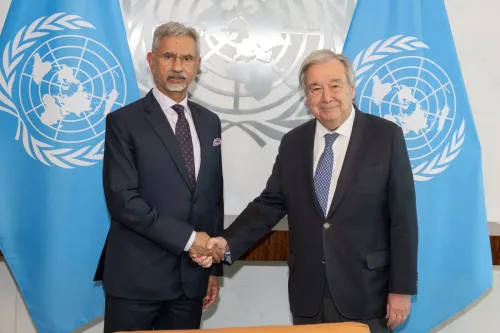
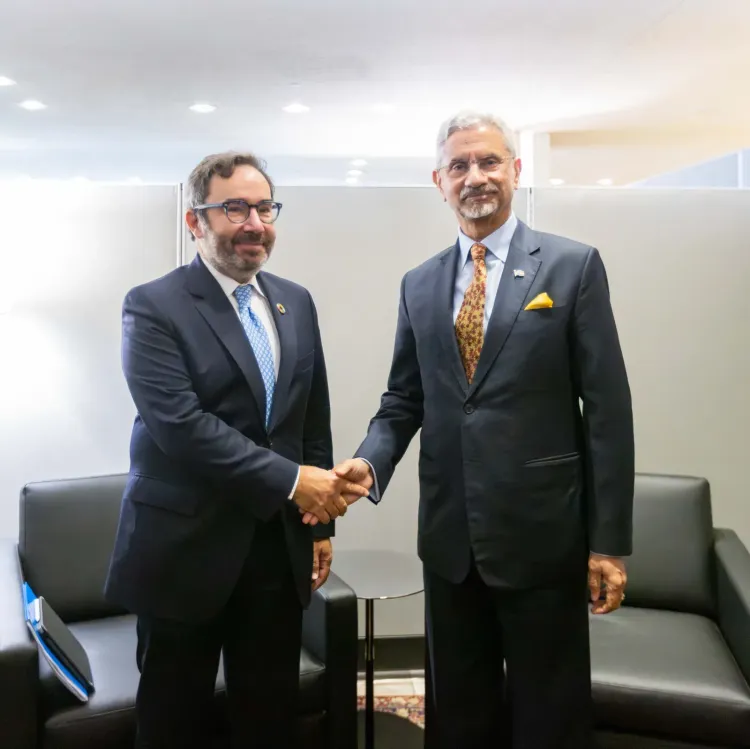
EAM Dr. S. Jaishankar met UNOPS Chief Jorge Moreira da Silva at UN Headquarters on September 24, 2026, praising the agency's logistical support in difficult operational environments — reflecting India's deep engagement with the UN's operational machinery.
Key Takeaways
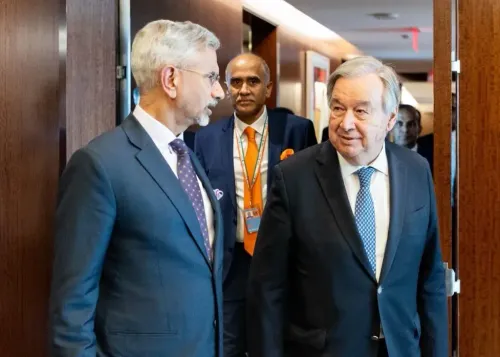
Jaishankar met UNOPS Chief Jorge Moreira da Silva at UN Headquarters, New York on September 24, 2026 .
He appreciated UNOPS's contribution in facilitating logistics in 'delicate and challenging situations.' UNOPS specialises in infrastructure, procurement, and project management in conflict and post-crisis environments.
India has been among the largest contributors to UN peacekeeping operations since the 1950s , giving it direct stake in operational UN support agencies.
The meeting is part of India's broader high-level engagement at the UN General Assembly season in New York.
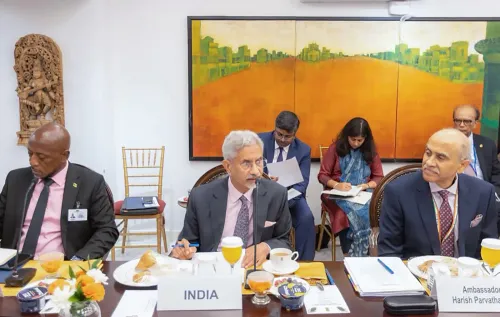
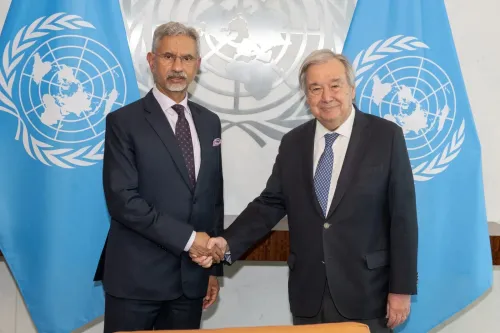
On the sidelines of high-level UN engagements in New York, Union External Affairs Minister Dr. S. Jaishankar met Jorge Moreira da Silva, Chief of the United Nations Office for Project Services (UNOPS), at UN Headquarters on Thursday, September 24, 2026 — underscoring India's sustained investment in the multilateral machinery that keeps humanitarian and peace operations running.
Why UNOPS matters in the world's hardest places
UNOPS is the UN's specialist arm for infrastructure, procurement, and project management in environments where conventional systems have broken down — active conflict zones, post-disaster landscapes, and fragile states. It does not grab headlines, but it moves supplies, builds clinics, and procures equipment in places where no one else will. Dr. Jaishankar explicitly acknowledged that contribution, noting UNOPS's role in 'facilitating logistics in delicate and challenging situations.'
That phrase carries weight. 'Delicate and challenging' is diplomatic shorthand for the kind of theatres — active war zones, sanctions-constrained economies, collapsed-state environments — where ordinary supply chains do not function. India, as one of the largest and most consistent contributors to UN peacekeeping operations since the 1950s, has direct operational experience of exactly these constraints. Its troops and civilian experts have depended on the kind of backstage coordination UNOPS provides.
India at the UN: operational respect, not just rhetoric
The meeting fits a recognisable pattern in Indian multilateral diplomacy: engaging not only with the Security Council's power centres but with the agencies that actually deliver on the ground. By taking time to meet the UNOPS Chief, Dr. Jaishankar signals that New Delhi values the operational layer of the UN system — the unglamorous logistics architecture that makes peacekeeping and humanitarian response physically possible.
India's presence at UN Headquarters during the annual high-level General Assembly season is itself significant. New Delhi has used these weeks to hold a dense schedule of bilateral and multilateral meetings, reinforcing its positioning as a consequential voice in global governance ahead of ongoing conversations on UN reform.
Point of View
Particularly in regions where Indian peacekeepers are deployed. By engaging Jorge Moreira da Silva directly, Dr. Jaishankar reinforces a pattern of Indian diplomacy that works the technical and logistical layers of multilateralism, not just the high-profile Council chambers. This approach also positions India as a responsible stakeholder in UN reform conversations — one that understands the plumbing, not just the politics. As India's global footprint in peace and development operations grows, so does its institutional interest in agencies like UNOPS.
NationPress
25 Sept 2026
Frequently Asked Questions
Who is Jorge Moreira da Silva and what does UNOPS do?
Jorge Moreira da Silva is the Chief of the United Nations Office for Project Services (UNOPS) , which specialises in infrastructure, procurement, and project management to support humanitarian and peacekeeping operations in fragile and conflict-affected environments.
Why did Jaishankar meet the UNOPS Chief at the UN?
Dr. S. Jaishankar met UNOPS Chief Jorge Moreira da Silva at UN Headquarters on September 24, 2026 , as part of India's high-level multilateral engagements during the UN General Assembly season, to appreciate UNOPS's logistical role in difficult operational situations.
What is India's relationship with UN peacekeeping and UNOPS?
India has been one of the largest contributors to UN peacekeeping operations since the 1950s , giving it a direct operational stake in agencies like UNOPS that provide logistics, infrastructure, and procurement support in conflict zones.
What did Jaishankar say about UNOPS at the UN meeting?
Dr. Jaishankar said he 'appreciated the contribution of UNOPS to facilitate logistics in delicate and challenging situations,' acknowledging the agency's critical support role in complex operational environments.
Where is UN Headquarters located and why is it significant for Indian diplomacy?
UN Headquarters is located in New York City, United States . It is the primary venue for annual high-level UN General Assembly sessions, where India conducts an intensive schedule of bilateral and multilateral meetings to advance its foreign policy positions.