Does Lankan Leader Silva's India Visit Hold Symbolic and Practical Importance?
Synopsis
The visit of Tilvin Silva to India serves as a pivotal moment in Sri Lanka's political landscape. With a focus on development over political pressure, Silva's insights could shape the future of governance in Sri Lanka. What implications does this have for the long-overdue Provincial Council elections?
Key Takeaways
Silva's visit to India indicates a shift towards focusing on development.
The discussions highlighted the importance of innovation in governance.
Silva's ambiguous stance on the Provincial Council elections raises crucial questions.
India’s perspective on Tamil rights emphasizes regional responsibility.
Power sharing remains a vital aspect of Sri Lanka's political future.
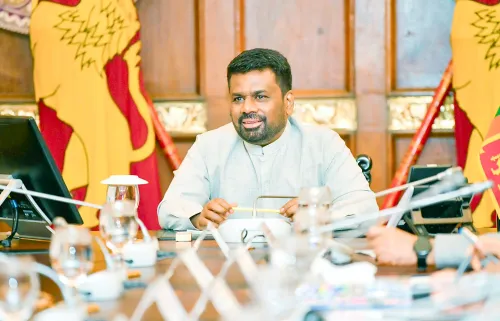
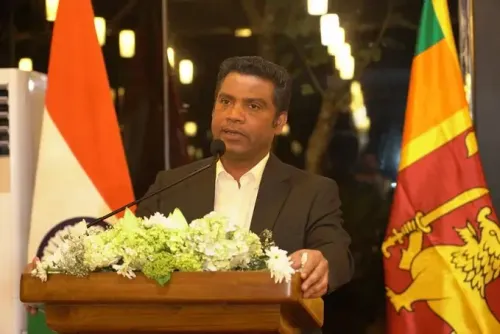
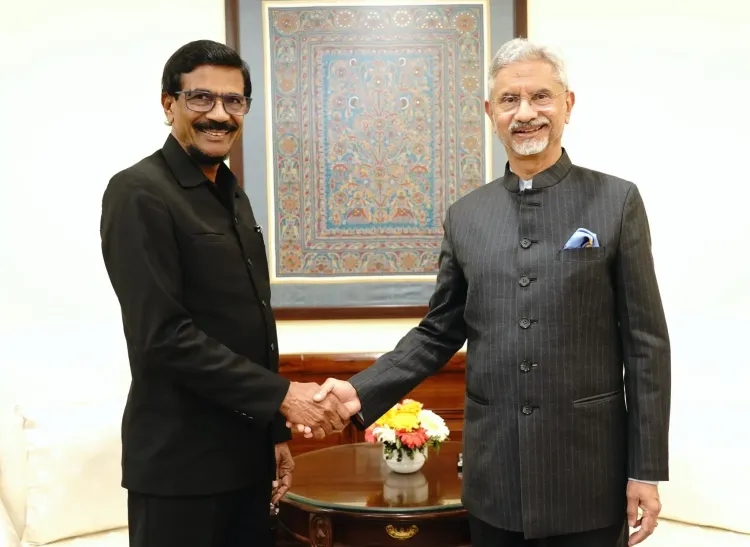
Colombo, Feb 21 (NationPress) The recent trip of Tilvin Silva, the General Secretary of the Anura Kumara Dissanayake-led Janatha Vimukthi Peramuna (JVP), to India showcased a unique mix of opportunity and challenge. Silva pointed out that India focused on development and innovation instead of applying political pressure on Sri Lanka to conduct the long-overdue Provincial Council elections, according to a report released on Saturday.
As indicated by a report from the Sri Lanka-based think tank 'Trinco Centre for Strategic Studies' (TCSS), a vital question within Sri Lanka’s changing political framework is whether Silva acquired valuable insights during his initial official visit to India.
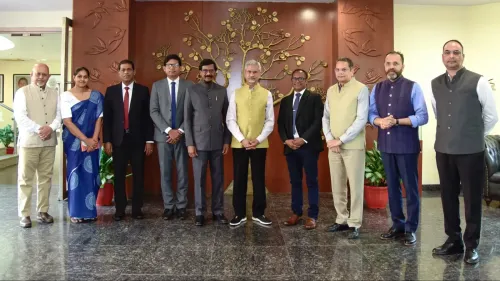
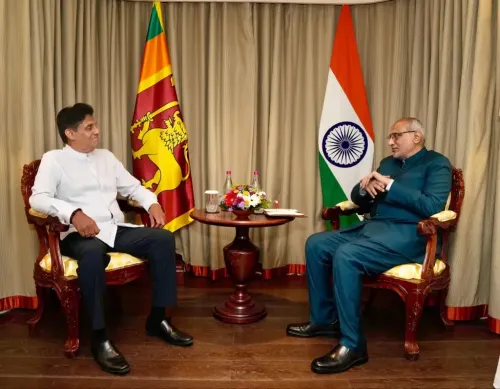
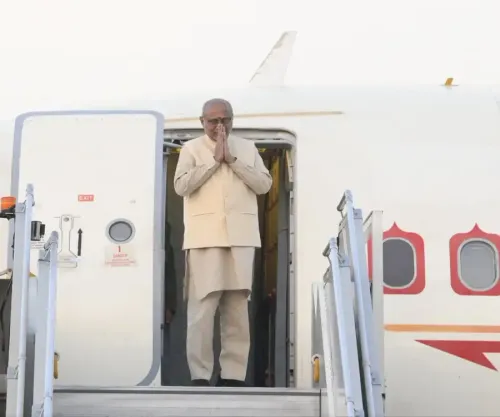
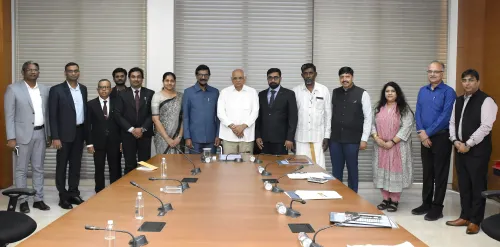
“Conducted through the Indian Council for Cultural Relations’ (ICCR) Distinguished Visitors Programme from 5–12 February 2026, this visit carried both symbolic and practical importance. Throughout his stay in India, Silva engaged in discussions with External Affairs Minister S. Jaishankar and toured Gujarat and Andhra Pradesh — states often cited as examples of India’s economic and technological advancements,” the report elaborated.
Silva's reflections on India and China sparked broader inquiries regarding which model Sri Lanka should consider for its future.
“In India, we observe that although there are efforts to integrate new technology, challenges arise in implementing these initiatives due to the cultural and religious practices that must be respected. In contrast, China operates differently,” the report quoted Silva as expressing.
It also highlighted that Silva's stance on Provincial Council elections in Sri Lanka remains unclear. When the topic of the Tamil issue was raised during his visit to India, he emphasized that he was representing the JVP and not the government.
“Simultaneously, he has consistently described the provincial council system as a failed model. This raises a significant question: should his statements be interpreted as the party's viewpoint, or do they signal the government's policy direction?” the report queried.
The TCSS report emphasized that the issue at hand is not about whether India is pressuring Sri Lanka, but rather if Sri Lanka will move forward with Provincial Council elections independently.
“Silva believes that for the JVP to be viewed as a ‘responsible government,’ it must conduct elections and promote equitable economic development across all provinces,” it stated.
The report further elaborated, “India's position is not a ‘proxy’ for Tamil demands, but rather a responsibility as a neighbor with over 85 million Tamil-speaking individuals in South India. Upholding Tamil rights in Sri Lanka, as India argues, ultimately benefits Sri Lanka itself, not India.”
It concluded by stating that India prioritizes inclusive development as opposed to ethnic or religious identity. For a multilingual democracy like Sri Lanka, power sharing is the optimal path forward, while a totalitarian approach like that of China represents an entirely different reality.
Point of View
It is essential to recognize the implications of Tilvin Silva's visit to India. This event underscores the need for strategic development in Sri Lanka, steering away from external pressures. We must remain vigilant about the evolving political dynamics and the potential impact on governance and democracy in the region.
NationPress
7 Oct 2026
Frequently Asked Questions
What was the significance of Tilvin Silva's visit to India?
Silva's visit highlighted a focus on development and innovation, rather than political pressure regarding Provincial Council elections.
What did Silva discuss during his trip?
He engaged with Indian leaders and toured states like Gujarat and Andhra Pradesh to understand their economic and technological advancements.
How does Silva view the provincial council system?
He has consistently described it as a failed model, raising questions about the future direction of Sri Lanka's governance.
What model does Silva suggest Sri Lanka should adopt?
He compares the approaches of India and China, advocating for a model that respects cultural practices while promoting technology.
What is India's stance on Tamil rights in Sri Lanka?
India believes that ensuring Tamil rights benefits Sri Lanka, as it is a responsibility of a neighbor with a significant Tamil-speaking population.