Has the Madras HC Ordered Chennai Metro to Prioritize Seating for Seniors and PwDs?
Synopsis
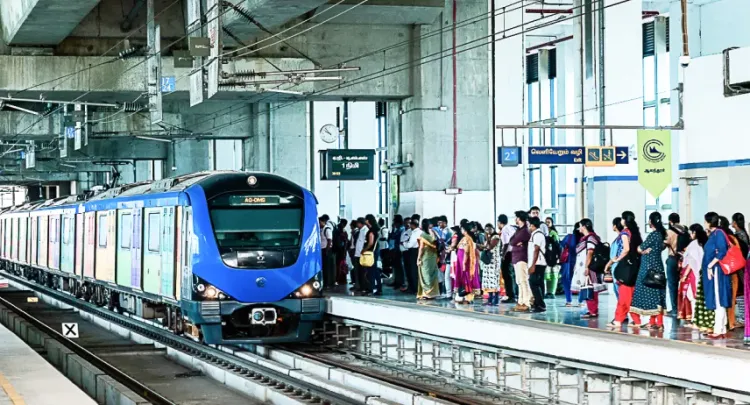
The Madras High Court's recent directive to Chennai Metro underscores the importance of ensuring that senior citizens and persons with disabilities have access to priority seating. This enforcement aims to enhance the travel experience for these vulnerable groups and uphold their dignity in public transport.
Key Takeaways
Madras High Court mandates surprise inspections to ensure compliance with priority seating rules.
Senior citizens and persons with disabilities must have access to their designated seats.
Current practices of marking seats with stickers are deemed inadequate.
Exclusive seating for vulnerable groups could enhance their travel experience.
Public awareness through announcements on priority seating is being implemented.
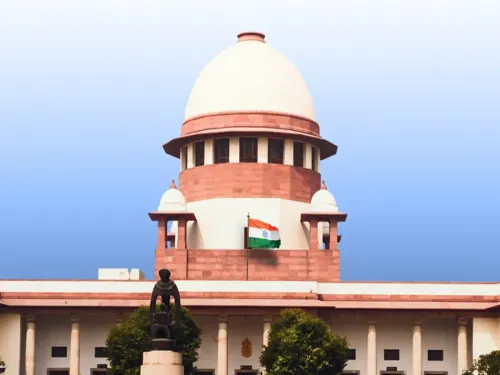
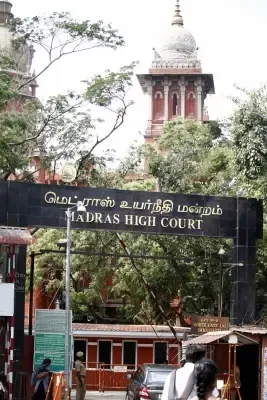
Chennai, Jan 19 (NationPress) The Madras High Court has instructed Chennai Metro Rail Limited (CMRL) to carry out surprise inspections on Metro trains in order to take proper measures ensuring that senior citizens and persons with disabilities (PwDs) are not deprived of their designated seats. This directive was given by a First Division Bench that included Chief Justice Manindra Mohan Shrivastava and Justice G. Arul Murugan while addressing a public interest litigation (PIL) initiated by advocate V.B.R. Menon.
The court mandated CMRL to act promptly when specific complaints are lodged by senior citizens or PwDs regarding the unavailability of priority seating.
In his petition, Menon highlighted that the current practice of marking certain seats with stickers denoting “priority seating” for senior citizens and PwDs falls short. He argued that these seats are frequently occupied by able-bodied individuals who often refuse to vacate them, even when elderly or disabled passengers board the train.
The petitioner suggested that the issue could be effectively addressed by reserving a fixed number of seats solely for senior citizens and PwDs in each Metro train, akin to the reservation of an entire coach for women.
“There is a significant difference between priority seating and seats designated exclusively for senior citizens and the physically challenged. The current implementation merely provides for priority seating, not exclusive reservations,” Menon emphasized to the court, advocating that exclusive seats would help eliminate misuse and uphold the dignity and comfort of vulnerable passengers.
In opposition to the plea, State Government Pleader A. Edwin Prabakar informed the court that able-bodied passengers are allowed to occupy these reserved seats only when no senior citizens or PwDs are present. Once such passengers board, the seats should be offered to them.
He noted that Metro commuters could file complaints via the intercom facility available in each coach, prompting necessary actions by CMRL staff.
Additionally, he mentioned that CMRL has begun making announcements to remind passengers about the availability of priority seating for senior citizens and PwDs.
After reviewing both arguments, the Bench remarked that it would be CMRL’s responsibility to contemplate the petitioner’s proposal for exclusive seat reservations. Until a decision is made, the court instructed CMRL to perform surprise inspections and ensure strict adherence to the existing priority seating regulations.
Point of View
I believe this ruling by the Madras High Court is a significant step towards ensuring that the rights of senior citizens and persons with disabilities are upheld in public transportation. The court's order not only highlights existing issues but also calls for a more robust framework for prioritizing vulnerable passengers. It reflects the nation's ongoing commitment to inclusivity and respect for all individuals.
NationPress
30 Sept 2026
Frequently Asked Questions
What did the Madras High Court order regarding seating for senior citizens and PwDs?
The Madras High Court ordered Chennai Metro Rail Limited to conduct surprise inspections and ensure that senior citizens and persons with disabilities are not denied their designated seats.
Why was the order issued?
The order was issued in response to a public interest litigation highlighting the ineffective marking of priority seating, which often leads to abuse by able-bodied passengers.
What changes are being proposed for priority seating?
The petitioner suggested that a number of seats should be exclusively reserved for senior citizens and PwDs, similar to the reservation of an entire coach for women.