Should the Maharashtra cabinet waive stamp duty on enemy property transactions?

Synopsis
The Maharashtra cabinet, under Chief Minister Devendra Fadnavis, has approved a waiver of stamp duty on enemy property transactions. This move aims to stimulate interest in purchasing these properties, which have seen low auction response. In addition, the cabinet extended government land lease terms and introduced the Trade Receivables Discounting System for MSMEs. Learn more about these impactful decisions.
Key Takeaways
Maharashtra cabinet waives stamp duty on enemy property to stimulate market interest.
There are 428 enemy properties in Maharashtra.
Government land lease period extended to 49 years .
Adoption of TReDS will support MSMEs financially.
These measures reflect the government's commitment to economic growth.
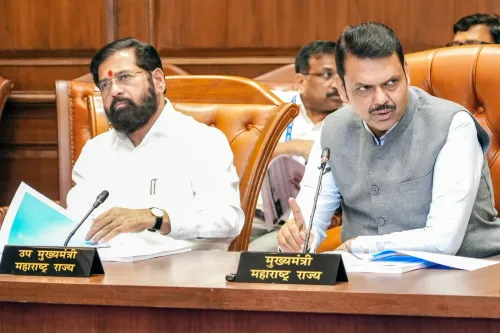
Mumbai, Jan 27 (NationPress) The Maharashtra cabinet, led by Chief Minister Devendra Fadnavis, has taken a significant step by approving the waiver of stamp duty on the purchase and sale of enemy property during the initial registration phase.
The Custodian of Enemy Property of India (CEPI), overseen by the Home Department of the Central Government, is responsible for the preservation, management, and sale of enemy property. The Custodian of Enemy Property Act, 1968 permits the sale of such properties.
Currently, there are 428 enemy properties located throughout the state, distributed as follows – Chhatrapati Sambhaji Nagar-2, Jalna-2, Mumbai-62, Mumbai Suburban-177, Nagpur-6, Palghar-77, Pune-4, Ratnagiri-11, Sindhudurg-1, Thane-86, as stated by the government.
“These properties belong to individuals who departed India during wartime and migrated to enemy nations. CEPI organizes auctions to sell these properties. However, the response to these auctions has been lukewarm. By waiving the stamp duty at the time of the first registration post-sale certificate issuance through CEPI, the acquisition costs for these properties will decrease, likely increasing interest in their purchase. Consequently, CEPI proposed to the Revenue Department to waive the stamp duty on the purchase and sale of such properties. The cabinet meeting today approved this waiver,” stated the government.
Additionally, the state cabinet has endorsed the extension of the lease period for government lands beyond the standard 30 years. According to the Maharashtra Land Revenue Code, 1966 and the Maharashtra Land Revenue (Disposal of Government Lands) Rules, 1971, government land is typically leased for 30 years for various purposes. The cabinet meeting on Tuesday sanctioned the lease period extension to 49 years.
“Government lands owned by various administrative departments or transferred to them by the Revenue Department for specific purposes, as well as those owned or transferred by local Corporations, Boards, and Authorities, were leased for 30 years for diverse commercial purposes to enhance corporate income. These lands can now be leased for an initial period of 49 years, and if no conditions are breached, the concerned department can renew the lease for another 49 years, charging an appropriate rent as necessary,” added the government statement.
Moreover, the possibility of renewing currently leased lands, increasing the ground rent of leased lands for a fixed duration, and ensuring that leaseholders regularly deposit the ground rent with the government, monitored by the relevant District Collector's Office, were also approved.
Furthermore, the cabinet has given the green light for adopting the Trade Platform - TReDS (Trade Receivables Discounting System) for settling outstanding payments owed to micro, small, and medium enterprises (MSMEs) and contractors in the Public Works Department. All state departments are required to adopt the TReDS Platform. Each department must create a Standard Operating Procedure (SOP) tailored to its specific operational needs. A committee will be established under the Chief Secretary's leadership, as directed by CM Fadnavis.
The Trade Receivable Electronic Discounting System is a collaborative initiative involving the Government of India and the Reserve Bank of India aimed at fostering financial inclusion, promoting 'Make in India' and 'Skill India', and providing timely, affordable financing to micro, small, and medium enterprises.
“This system will promote consistency and transparency in the payment procedures within the Public Works Department. It will grant access to essential working capital for MSME contractors registered with the department, enabling them to expand their operations, modernize technology, and enhance their competitiveness. This initiative will assist MSME contractors in overcoming working capital challenges and ensuring timely completion of contracts,” concluded the government statement.
Following the successful implementation of this system, the subsequent phase will involve linking the e-tendering and e-procurement portal with the TReDS platform, allowing for the submission, verification, and discounting of invoices at a centralized location.
Point of View
It is vital to recognize the significance of the Maharashtra cabinet's decisions. The waiver of stamp duty on enemy properties could revitalize a stagnant market while extending government land lease terms ensures better utilization of resources. Adopting the TReDS platform for MSMEs illustrates a proactive approach to boosting economic growth. These measures reflect the government's commitment to enhancing operational efficiency and supporting local businesses.
NationPress
8 Sept 2026
Frequently Asked Questions
What is the purpose of waiving stamp duty on enemy property?
The waiver aims to reduce acquisition costs and encourage interest in purchasing enemy properties, which have historically received low auction responses.
How many enemy properties are there in Maharashtra?
There are a total of 428 enemy properties located throughout the state.
What is the new lease period for government lands?
The Maharashtra cabinet approved extending the lease period for government lands from 30 years to 49 years.
What is the TReDS platform?
The Trade Receivables Discounting System (TReDS) is a platform designed to facilitate timely payments to micro, small, and medium enterprises and contractors.
How will the TReDS platform benefit MSMEs?
The TReDS platform will provide MSMEs with access to necessary working capital, helping them to expand operations and complete contracts on time.