Maharashtra Government Unveils Strategies to Tackle Human-Wildlife Conflict
Synopsis
Forest Minister Ganesh Naik announces the Maharashtra government's commitment to long-term strategies aimed at reducing human-wildlife conflict, including innovative farming approaches and rehabilitation plans. Key measures will ensure farmers' activities remain unhindered while promoting conservation efforts.
Key Takeaways
Long-term measures to address human-wildlife conflict are being implemented.
Farmers will not face additional restrictions on their activities.
Valuation of teak plantations stands at approximately Rs 12,000 crore .
Government ready to assist villages wishing to relocate.
A revised Eco-Sensitive Zone proposal is forthcoming.
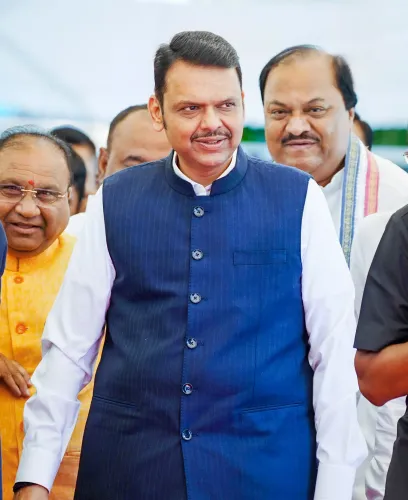
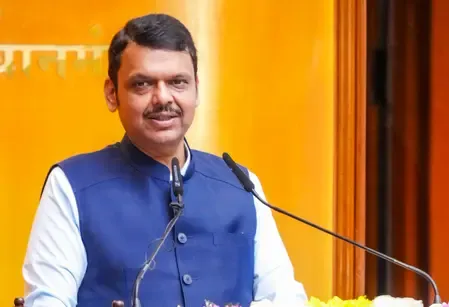
Mumbai, Feb 27 (NationPress) Forest Minister Ganesh Naik declared in the Legislative Council on Friday that the government is set to introduce long-term strategies aimed at addressing human-wildlife conflict, which will include initiatives such as alternative farming methods and rehabilitation efforts.
In response to inquiries from MLC Parinay Phuke regarding the Navegaon-Nagzira Tiger Reserve, the Minister clarified that there are currently no plans to expand the reserve's buffer zone.
On September 7, 2016, the government announced a notification that consolidated the Gondia Territorial, Gondia MTCM, and Bhandara MTCM (Wildlife) divisions under the management of a single senior officer.
This decision was made in light of directives from the National Tiger Conservation Authority (NTCA) issued on February 15, 2012, which called for a unified approach to tiger conservation projects.
Furthermore, he stated that this change was endorsed during the 23rd meeting of the State Wildlife Board on August 12, 2024.
Minister Naik reassured that farmers will not face additional restrictions due to the tiger project, emphasizing that farming activities, well drilling, and the use of existing roads will remain unaffected. Restrictions will apply only to new constructions within the legal guidelines, with no new villages added to the buffer zone, ensuring that local employment remains stable.
He also mentioned that a revised proposal concerning the Eco-Sensitive Zone (ESZ) of the Navegaon-Nagzira Tiger Reserve will soon be submitted to the Central Government, with nodal officers appointed for this task.
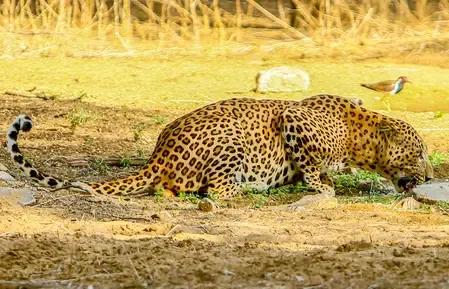
To mitigate human-wildlife conflicts, Minister Naik highlighted plans to construct a 500-foot-wide bamboo barrier in the Tadoba area.
Additionally, there is an initiative in place to release captured monkeys back into project areas while ensuring a stable food supply for them.
If any villages express a desire to relocate voluntarily, the government stands ready to provide necessary land and financial support.
Minister Naik also revealed that the teak plantations managed by the Forest Development Corporation (FDCM) are currently valued at around Rs 12,000 crore. A proposal is being formulated to secure a loan of approximately Rs 6,000 crore based on this asset.
This funding will be allocated for various purposes, including forest department roads, tourism enhancement, office establishment, rest houses, and employee compensation and facilities, with a detailed proposal expected to be presented to the Cabinet soon.
During the Question Hour, MLCs Pravin Darekar and Satej alias Bunty Patil raised additional questions.
In parallel, Horticulture Minister Bharat Gogawale assured the Legislative Council that necessary budget provisions will be made to accelerate the completion of the Balasaheb Thackeray Turmeric (Haridra) Research Centre in Hingoli district.
To a query from MLC Hemant Patil, Minister Gogawale stated that as this project directly impacts farming families and honors the esteemed Balasaheb Thackeray, the government is committed to upholding high standards and providing necessary facilities.
Minister Gogawale noted that Rs 100 crore had previously been sanctioned for this initiative, with Rs 87 crore already utilized. Approval for the remaining funds has been granted, and provisions will be made in the upcoming budget.
The project is set to be finalized through phased funding as necessary.
Point of View
The Maharashtra government is taking proactive steps to balance agricultural practices with ecological preservation. The approach outlined by Minister Naik reflects a commitment to both human livelihoods and the safeguarding of wildlife, aiming for a harmonious coexistence.
NationPress
17 Sept 2026
Frequently Asked Questions
What measures is the Maharashtra government implementing to address human-wildlife conflict?
The Maharashtra government is introducing long-term strategies including alternative farming methods and rehabilitation efforts to effectively address human-wildlife conflicts.
Will farmers face additional restrictions due to the tiger project?
No, farmers will not face additional restrictions. They can continue their farming activities, dig wells, and use existing roads without limits.
What is the value of the teak plantations managed by the Forest Development Corporation?
The teak plantations are currently valued at approximately Rs 12,000 crore.
How will the government support villages that wish to relocate?
The government is prepared to offer necessary land and financial assistance to villages that voluntarily decide to relocate.
When is the revised proposal for the Eco-Sensitive Zone expected to be submitted?
A revised proposal regarding the Eco-Sensitive Zone of the Navegaon-Nagzira Tiger Reserve will soon be sent to the Central Government.