Major Swathi's Journey in South Sudan: Insights from the UN Secretary-General’s Award 2025
Synopsis
Discover the inspiring story of Major Swathi Shantha Kumar, an Indian Army officer who has made impactful strides in peacekeeping efforts in South Sudan. Awarded the UN Secretary-General’s Award 2025, she reflects on her team's challenges and achievements in promoting gender-inclusive peace.
Key Takeaways
Major Swathi Kumar received the UN Secretary-General’s Award 2025 for her project.
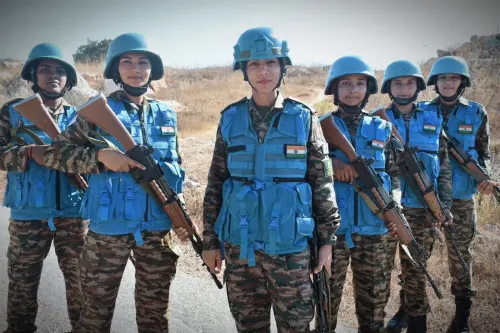
Her project reflects the efforts of 20 Indian women soldiers .
She emphasized the importance of community engagement in peacekeeping.
Challenges included difficult terrain and communication gaps.
Empowering women benefits entire families and communities.
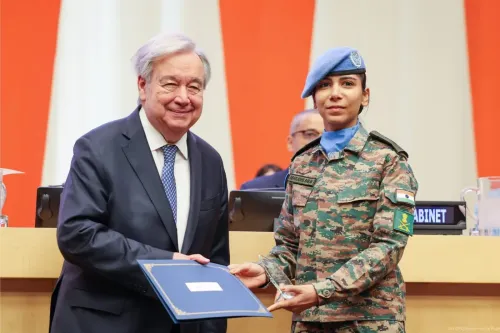
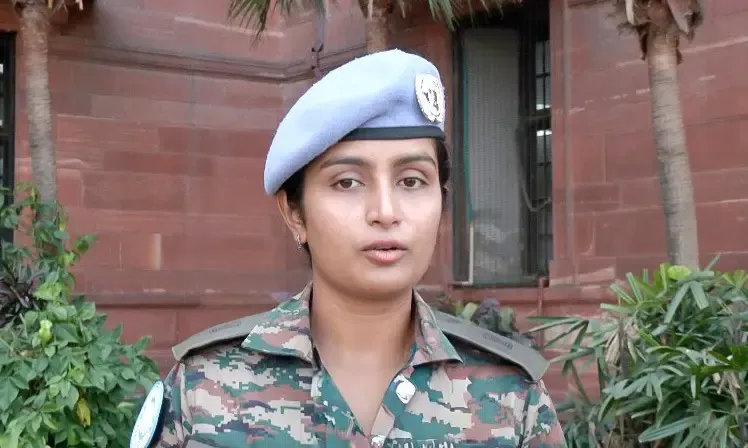
New Delhi, March 7 (NationPress) Major Swathi Shantha Kumar, an officer from Bengaluru working with the United Nations Mission in South Sudan (UNMISS), has been awarded the prestigious UN Secretary-General’s Award 2025 in the gender category for her initiative titled ‘Equal Partners, Lasting Peace’. In an exclusive interview with IANS, Major Kumar recounted her experiences in the mission, her essential duties on the ground, and the obstacles she encountered while operating in this conflict-ridden area.
Major Swathi Kumar emphasized that the accolade is a testament to the collaborative efforts of her entire team of Indian women peacekeepers deployed in South Sudan.
“I am honored to have received the UN Secretary-General’s Award for 2025 in the gender category for our gender-inclusive peacekeeping efforts. This award is a reflection of the commitment demonstrated by my team, comprising 20 women soldiers from India. It marked our inaugural participation in the UN mission in South Sudan, and this recognition showcases our collective work and the invaluable support we received from our battalion, the Army Headquarters in Delhi, and the Indian Army,” she stated.
Major Kumar further elaborated that despite being stationed on the ground in South Sudan, they consistently benefitted from guidance and support from India.
“While we were the soldiers on-site, we were always backed by our battalion and Army Headquarters in Delhi. This support was crucial for us to effectively fulfill our responsibilities,” she remarked.
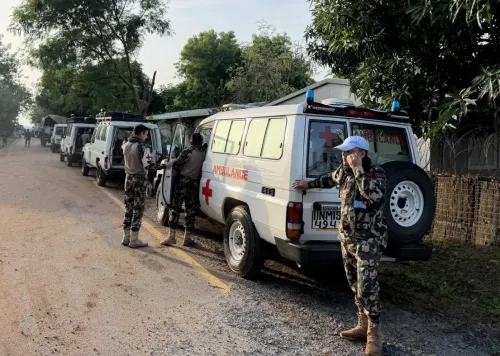
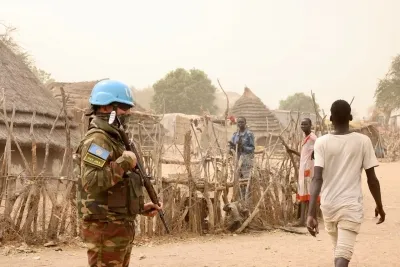
Discussing her mission role, Major Kumar outlined that her principal duties encompassed operational planning and executing various patrols to safeguard civilians and uphold peace in the region.
“My core responsibilities involved operational activities, particularly in planning patrols. As part of our battalion engaged in the UN mission, we conducted diverse patrol types, including short-distance, long-distance, river, and air patrols,” Major Kumar explained.
She acknowledged that the challenging terrain and weather conditions in South Sudan often complicated movement.
“During the wet season, numerous roads become impassable due to flooding and heavy rain. This forced us to adopt alternative strategies to reach remote areas and distant payams. Engaging in river and air patrols enabled us to connect with communities in those regions,” she noted.
Reflecting on the challenges encountered during the mission, Major Kumar remarked that while Indian Army personnel are trained to manage difficult situations, operating in a completely unfamiliar environment demanded adaptability.
“As military members in the Indian Army, we are equipped to tackle challenges. However, the setting was entirely new, as we were in a foreign country and engaging with different communities. We had a clear mandate, with the protection of civilians as our top priority,” she stated.
Major Kumar also discussed the motivation behind her award-winning project, ‘Equal Partners, Lasting Peace’. She indicated that the project symbolizes the initiatives and engagement undertaken by her team during the mission.
“This project embodies our actions while on mission. Upon arrival, we recognized the need for greater involvement of women soldiers and peacekeepers in operational activities and community engagement,” she explained.
Moreover, Major Kumar's team identified a communication gap between the local community and the UN mission, prompting them to take more proactive measures.
“When we reached the mission area, we discovered a gap between the community and the UN mission. We commenced engaging with the locals through operational patrols and community interactions, which were instrumental in establishing trust and enhancing communication between the mission and the local populace,” she remarked.
Emphasizing the values that guide Indian Army personnel, Major Kumar stated that the principle of “service before self” remains a cornerstone of their work during the mission.
“The ethos of the Indian Army is ‘service before self’. Throughout our training and deployment, both in India and abroad, we adhere to this principle. By participating in peacekeeping missions and interacting with local communities, we recognize that we are also representatives of our nation,” she said.
She concluded with a message for women in peacekeeping roles.
“For every woman in such missions, believing in the mission is crucial, as the mandate clearly outlines what needs to be accomplished. Every community and mission presents unique challenges, so finding innovative solutions and trusting one’s process is essential,” she expressed.
Major Kumar further highlighted the significance of empowering women in society.
“Empowering women transcends individual empowerment; it encompasses the entire family. When women receive education, achieve economic stability, and access opportunities, it benefits the entire community,” she added.
Point of View
Major Swathi Shantha Kumar's story exemplifies the dedication of Indian women in peacekeeping roles. Her experiences highlight the importance of gender-inclusive initiatives and the need for effective communication with local communities. This narrative not only celebrates her achievements but also emphasizes the collective effort of her team, reinforcing a commitment to peace and safety in conflict zones.
NationPress
7 Oct 2026
Frequently Asked Questions
What is the significance of the UN Secretary-General’s Award?
The UN Secretary-General’s Award recognizes outstanding contributions to peacekeeping efforts, particularly in promoting gender equality and inclusive practices.
What challenges did Major Swathi face in South Sudan?
Major Swathi encountered difficulties related to the challenging terrain and weather conditions, which often complicated their operations and movement.
What is the 'Equal Partners, Lasting Peace' project?
'Equal Partners, Lasting Peace' is an initiative aimed at enhancing the involvement of women peacekeepers in operational activities and community engagement.
How does Major Swathi view the role of women in peacekeeping?
Major Swathi believes empowering women in peacekeeping is essential, as it not only benefits individuals but also strengthens entire communities.
What core principle guides Indian Army personnel during missions?
The principle of 'service before self' is central to the ethos of Indian Army personnel during their deployment in peacekeeping missions.