Mamata Banerjee Avoids Nandigram, Sticks to Bhabanipur for Political Battle
Synopsis
In a strategic move, Mamata Banerjee bypasses Nandigram to contest in Bhabanipur, navigating the political landscape against her former aide Suvendu Adhikari. This decision shapes her bid for a third term as West Bengal Chief Minister amid growing electoral tensions.
Key Takeaways
Mamata Banerjee is contesting from Bhabanipur instead of Nandigram .
She aims for a third term as West Bengal Chief Minister .
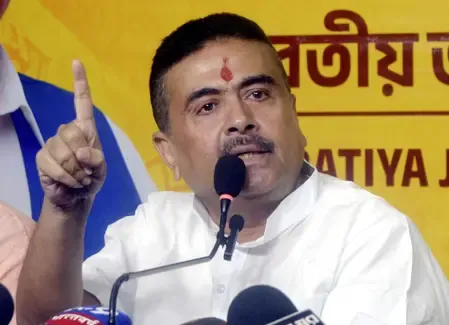
Suvendu Adhikari is a significant political rival.
The Adhikari family has a longstanding political legacy in West Bengal .
Strategic decisions are crucial in the current political climate.
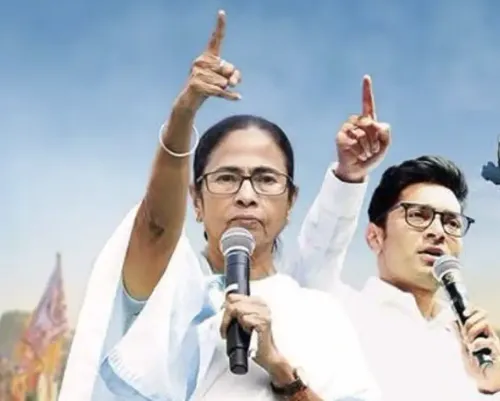
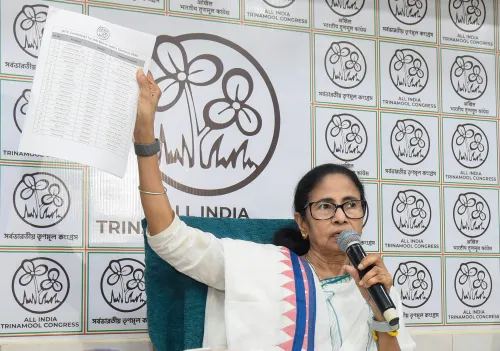
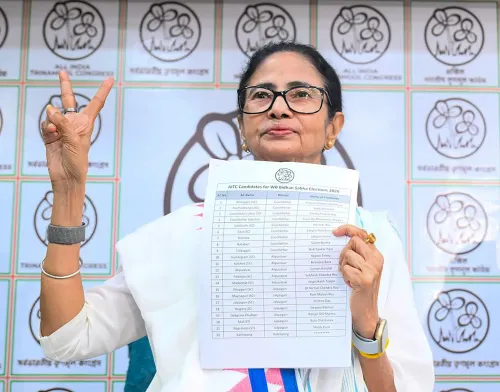
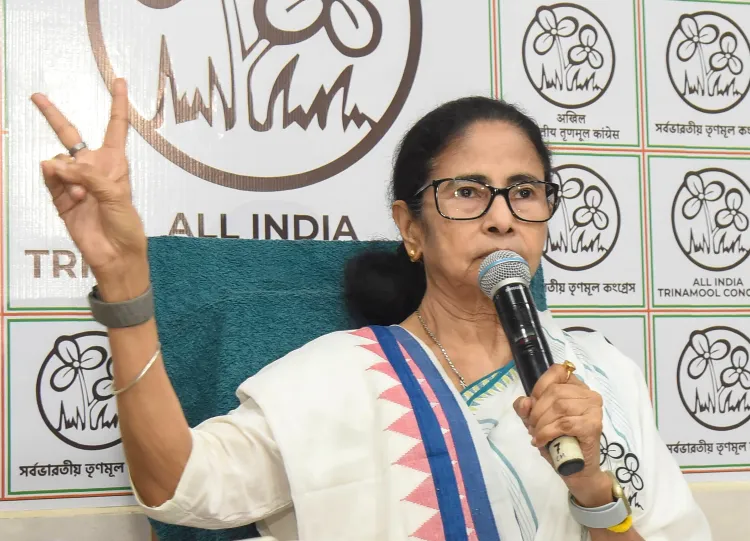
New Delhi, March 17 (NationPress) Trinamool Congress leader Mamata Banerjee has opted to avoid a confrontation in Nandigram with the Bharatiya Janata Party (BJP), choosing instead the more familiar ground of Bhabanipur as she seeks to secure her position as West Bengal's Chief Minister for a third consecutive term.
In the previous election, her former ally, Suvendu Adhikari, narrowly defeated her by less than 2,000 votes in what was considered a pivotal contest. Although Adhikari's vote share significantly decreased from his earlier performance as a Trinamool candidate in 2016, his victory was paramount. He garnered over 1.3 lakh votes, accounting for 67 percent of the votes in 2016, with a turnout exceeding 2 lakh, which represented approximately 87 percent of the total electorate in Nandigram.
The runner-up from the Communist Party of India (CPI) received around 53,000 votes, translating to nearly 27 percent of the share. As a BJP nominee, Adhikari secured about 1.1 lakh votes from approximately 2.3 lakh ballots cast in 2021, marking a 48 percent vote share that allowed him to triumph over his former mentor in a tightly contested battle.
Remarkably, in 2011, when the Trinamool toppled the long-standing communist rule in West Bengal, Mamata was serving as the Railways Minister in Manmohan Singh's cabinet. She stepped down to take on the role of Chief Minister, winning a bye-election in the Bhabanipur constituency, her home turf.
Despite a general election turnout of about 1.4 lakh votes in 2011, the voter participation dropped to 95,064, or roughly 45 percent of the total, in the bye-election. Nonetheless, she increased her winning margin to over 4,000 votes, achieving a substantial vote share exceeding 77 percent.
In the 2016 Assembly elections, her vote share decreased to around 48 percent, where she collected just over 65,000 votes against Congress candidate Deepa Dasmunshi and the BJP's Chandra Kumar Bose.
In her last bye-election, Mamata successfully expanded her victory margin by approximately 30,000 votes and increased her vote share by more than 14 percent compared to the general state elections.
As the political landscape unfolds for the 2026 elections, it will be intriguing to observe how she performs against Adhikari, who is challenging her in her stronghold of Bhabanipur while also contending for the safer Nandigram seat.
In the 2021 elections, Mamata had taken a bold step into Adhikari's stronghold without an alternative plan. The Adhikari family has long held a significant position in West Bengal politics, with several members having served in key roles. Suvendu's father, Sisir Kumar Adhikari, once with the Congress, later joined the Trinamool and has been an MP. His brothers, Dibyendu and Soumendu Adhikari, are also engaged in politics.
The 56-year-old Suvendu is recognized for his organizational capabilities and influence in East Midnapore. He played a crucial role in galvanizing support for Mamata's campaign against the former Left Front Chief Minister Buddhadeb Bhattacharjee regarding plans for a chemical hub in Nandigram, which were ultimately abandoned.
Suvendu began his political journey with the Congress from 1995 to 1998 before shifting his allegiance to Mamata as she left the Congress, rising through the ranks of the Trinamool to become a minister and later an MP.
In 2020, he departed from the Trinamool following a fallout with its leadership, and after his historic win in Nandigram in 2021, he was appointed as the Leader of the Opposition in the West Bengal Assembly. His critical remarks towards Mamata have consistently positioned him as a prominent figure in the anti-Trinamool narrative.
Point of View
Banerjee is prioritizing her political survival and stability over potential risks, which reflects a calculated approach in a highly charged political environment.
NationPress
22 Sept 2026
Frequently Asked Questions
Why did Mamata Banerjee choose Bhabanipur over Nandigram?
Mamata Banerjee opted for Bhabanipur as it is a safer constituency for her, allowing her to secure her position as Chief Minister amidst challenging political dynamics.
What was the outcome of the previous election in Nandigram?
In the last election, Suvendu Adhikari narrowly defeated Mamata Banerjee in Nandigram by less than 2,000 votes.
Who is Suvendu Adhikari?
Suvendu Adhikari is a former aide of Mamata Banerjee and a prominent political figure in West Bengal, known for his organizational skills and influence in East Midnapore.
What are the implications of Mamata's decision on the upcoming elections?
Mamata's decision to focus on Bhabanipur could enhance her chances of winning a third term as Chief Minister, while also reflecting her strategy to avoid high-risk confrontations.
What role does the Adhikari family play in West Bengal politics?
The Adhikari family has a significant influence in West Bengal politics, with several members holding key political positions across various parties.