Manjhi targets 50% women share in MSME workforce
Synopsis
Union MSME Minister Jitan Ram Manjhi has set a 50 per cent women-workforce goal for the sector, up from 37-38 per cent, without naming a deadline. Speaking after the FICCI-CMSME summit in New Delhi, he said MSME units had doubled to 100 million in two years and now employ around 420 million people.
Key Takeaways
Union Minister Jitan Ram Manjhi on 25 November 2026 set a goal to raise women’s MSME workforce share from 37-38 per cent to 50 per cent .
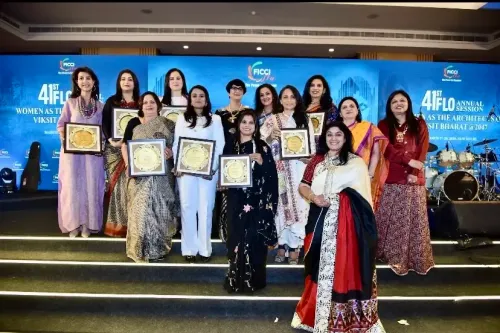
He spoke after the 12th FICCI-CMSME Annual Summit 2026 in New Delhi .
Manjhi said MSME units had grown from about 50 million to 100 million in two years and now employ around 420 million people.
He cited MSMEs as contributing 31 per cent of GDP, 36 per cent of manufacturing output and nearly 50 per cent of exports.
There is no fixed target date ; he said the 50 per cent mark would be achieved “very soon”.
He tied MSME growth to Prime Minister Narendra Modi ’s Viksit Bharat vision for 2047 .
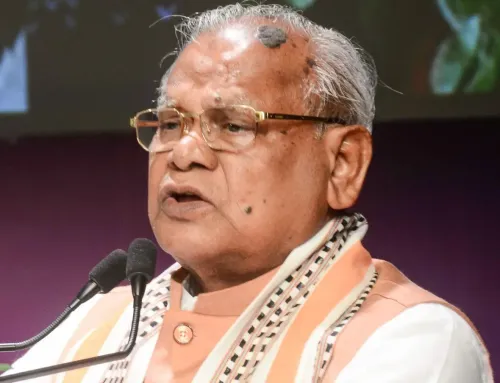
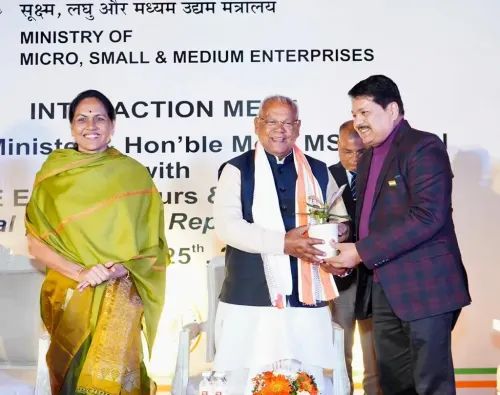
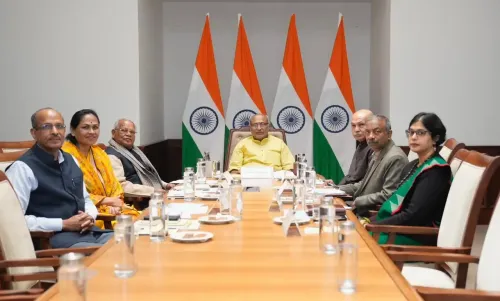
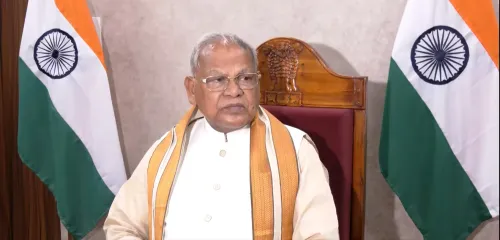
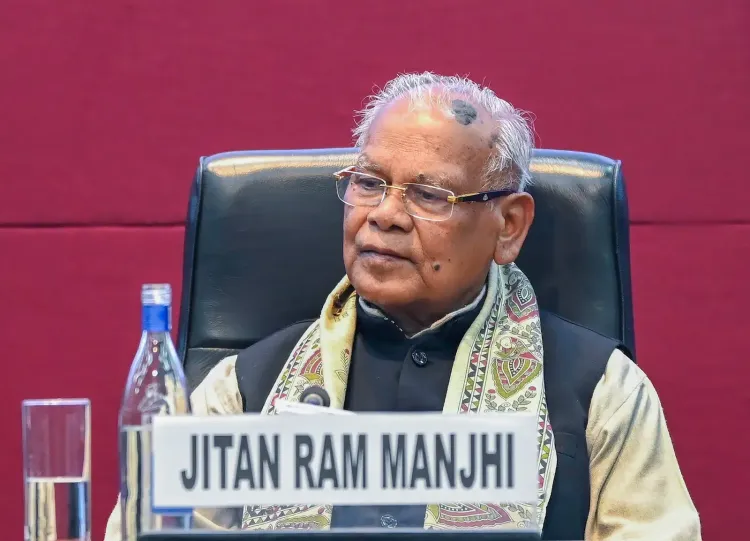
Union Minister of Micro, Small and Medium Enterprises Jitan Ram Manjhi on Wednesday, 25 November 2026 said the government is working to give women equal participation in the MSME sector, with a goal to raise the female workforce from the current 37-38 per cent to 50 per cent. He spoke to reporters in New Delhi after addressing the 12th FICCI-CMSME Annual Summit 2026.
Manjhi said the Federation of Indian Chambers of Commerce and Industry (FICCI) and MSME leaders had resolved to close that gap in a sector that, by his account, now employs around 420 million people and accounts for 31 per cent of GDP. He set no calendar for parity, saying the 50 per cent mark would be reached “very soon”.
What Manjhi said at the FICCI summit
The minister placed the target in a longer social arc. “Earlier, there was a time when women’s participation in almost every field was negligible. Today, however, women are advancing in every sector, whether it is entrepreneurship, science, space, or politics. In such a scenario, FICCI and the MSME sector have set a goal to increase women’s participation from the current 37-38 per cent to 50 per cent,” he said.
He underlined that inclusive development cannot be achieved unless women move forward and contribute actively. He also argued that Indian cultural memory already places women at the centre of leadership, citing figures from Hindu mythology.
“Whether it is Goddess Saraswati, Lakshmi, Kali, or Durga, they have always symbolised leadership and progress for society and the nation, and they continue to do so today,” Manjhi said. He noted that Goddess Sita is placed first in ‘Siya-Ram’ and Lord Krishna’s divine consort Radha in ‘Radha-Krishna’. “This symbolises that we must promote and empower women. Without their progress, our development will remain incomplete.”
“Therefore, leaders of the MSME sector and FICCI have resolved to increase women’s participation to 50 per cent,” he added.
How the Centre says it will get there
Asked how the government plans to hit the target, Manjhi pointed to expansion already under way rather than a new dated scheme. “The numbers are already moving upward. When we started, there were only about 50 million MSME units, and today that number has grown to 100 million within just two years. Similarly, the sector now employs around 420 million people,” he said.
“There is no fixed target date, but we are confident that we will achieve the 50 per cent participation mark very soon,” he added. The destination is therefore public; the instruments — credit earmarks, skilling, procurement, and ownership support — were not spelled out at the briefing.
Notably, the pledge was framed as a joint resolve of FICCI and MSME leaders alongside government effort, not as a notified statutory quota. That distinction matters: a summit aspiration is politically visible, but it is not the same as a budgeted policy with state-wise timelines and a measurement protocol.
MSME weight in the Indian economy
Manjhi asserted that MSMEs remain a pillar of India’s economy, accounting for 31 per cent of GDP, 36 per cent of manufacturing output, and nearly 50 per cent of exports — a record he called a “major achievement”. He also described MSMEs as the country’s largest sector of enterprise after agriculture.
Those three ratios explain why a gender shift inside MSMEs is not a niche labour-market story. If women currently account for a little under two-fifths of the MSME workforce, moving to half would, on the minister’s own employment figure, rebalance who produces, who exports, and who is counted in the small-business base.
This comes amid Prime Minister Narendra Modi’s Viksit Bharat timeline. “Under the leadership of Prime Minister Narendra Modi, there is a strong commitment to further strengthen the sector. The vision of a ‘Viksit Bharat’ (Developed India) by 2047 cannot be achieved without the growth of MSMEs. Therefore, we will accomplish this objective as quickly as possible,” Manjhi stated.
Why the 50 per cent target matters
India’s MSME story is usually told through unit counts, credit schemes and export shares. Manjhi recast it as a participation question. A jump from 37-38 per cent to 50 per cent would, if realised, be one of the sharper gender corrections attempted in any large Indian production sector.
The same speech, however, stacked scale claims that invite scrutiny: a doubling of MSME units from about 50 million to 100 million in two years, and employment of around 420 million. Industry and independent statisticians will weigh those headlines against registration and labour-force series. The women-share target will be judged the same way — by whether the next round of official data shows movement, not by summit rhetoric.
What happens next is the unstated part of Wednesday’s message. Ministries, state MSME departments, and industry bodies such as FICCI will be watched for cluster-level skilling, easier credit for women-owned units, and procurement preferences that actually pull women into ownership and wage work. Manjhi said the numbers are already climbing; the test is whether the female share climbs with them toward 50 per cent well before the 2047 developed-India deadline.
Point of View
No state-wise pathway, no public measurement protocol. That gap matters because the same speech stacked extraordinary scale claims: units doubling to 100 million in two years, 420 million workers, nearly half of exports. If those magnitudes are even broadly right, gender parity inside MSMEs would be one of the largest labour-market shifts in the republic; if they are registration artefacts, the pledge risks becoming another summit slogan. Viksit Bharat 2047 cannot substitute a quarterly dashboard showing whether women are actually being hired, financed and registered as owners.
NationPress
25 Nov 2026
Frequently Asked Questions
What did Jitan Ram Manjhi announce on women in the MSME sector?
Union MSME Minister Jitan Ram Manjhi said the government is working to give women equal participation in MSMEs, with a goal to raise the female workforce from 37-38 per cent to 50 per cent. He made the remarks in New Delhi on 25 November 2026 after the 12th FICCI-CMSME Annual Summit 2026.
What is the current share of women in the MSME workforce?
Manjhi put women’s current participation in the MSME sector at 37-38 per cent. The target announced with FICCI and MSME leaders is to take that share to 50 per cent.
Is there a deadline for the 50 per cent women MSME target?
There is no fixed target date. Manjhi said the numbers are already moving upward and that the government is confident of hitting the 50 per cent participation mark very soon.
How large is the MSME sector according to Manjhi?
Manjhi said MSME units had grown from about 50 million to 100 million in two years and now employ around 420 million people. He also said MSMEs account for 31 per cent of GDP, 36 per cent of manufacturing output and nearly 50 per cent of exports, and are the largest enterprise sector after agriculture.
Why did Manjhi link MSMEs to Viksit Bharat 2047?
Manjhi said the vision of a Viksit Bharat (Developed India) by 2047 cannot be achieved without MSME growth. He added that under Prime Minister Narendra Modi’s leadership there is a strong commitment to strengthen the sector as quickly as possible.