Keshav Maurya's 'Mathura Ki Baari' remark sparks BJP-Opposition clash ahead of 2027 UP polls
Synopsis
UP Deputy CM Keshav Prasad Maurya's 'Ab Mathura Ki Baari' declaration — signalling Mathura as the BJP's next religious-political focus after Ayodhya — has opened a fresh front with the Opposition. With 2027 UP Assembly elections looming, this exchange reveals how religion versus governance is shaping up as the central fault line.
Key Takeaways
UP Deputy CM Keshav Prasad Maurya declared 'Ayodhya Hui Hamari, Ab Mathura Ki Baari' , signalling Mathura as the BJP's next political-religious focus.
Maurya said a grand temple at Krishna Janmabhoomi would be built through judicial process or mutual dialogue, calling on SP chief Akhilesh Yadav to join the proposed 'Kar Seva' .
BJP MP Praveen Khandelwal backed the narrative, calling Mathura-Vrindavan development a 'tremendous gift' to Sanatan followers.
Congress leader Udit Raj pointed to 25,000 school closures in UP, arguing elections should focus on development, not faith.
SP MP Rajiv Rai cited the BJP's losses in Ayodhya, Kashi, Prayagraj, and Mathura in recent elections as evidence the religious card had backfired.
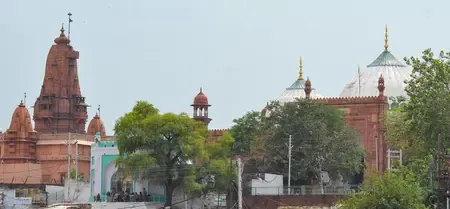
The Shahi Idgah Mosque-Shree Krishna Janmabhoomi dispute is currently under judicial examination, with the 2027 UP Assembly polls expected to heighten its political salience.
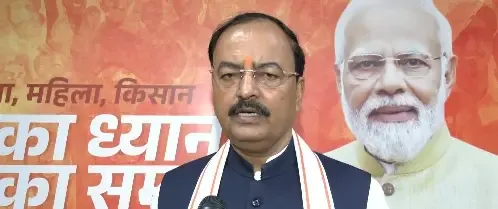
Uttar Pradesh Deputy Chief Minister Keshav Prasad Maurya's remark — 'Ayodhya Hui Hamari, Ab Mathura Ki Baari' — has set off a sharp political exchange in New Delhi on 17 November 2026, with the Bharatiya Janata Party (BJP) embracing the religious development narrative and Opposition parties accusing the ruling party of deliberately pivoting discourse away from governance ahead of the Uttar Pradesh Assembly elections in 2027. The statement, which signals that Mathura's Shahi Idgah Mosque-Shree Krishna Janmabhoomi dispute could be the next political flashpoint, has drawn reactions from across the political spectrum.
What Maurya Said
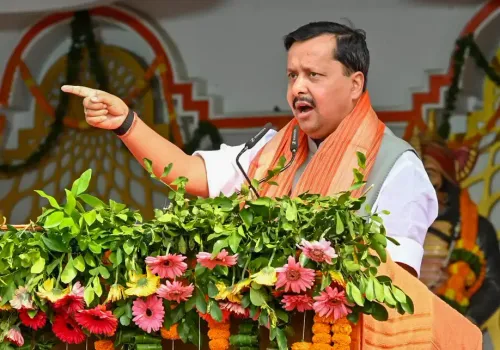
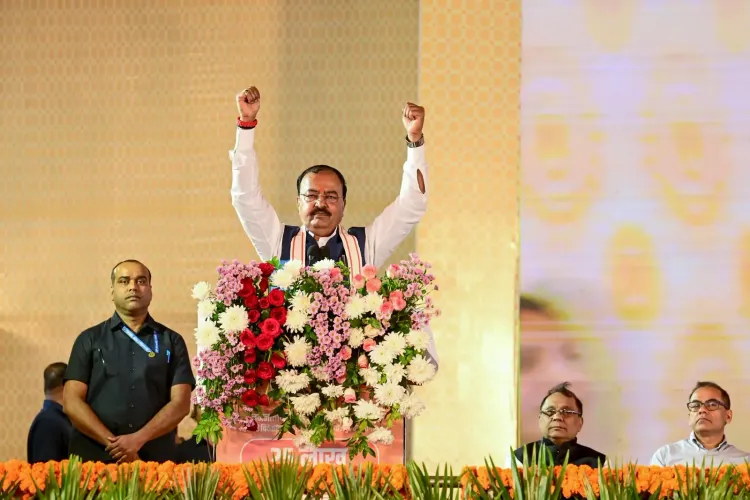
Maurya publicly declared that after the construction of the Ram Temple in Ayodhya, Mathura would be the next focus. He stated that a grand temple would be built at Krishna Janmabhoomi — either through the judicial and legal process or through mutual dialogue — and urged Samajwadi Party (SP) chief Akhilesh Yadav to contribute to the proposed 'Kar Seva'. The remarks have been widely read as an early electoral signal ahead of the 2027 UP Assembly polls.
BJP Leaders Back the Sentiment
BJP Member of Parliament Praveen Khandelwal framed the proposed development of Mathura and Vrindavan in cultural terms, calling it a 'great opportunity for followers and lovers of Sanatan across the entire country.' He said, Uttar Pradesh Chief Minister Yogi Adityanath had already begun beautification and development work in Mathura. 'Therefore, after Ayodhya, then Kashi, and after Kashi, if Mathura undergoes rejuvenation, it will be a tremendous gift from the government to the people of Sanatan,' Khandelwal said. He added that the development would make it easier for devotees to worship Lord Krishna.
Opposition Calls It Electoral Distraction
Congress leader Udit Raj questioned the prioritisation of religious issues over development. 'Twenty-five thousand schools have been shut in Uttar Pradesh. Where will the children of the backward communities go?' he asked, arguing that elections should centre on 'pollution, agriculture, technology, education and health' rather than faith. SP Member of Parliament Awadhesh Prasad dismissed Maurya's political standing, claiming he had failed to establish himself despite holding the Deputy Chief Minister's post.
SP's Sharp Counterattack
SP MP Rajiv Rai launched a pointed attack, alleging that the BJP was exploiting religious sentiment for political and financial gain. Referring to the BJP's electoral losses in Ayodhya, Kashi, Prayagraj, and Mathura in recent contests, Rai said, 'He is a political man; politically, in the parliamentary elections, Lord Ram kicked him out.' He added that the party should not use the Mathura issue for alleged political or financial gains. SP National General Secretary Shivpal Yadav also pushed back, saying, 'It belongs to us, and it belongs to everyone. Neither Ayodhya nor Mathura belongs to those people of the Bharatiya Janata Party.'
Broader Political Context
This is not the first time the BJP has drawn political energy from the temple-mosque dispute sequence — Ayodhya's Ram Temple consecration in early 2024 was a defining moment for the party, though the BJP subsequently lost the Faizabad (Ayodhya) parliamentary seat in the 2024 general elections, an outcome opposition leaders now cite. The Mathura dispute, involving the Shahi Idgah Mosque adjacent to the Shree Krishna Janmabhoomi, is currently under judicial examination. As 2027 approaches, whether this rhetoric translates into tangible legal or political movement — or remains a mobilisation signal — will shape the UP electoral contest significantly.
Point of View
And the SP is quick to cite Ayodhya, Kashi, Prayagraj, and Mathura as evidence that the formula has diminishing returns. The real question is whether the Mathura dispute — still sub-judice — can generate the same galvanising energy as Ayodhya did over three decades, or whether voters, especially in backward communities, pivot on schools, employment, and agriculture. The Congress citing 25,000 school closures in the same breath as Maurya's temple remarks captures the central 2027 contest: Sanatan identity politics vs. welfare credibility.
NationPress
17 Nov 2026
Frequently Asked Questions
What did Keshav Maurya mean by 'Mathura Ki Baari'?
UP Deputy Chief Minister Keshav Prasad Maurya used the phrase 'Ayodhya Hui Hamari, Ab Mathura Ki Baari' to indicate that after the construction of the Ram Temple in Ayodhya, the BJP's next focus would shift to Mathura's Shree Krishna Janmabhoomi. He stated a grand temple would be built there through legal process or mutual dialogue, and invited SP chief Akhilesh Yadav to join a proposed 'Kar Seva'.
Why has the remark triggered a political row?
The remark has been widely interpreted as an early electoral signal ahead of the 2027 Uttar Pradesh Assembly elections, with the BJP framing it as cultural development and Opposition parties accusing the ruling party of using religious issues to deflect from governance failures like school closures and unemployment.
What is the Shahi Idgah Mosque-Shree Krishna Janmabhoomi dispute?
The dispute concerns a mosque situated adjacent to the site believed by Hindus to be the birthplace of Lord Krishna in Mathura. Legal proceedings around the site are currently ongoing in the courts, making it a sensitive and politically charged issue.
How did the Samajwadi Party respond to Maurya's remarks?
SP MPs Awadhesh Prasad and Rajiv Rai both criticised Maurya, with Rai citing the BJP's electoral losses in Ayodhya, Kashi, Prayagraj, and Mathura as proof the religious strategy had not worked. SP National General Secretary Shivpal Yadav asserted that neither Ayodhya nor Mathura 'belongs' to the BJP.
What is the Congress's position on the Mathura issue?
Congress leader Udit Raj argued that elections should revolve around development — citing 25,000 school closures in UP — rather than faith. He said issues like pollution, agriculture, technology, education, and health should drive the electoral discourse.