Did UP Dy CM Just Label SP as a 'Namazwadi' Party in Retaliation to Akhilesh Yadav's 'Rashtravivadi' Claim?
Synopsis
The political clash between Uttar Pradesh's Deputy CM and SP leader escalates as Maurya labels the SP a 'Namazwadi' party in response to accusations of BJP's nationalism monopoly. This high-stakes exchange highlights deep-rooted ideological divides in Indian politics.
Key Takeaways
Keshav Prasad Maurya strongly criticized Akhilesh Yadav for his remarks.
The term 'Namazwadi' was used to describe the SP.
The BJP positions itself as a uniting force in contrast to the SP.
Akhilesh Yadav emphasized the importance of 'Vande Mataram' beyond politics.
The exchange reflects ongoing ideological battles in Indian politics.
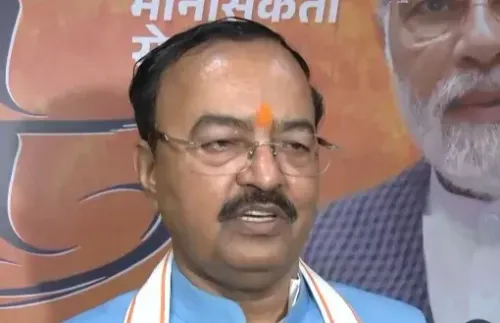
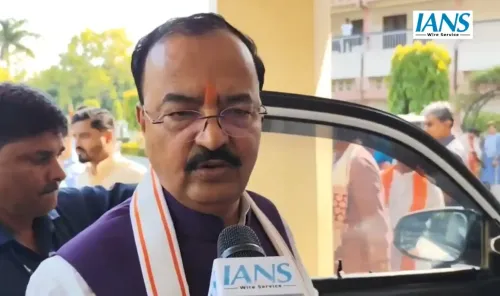
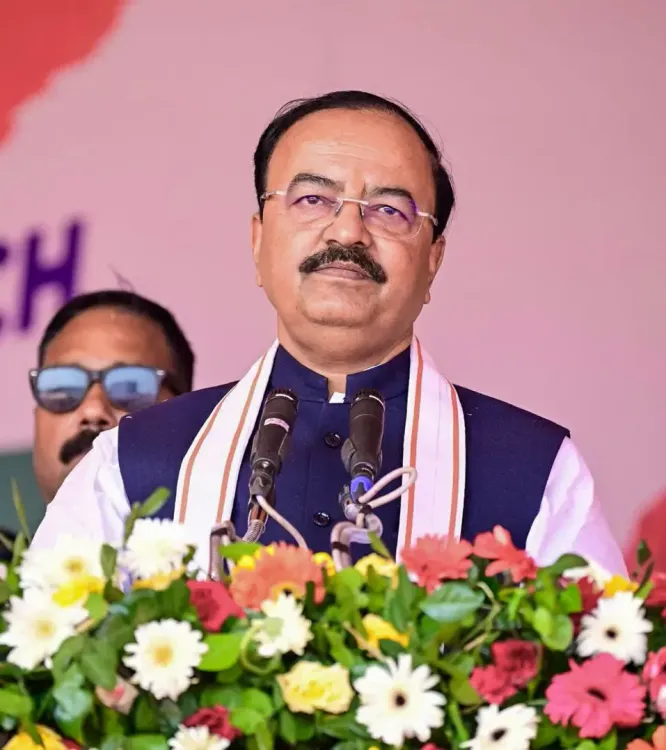
Lucknow, Dec 9 (NationPress) Uttar Pradesh's Deputy Chief Minister Keshav Prasad Maurya delivered a strong response on Tuesday to Samajwadi Party (SP) leader Akhilesh Yadav, who recently referred to the ruling BJP as 'Rashtravivadi', labeling the SP as a 'Namazwadi' party linked to what he described as 'anti-India' forces.
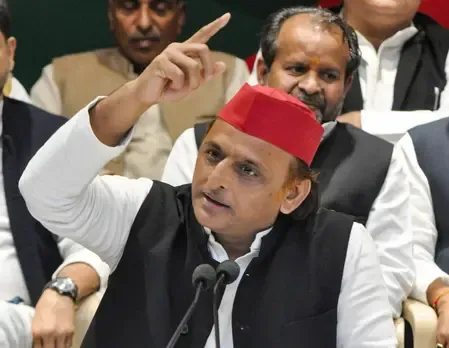
The exchange of political barbs escalated following Yadav's accusations against the BJP of attempting to monopolize nationalism, dubbing them 'Rashtravivadi', or 'anti-national'.
During a special session of the Lok Sabha commemorating 150 years of 'Vande Mataram', Yadav stated that the national song is a treasure for all Indians and should not be politicized.
He further criticized the BJP, saying, 'They are not Rashtravadi (nationalist); they are Rashtravivadi (anti-national). Back in the day, the British practiced divide and rule, and today some individuals are following that same path.'
In retaliation, Deputy CM Maurya asserted, 'Regarding Akhilesh Yadav's claims, I ask him: Did you, during your time, withdraw cases against terrorists for vote-bank politics? Did your government order shootings on Ram devotees?'
'You prioritize appeasing a certain community and dividing society, while the BJP, under Prime Minister Modi and Chief Minister Yogi Adityanath, strives to unite society and propel the nation forward through a double-engine government,' he added.
Further intensifying his critique, Maurya stated, 'The Samajwadi Party is not truly 'Samajwadi', but rather a 'Namazwadi' party, as their actions have always aligned with anti-Hindu and anti-India forces. They even withdrew cases against terrorists. If a leader from that party makes such statements, the people of Uttar Pradesh will respond.'
Earlier, while addressing the Lok Sabha, Yadav had launched a direct assault on the ruling BJP, claiming, 'The ruling party in our country aims to claim ownership over everything, including things they do not possess.' He reflected on the initial formation of the party and the debates around whether it would adopt a secular or socialist approach.
Emphasizing a deeper understanding of the national song beyond mere symbolism, Yadav remarked, 'Vande Mataram is not just to be sung; it is to be acted upon. The song united everyone during the Independence movement; today, some seek to fracture the nation.' He criticized BJP leaders for treating Vande Mataram as a BJP-exclusive anthem, questioning, 'How can those who did not participate in the Independence movement comprehend the significance of Vande Mataram?'
Point of View
It's essential to keep an unbiased perspective. This back-and-forth between the BJP and SP showcases the ongoing struggle for dominance in Indian politics. Parties must focus on unifying the populace rather than deepening divisions. The dialogue around nationalism and identity is crucial, and both sides must navigate it carefully to foster a more inclusive political environment.
NationPress
11 Oct 2026
Frequently Asked Questions
What did Keshav Prasad Maurya say about Akhilesh Yadav?
Deputy CM Maurya criticized Yadav's 'Rashtravivadi' remark, labeling the SP as a 'Namazwadi' party aligned with anti-India forces.
What was Akhilesh Yadav's accusation against the BJP?
Yadav accused the BJP of attempting to monopolize nationalism and claimed they are 'Rashtravivadi' or anti-national.
How did Maurya respond to Yadav's remarks about Vande Mataram?
Maurya questioned Yadav's tenure and accused him of withdrawing cases against terrorists for political gain, emphasizing the BJP's commitment to national unity.
What are the key themes of this political exchange?
The exchange highlights themes of nationalism, political allegiance, and the impact of historical narratives on current politics.
What does 'Namazwadi' imply in this context?
Maurya uses 'Namazwadi' to suggest that the SP prioritizes appeasement and aligns with forces he deems anti-Hindu and anti-India.