Meghalaya's SPARK programme builds future-ready skills in 20,000+ students
Synopsis
Meghalaya's SPARK programme — built on articulation, resilience, and kindness — has quietly crossed 20,000 students and earned a Best NEP Practice tag. CM Conrad Sangma's pitch at Tura goes beyond the numbers: in a decade when AI will reshape work, he is betting that human problem-solving, not rote learning, is Meghalaya's real competitive edge.
Key Takeaways
SPARK (School Programmes in Articulation, Resilience and Kindness) was launched in 2024 as a pilot across 25 government schools in all 12 districts of Meghalaya.
The programme has directly reached 12,078 students across 53 benchmark campuses , including 6,592 girls and 5,486 boys ; total beneficiaries exceed 20,000 .
SPARK for Teachers has trained 526 teachers from 287 schools through a 30-hour semi-residential course at district headquarters.
The programme has been recognised as a Best NEP Practice with Ministry of Education support.
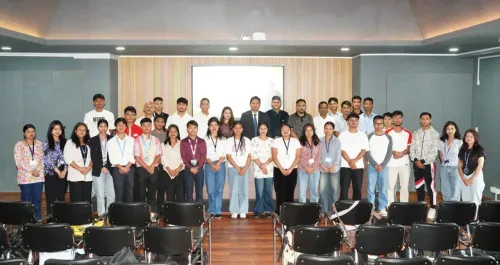
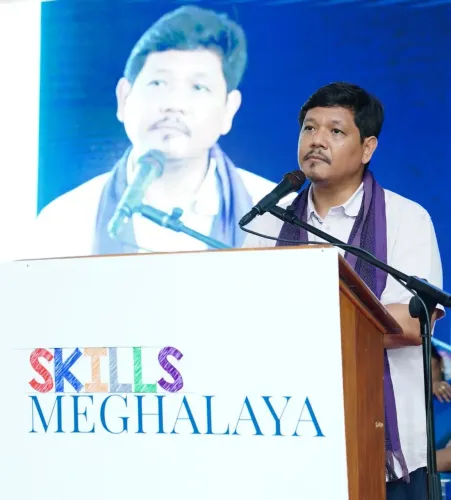
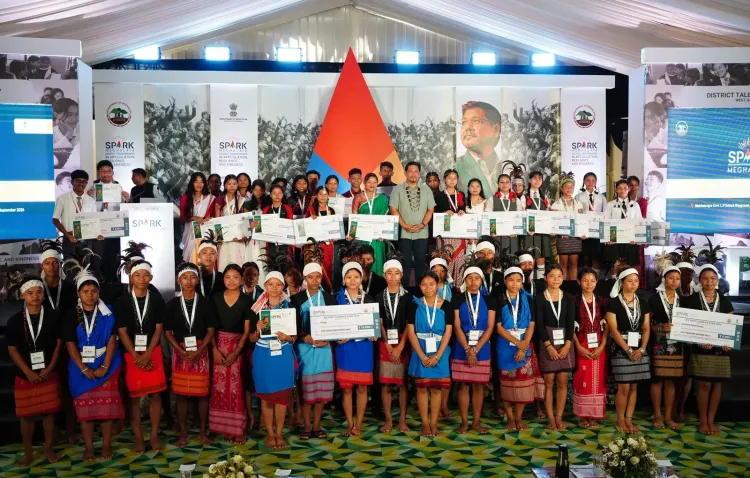
Sangma addressed the District Talent Event under SPARK Meghalaya at Tura on Wednesday, reiterating his commitment to sustaining SPARK long-term.
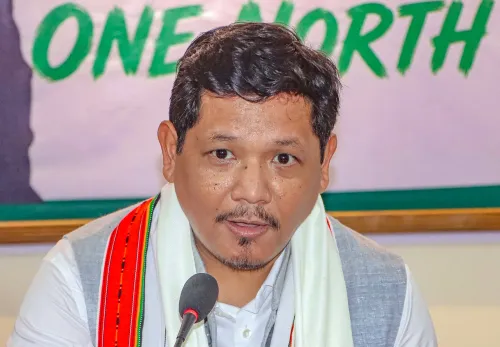
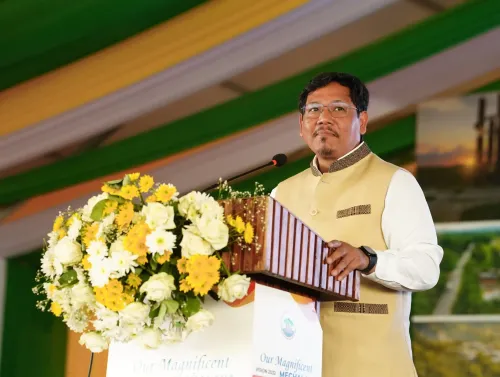
Meghalaya Chief Minister Conrad K. Sangma on Wednesday said foundational human capabilities — including taking responsibility, connecting with purpose, diagnosing problems, and finding solutions — will remain indispensable for young people even as technology reshapes the world at an unprecedented pace. Addressing the District Talent Event under SPARK Meghalaya at Tura, he underscored that the state's SPARK programme is specifically designed to build these capabilities in students from an early age.
What SPARK Is and How It Began
SPARK — which stands for School Programmes in Articulation, Resilience and Kindness — was launched in 2024 as a pilot covering 5,143 students across 25 government schools in all 12 districts of Meghalaya. The initiative subsequently received support from the Ministry of Education and has since been recognised as a Best NEP Practice, marking a significant endorsement of the programme's design and outcomes.
Scale and Reach So Far
According to a senior official, the student-facing component of SPARK has directly reached 12,078 students across 53 benchmark campuses — comprising 6,592 girls and 5,486 boys. In total, more than 20,000 students have benefited from the initiative to date. The programme also runs a parallel track for educators: SPARK for Teachers has seen 526 teachers from 287 schools complete an intensive 30-hour semi-residential training at district headquarters.
Why CM Sangma Sees It as Urgent
'Education systems are very sticky. You take a decision today, impact comes 10 years later. But global transformation will happen in a decade. Programmes like SPARK allow us to unlock potential and prepare our children to adapt,' CM Sangma said at the event. He stressed that while technology may automate routine tasks, problem-solving and human judgment will remain permanently in demand. 'Problem-solving is at the crux of every organisation and will be required forever,' he added.
Notably, Sangma was careful to frame SPARK not as a substitute for conventional investment in higher education and skilling, but as a capability layer that helps students make better use of those opportunities when they arise. This positions SPARK as a complement to, rather than a replacement for, the state's broader education and employment agenda.
A Personal Note and a Broader Vision
Speaking candidly, CM Sangma acknowledged that he himself had struggled with public speaking and lacked the confidence he now sees in Meghalaya's youth. 'We did not have programmes like SPARK to train and guide us,' he said, congratulating Team SPARK and Avenues. He also referenced the state's sports programme, pointing to children identified among the top one per cent globally despite lacking shoes or formal training — illustrating Meghalaya's raw, untapped talent pool.
'It is not quantity, but quality that will determine productivity, growth and where we take Meghalaya,' he said, reiterating his commitment to sustaining SPARK as a long-term programme. The confidence built in children today, he argued, would compound into a strategic asset for the state over the decades ahead.
Point of View
But the harder question is whether soft-skill programmes at this scale produce measurable long-term outcomes — and Meghalaya has not yet published independent impact data. CM Sangma's framing is astute: positioning SPARK as a capability multiplier rather than a standalone solution insulates it from the usual critique that such programmes displace core academic investment. The gender breakdown — 6,592 girls versus 5,486 boys — is quietly significant in a northeastern state where female participation in formal skill pipelines has historically lagged. Whether SPARK can hold political and budgetary priority beyond the current administration is the real test of its ambition.
NationPress
17 Oct 2026
Frequently Asked Questions
What is the SPARK programme in Meghalaya?
SPARK stands for School Programmes in Articulation, Resilience and Kindness. It is a Meghalaya government initiative launched in 2024 to build foundational human capabilities — including communication, problem-solving, and resilience — among school students, and has been recognised as a Best NEP Practice by the Ministry of Education.
How many students has SPARK reached so far?
SPARK has directly reached 12,078 students across 53 benchmark campuses, including 6,592 girls and 5,486 boys. In total, more than 20,000 students have benefited from the initiative since its launch in 2024.
What is SPARK for Teachers?
SPARK for Teachers is a parallel track under the programme designed for educators. So far, 526 teachers from 287 schools have completed an intensive 30-hour semi-residential training conducted at district headquarters across Meghalaya.
Why did CM Conrad Sangma launch SPARK?
CM Sangma launched SPARK to address the gap between the pace of global technological change and the slower response time of formal education systems. He argues that human capabilities like problem-solving and resilience will remain indispensable even as technology automates routine tasks.
Where was the SPARK District Talent Event held?
The District Talent Event under SPARK Meghalaya was held at Tura, where CM Conrad K. Sangma addressed students, teachers, and officials on Wednesday, reiterating his long-term commitment to the programme.