How Do Top Military Officers in Pakistan Transition to Entrepreneurs Under Institutional Support?
Synopsis
Explore the intertwining of Pakistan's military with its economy, revealing how officers navigate entrepreneurial ventures under institutional guidance. This article dives into critical issues of pay disparities, military influence on governance, and the growth of military-owned businesses, painting a vivid picture of power dynamics in Pakistan.
Key Takeaways
The Pakistan Army has significant influence over the economy.
Military-owned businesses primarily benefit senior officers.
Pay disparities among ranks lead to discontent .
The military's role in governance has evolved since 1958 .
Institutional support enables entrepreneurial activities among officers.
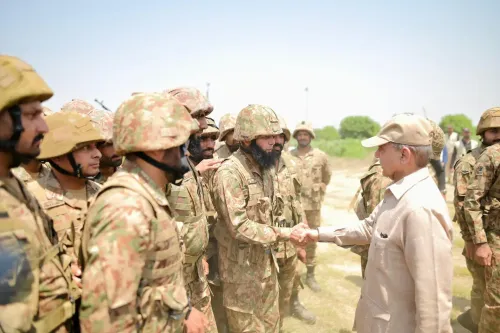
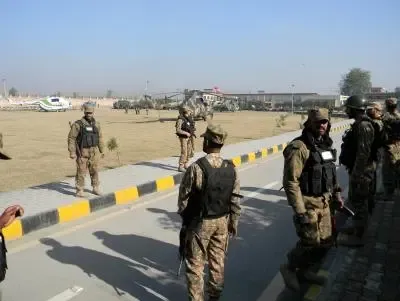
Islamabad, Feb 18 (NationPress) The Pakistan Army endured significant losses during counterinsurgency efforts along the tumultuous Afghanistan-Pakistan frontier in the aftermath of 9/11, engaging in combat against Al-Qaeda and Taliban militants. According to a recent analysis, some military officers expressed discontent regarding pay inequities during the peak of these operations.
The report titled 'India Narrative' highlighted that when US officials criticized the Pakistani army's performance as 'disappointing,' certain officers voiced concerns that insurgent factions were offering better compensation to their fighters compared to what the government provided to its own troops.
This discontent signals deeper issues among lower-ranking military personnel concerning their salaries, especially in a country where the military holds a significant portion of the national defense budget.
Moreover, it is often suggested that Pakistan is unique as 'the only nation where the military operates as a state within a state.'
The evolution of military governance in Pakistan is traced back to 1958, when the army took over control amidst a decade of political instability, claiming it would navigate the nation through challenging times.
However, the military has since embedded itself within political frameworks, dominating essential state institutions and emerging as both the de jure and de facto authority while allegedly leveraging state resources for its benefit.
The report indicates that armed forces members have ventured into commercial enterprises, which significantly contribute to Pakistan's political economy, existing apart from the official military budget.
These ventures primarily profit the upper echelons of the military rather than being equitably shared amongst lower ranks.
The report cites her research, demonstrating how entrepreneurial initiatives by military members and their affiliates operate under explicit or implicit institutional support.
It further asserts that the Pakistan Army stands as the largest landholder in the country, a key player in various industries, and a vital financial entity, wielding influence across multiple economic sectors. Within this context, control over policymaking and resource distribution becomes essential, bolstering the military’s political power.
In Pakistan, civilian administrations have faced removal when they seemed to pose a threat to this parallel economic framework, which reportedly generates billions of dollars annually for high-ranking military officials. These financial systems remain largely detached from taxation, regulatory scrutiny, or civilian oversight.
Simultaneously, the report argues that segments of the civilian political class have adapted to this arrangement, using their time in office for personal gain instead of challenging military control.
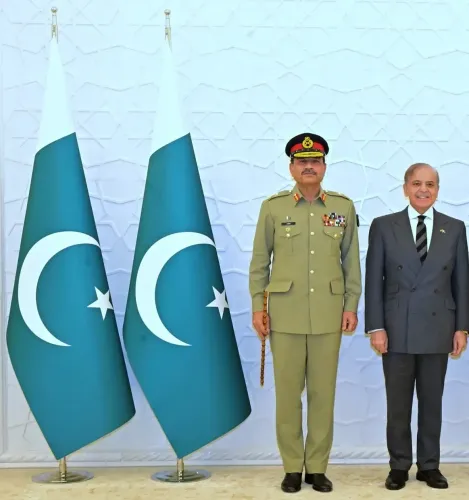
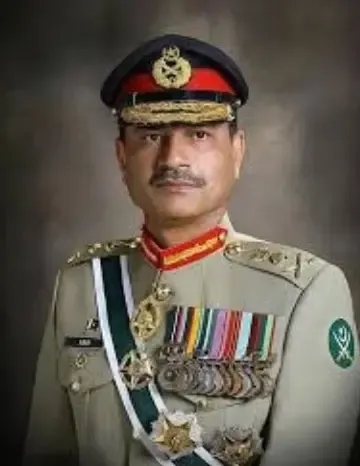
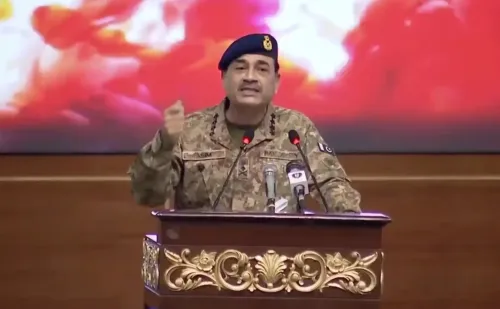
It also noted that Army Chief Field Marshal Asim Munir was seen alongside Prime Minister Shahbaz Sharif at the World Economic Forum in Davos last month, engaging in informal discussions, indicative of the military's continued sway over economic and foreign policy decisions.
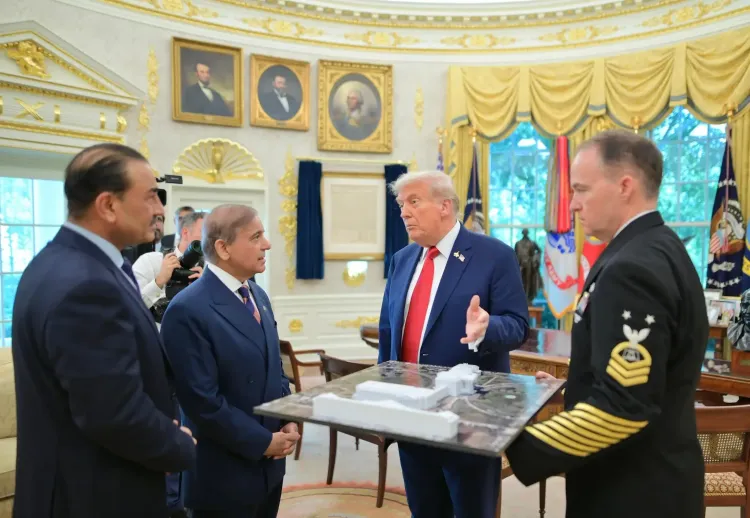
Furthermore, the report claimed that Munir accompanied the Prime Minister during a visit to Washington's Oval Office in September 2025, where discussions with US President Donald Trump reportedly revolved around trade.
Point of View
I believe it is crucial to address the complexities surrounding the military's role in Pakistan's economy. This analysis sheds light on the significant influence that military ventures hold over both governance and economic policy, raising important questions about accountability and the future of civil-military relations in our nation.
NationPress
27 Sept 2026
Frequently Asked Questions
What is Milbus in the context of the Pakistani military?
Milbus refers to the network of military-owned businesses that serve the interests of high-ranking military officials, often at the expense of lower-ranking personnel.
How has the military's role in governance evolved in Pakistan?
Since taking control in 1958, the military has embedded itself deeply within the political framework, exerting significant influence over state institutions and resources.
What are the implications of military entrepreneurial activities?
These activities contribute to a parallel economy that operates outside civilian oversight, raising concerns about accountability and the impact on civil governance.
What challenges do lower-ranking military personnel face?
Lower-ranking personnel often express dissatisfaction over pay disparities compared to insurgent groups, highlighting systemic issues within the military pay structure.
What role does the military play in Pakistan's economy?
The military is one of the largest landholders and significant players in various industries, affecting policymaking and resource allocation across the economy.