SC warns Centre, FSSAI: Act on food warning labels or face verdict

Synopsis
The Supreme Court has run out of patience with the Centre and FSSAI over front-of-pack food warning labels — and said so in open court. With a two-week ultimatum now on the table, India's packaged food industry faces the prospect of a judicially mandated labelling regime if the government fails to act. The bench's direct question — whether the government is bowing to corporate pressure — is the sharpest judicial rebuke on food regulation in years.
Key Takeaways
The Supreme Court on 13 August criticised the Centre and FSSAI for not implementing front-of-pack warning labels on packaged foods high in sugar, salt, and saturated fat.
A bench of Justices J.B.
Vinod Chandran questioned whether the government was yielding to corporate pressure .
The court rejected the Centre's argument that aligning with international standards posed practical challenges.
The government has been given two weeks to file its response — described by the court as its 'last opportunity'.
If no concrete action is taken, the Supreme Court has warned it will proceed to deliver a binding verdict on the matter.
The Supreme Court on Thursday, 13 August sharply criticised the Central government and the Food Safety and Standards Authority of India (FSSAI) for failing to implement front-of-pack (FOP) warning labels on packaged food products high in sugar, salt, and saturated fat. A bench of Justices J.B. Pardiwala and K. Vinod Chandran warned that it would issue a binding judicial directive if the government did not act within the time granted.
What the Court Said
'We are concerned with the health of citizens, especially growing children,' the bench observed, directing the Additional Solicitor General appearing for the Centre to ensure compliance with earlier court directions. The bench also pointedly asked FSSAI: 'Do you not want the people of this country to remain healthy, especially growing children?'
The court questioned whether the government was yielding to pressure from corporate interests and sought a detailed account of steps taken so far on the labelling issue. It made clear that commercial considerations cannot override public health policy. 'Manufacturers cannot dictate policy in such matters,' the bench stated.
The Labelling Debate
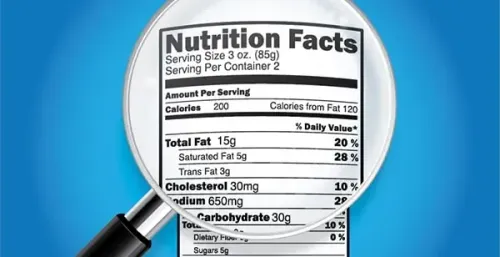
The court noted that while consumers broadly know packaged foods contain sugar, fat, and carbohydrates, a prominent front-of-pack warning would enable informed purchasing decisions before a product is bought. Rejecting industry concerns that such labels could harm business, the bench underlined that the final choice rests with consumers — not manufacturers.
The Centre had earlier argued that aligning with international packaging and nutritional standards posed practical challenges. The court dismissed that submission, holding that India cannot use foreign benchmarks as a pretext to delay stronger domestic public health safeguards. It stressed that the country must demonstrate a genuine commitment to protecting citizens — particularly children — rather than defaulting to weaker regulatory measures.
Government's Last Opportunity
The Supreme Court has granted the Centre two weeks to file its response. Describing this as the government's 'last opportunity', the bench warned that if no concrete action is forthcoming, it will proceed to deliver its verdict. The court's objective, it clarified, is not to target any specific product or brand, but to ensure that consumers are fully informed about what they are purchasing and consuming.
Why This Matters
India has one of the world's fastest-growing packaged food markets, with ultra-processed products increasingly reaching children through schools and retail outlets. The absence of clear front-of-pack warnings has long been flagged by nutritionists and public health advocates as a regulatory gap. Countries including Chile, Mexico, and Israel have already mandated high-contrast warning labels, and studies suggest such labels measurably reduce purchases of unhealthy products. This case represents one of the most direct judicial interventions in India's food regulatory framework in recent years.
With the two-week deadline now running, the Centre faces a stark choice: move voluntarily on FOP labelling or have the court impose a framework of its own.
Point of View
But the deeper story is structural: FSSAI has been studying front-of-pack labelling for years, producing draft regulations that have repeatedly stalled under industry lobbying. The bench's question about corporate pressure was not rhetorical — it named the precise mechanism that has kept India behind Chile, Mexico, and Israel on food labelling. A court-imposed framework is not ideal regulation, but at this point it may be the only kind that actually arrives. The real accountability question is not whether labels will be mandated, but why a public health body needed a Supreme Court ultimatum to do what its own mandate required.
NationPress
13 Aug 2026
Frequently Asked Questions
What are front-of-pack warning labels on packaged food?
Front-of-pack (FOP) warning labels are prominent symbols or text placed on the front of packaged food products to alert consumers when a product is high in sugar, salt, or saturated fat. Several countries have already made such labels mandatory, and research indicates they help consumers make healthier purchasing choices.
Why has the Supreme Court pulled up the Centre and FSSAI?
The Supreme Court criticised the Centre and FSSAI on 13 August for repeatedly failing to implement FOP warning labels despite earlier court directions. The bench questioned whether the delay was driven by corporate pressure and warned it would issue a binding order if the government did not act within two weeks.
What deadline has the Supreme Court set for the government?
The court has given the Centre two weeks to file its response and has called this its 'last opportunity'. If no concrete steps are taken, the Supreme Court has said it will proceed to deliver its verdict and impose a framework.
Why does the government say implementation is difficult?
The Centre has argued that aligning India's packaging and nutritional warning standards with international norms poses practical challenges. The Supreme Court rejected this reasoning, stating that India cannot use foreign benchmarks as a reason to delay stronger domestic public health safeguards.
Who is most at risk from the absence of food warning labels?
The Supreme Court specifically flagged children as the most vulnerable group, noting that clear front-of-pack warnings are essential to protect growing children from high consumption of sugar, salt, and saturated fat in packaged foods.