Delhi HC stays FSSAI ban on Dabur products over '100%' label claims

Synopsis
The Delhi High Court has put the brakes on FSSAI's sweeping prohibition against Dabur, finding that a ban of this magnitude should not have been imposed without a hearing. The case cuts to the heart of how India's food regulator exercises its enforcement powers — and whether procedural shortcuts can survive judicial scrutiny.
Key Takeaways
The Delhi High Court on 7 August stayed an FSSAI prohibition order directing Dabur India Limited to halt sales of products carrying '100 per cent' label claims.
Justice Amit Mahajan held that the prohibition ought not to have been passed without giving Dabur an opportunity of hearing.
The FSSAI had flagged claims such as '100 per cent Natural' , '100 per cent Organic' , and '100 per cent Tender Coconut Water' as ambiguous and potentially misleading under the Advertising and Claims Regulations, 2018 .
The regulator also objected to the Jaivik Bharat logo on Dabur Himalayan Organic Apple Cider Vinegar and Dabur Organic Honey for lacking valid organic endorsement.
The court has sought responses from the Central government and FSSAI ; the next hearing is on 24 August .
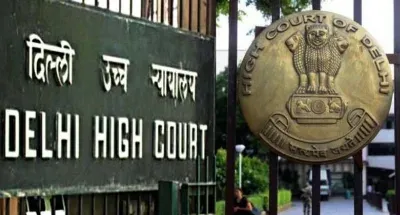
The Delhi High Court on Friday, 7 August granted interim relief to Dabur India Limited, staying a prohibition order issued by the Food Safety and Standards Authority of India (FSSAI) that had directed the company to immediately halt sales of certain food products carrying '100 per cent' label claims. The stay holds until the next date of hearing, fixed for 24 August.
What the Court Ruled
A single-judge bench of Justice Amit Mahajan passed the interim order after observing that a prohibition of this nature ought not to have been issued without first affording Dabur an opportunity to be heard. The court held that a prima facie case had been made out in the company's favour.
'Considering the arguments made by the senior counsel appearing for the petitioner, this court is of the prima facie view that the impugned prohibitory order of such nature ought not to have been passed without opportunity of hearing. Till the next date of hearing, the impugned order is stayed,' the bench stated.
The court simultaneously issued notice on Dabur's petition and sought responses from the Central government and the FSSAI. The matter had been initially mentioned for urgent listing before a bench headed by Chief Justice Devendra Kumar Upadhyaya and Justice Tejas Karia, which allowed the case to proceed on an urgent basis.
Dabur's Arguments
Senior counsel for Dabur India contended that the company had been selling the products in question for decades and that the officer who passed the prohibition order did not have the authority to do so in the manner adopted. Counsel further argued that the order violated the principles of natural justice, having been passed without issuing a show-cause notice to the company.
In regulatory filings before the Bombay Stock Exchange (BSE) and National Stock Exchange (NSE), Dabur had maintained that its product labels complied with the prevailing legal and regulatory framework and were consistent with long-standing industry practices. The company stated it had never made misleading claims and that the impact of the prohibition order was limited to the specific products flagged by the regulator.
What FSSAI Had Alleged
The FSSAI had directed Dabur to stop selling products carrying claims such as '100 per cent Natural', '100 per cent Pure', '100 per cent Purity Guaranteed', '100 per cent Organic', and '100 per cent Tender Coconut Water', describing these as ambiguous, unverifiable, and likely to mislead consumers in violation of the Food Safety and Standards (Advertising and Claims) Regulations, 2018.
The regulator had also raised objections to the display of the Jaivik Bharat logo on Dabur Himalayan Organic Apple Cider Vinegar and Dabur Organic Honey, alleging the products lacked valid FSSAI organic endorsement under the Food Safety and Standards (Organic Foods) Regulations, 2017. Additionally, the FSSAI had flagged that Dabur Hommade Coconut Milk was marketed with a '100 per cent Purity' claim, which it said was impermissible for compound food products.
The regulator stated that Dabur failed to take satisfactory corrective action despite an earlier improvement notice, and consequently directed the company to stop sales and submit an Action Taken Report within 15 days.
FSSAI's Defence
Central Government Standing Counsel Ashish Dixit, appearing for the FSSAI, defended the regulator's action, submitting that an improvement notice had been issued to Dabur before the prohibition order was passed — a procedural step the regulator argued satisfied natural justice requirements.
What Happens Next
The Delhi High Court will take up the matter again on 24 August. Until then, Dabur's products remain on shelves under the protection of the stay. The case is being closely watched by the fast-moving consumer goods sector, as it raises broader questions about the regulatory threshold for invoking prohibition orders and the procedural safeguards owed to companies before such drastic action is taken.
Point of View
However well-intentioned, must be exercised within procedural guardrails. The FSSAI's argument that an improvement notice sufficed as prior hearing is thin — prohibition orders carry consequences far more severe than improvement notices, and courts have consistently demanded proportionality. More broadly, the case exposes a tension in India's food regulation architecture: the regulator has broad powers to act swiftly on consumer protection grounds, but those powers are being tested by large incumbents with the legal firepower to push back. The outcome on 24 August will signal whether the FSSAI's enforcement style needs a procedural reset.
NationPress
21 Sept 2026
Frequently Asked Questions
Why did the Delhi High Court stay the FSSAI order against Dabur?
The Delhi High Court stayed the FSSAI prohibition order on 7 August after Justice Amit Mahajan found a prima facie case that the order should not have been passed without giving Dabur an opportunity to be heard. The court held this was a violation of natural justice principles.
Which Dabur products were targeted by the FSSAI prohibition order?
The FSSAI directed Dabur to stop selling products carrying claims such as '100 per cent Natural', '100 per cent Pure', '100 per cent Purity Guaranteed', '100 per cent Organic', and '100 per cent Tender Coconut Water'. The regulator also flagged Dabur Himalayan Organic Apple Cider Vinegar, Dabur Organic Honey, and Dabur Hommade Coconut Milk for separate labelling violations.
What is Dabur's position on the FSSAI's allegations?
Dabur has maintained that its product labels comply with the prevailing legal and regulatory framework and are consistent with long-standing industry practices. In regulatory filings with the BSE and NSE, the company stated it has never made misleading claims and upholds the highest standards of food safety and regulatory compliance.
What did the FSSAI allege about Dabur's '100 per cent' claims?
The FSSAI described the '100 per cent' claims as ambiguous, unverifiable, and likely to mislead consumers, in violation of the Food Safety and Standards (Advertising and Claims) Regulations, 2018. It also alleged that certain products displayed the Jaivik Bharat organic logo without valid FSSAI organic endorsement.
When will the Delhi High Court hear the Dabur-FSSAI case next?
The Delhi High Court has fixed 24 August as the next date of hearing. Until then, the FSSAI prohibition order remains stayed, allowing Dabur to continue selling the flagged products.