Dabur moves Delhi HC against FSSAI ban on '100%' label claims
Synopsis
India's food regulator banned Dabur from selling products labelled '100 per cent Natural', '100 per cent Organic', and similar claims, calling them unverifiable and misleading. Dabur has now taken the fight to the Delhi High Court — and the verdict could redraw the rules for health-claim labelling across India's entire packaged food industry.
Key Takeaways
Dabur India Limited filed a petition in the Delhi High Court on Thursday, 6 August challenging an FSSAI prohibition order.
The FSSAI directed Dabur to stop selling products bearing claims such as '100 per cent Natural' , '100 per cent Organic' , and '100 per cent Pure' , calling them ambiguous and unverifiable.
Dabur Himalayan Organic Apple Cider Vinegar and Dabur Organic Honey were flagged for displaying the Jaivik Bharat logo without valid FSSAI organic endorsement.
Dabur was required to submit an Action Taken Report (ATR) within 15 days of the prohibition order.
The company maintains its labels comply with existing regulations and has denied making any misleading claims, as stated in filings to the BSE and NSE .
The Delhi HC Bench of Chief Justice Devendra Kumar Upadhyaya and Justice Tejas Karia agreed to list the case urgently.
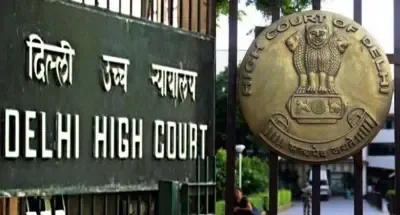
Dabur India Limited has approached the Delhi High Court challenging a prohibition order issued by the Food Safety and Standards Authority of India (FSSAI) that directed the company to immediately halt sales of certain food products carrying allegedly misleading '100 per cent' claims. The petition was mentioned on Thursday for urgent listing before a Bench comprising Chief Justice Devendra Kumar Upadhyaya and Justice Tejas Karia, which agreed to take it up on priority.
What the FSSAI Order Said
The food regulator's prohibition order targeted a range of claims printed on Dabur products, including '100 per cent Natural', '100 per cent Pure', '100 per cent Purity Guaranteed', '100 per cent Organic', and '100 per cent Tender Coconut Water'. According to the FSSAI, these claims were ambiguous, unverifiable, and likely to mislead consumers, allegedly violating the Food Safety and Standards (Advertising and Claims) Regulations, 2018.
The regulator further noted that Dabur Himalayan Organic Apple Cider Vinegar and Dabur Organic Honey displayed the Jaivik Bharat logo without valid FSSAI organic endorsement, allegedly breaching the Food Safety and Standards (Organic Foods) Regulations, 2017. Additionally, Dabur Hommade Coconut Milk was found to carry the claim '100 per cent Purity', which is not permitted for compound food products.
Why the Regulator Acted
The FSSAI stated that Dabur had failed to take satisfactory corrective action despite an earlier notice, prompting the prohibition order. The regulator directed the company to stop sales of the identified products and submit an Action Taken Report (ATR) within 15 days. The order represents a significant escalation in the regulator's scrutiny of health and wellness labelling claims by fast-moving consumer goods companies.
This comes amid a broader regulatory push by the FSSAI to crack down on unsubstantiated health and purity claims across the food industry — a pattern that has seen multiple FMCG players receive notices in recent years over labelling practices.
Dabur's Position
Following the regulator's action, Dabur maintained that its product labels comply with the prevailing legal and regulatory framework and are consistent with long-standing industry practices. In regulatory filings submitted to the BSE and NSE, the company said it stood by the purity and quality of its products and denied making any misleading claims.
Dabur also stated it continues to maintain the highest standards of quality, food safety, and regulatory compliance, and noted that the impact of the prohibition order was limited to the objected products. The company had indicated it was seeking legal advice, following which it approached the Delhi High Court.
What Happens Next
The Delhi High Court has agreed to list the matter on an urgent basis, meaning a hearing is expected shortly. The outcome could have wider implications for how '100 per cent' and similar absolute claims are regulated across India's packaged food sector. Industry observers will watch closely whether the court grants interim relief allowing Dabur to continue sales pending the final decision.
Point of View
If the court grants relief, it risks signalling that aggressive health claims can be litigated into permanence. The FSSAI's credibility as a consumer protection body now partly hinges on whether it can sustain this order in court.
NationPress
21 Sept 2026
Frequently Asked Questions
Why did FSSAI issue a prohibition order against Dabur?
The FSSAI issued the prohibition order because it found that claims such as '100 per cent Natural', '100 per cent Organic', and '100 per cent Purity Guaranteed' on Dabur products were ambiguous, unverifiable, and likely to mislead consumers, violating the Food Safety and Standards (Advertising and Claims) Regulations, 2018. The regulator also flagged the use of the Jaivik Bharat logo on certain products without valid organic endorsement.
Which Dabur products are affected by the FSSAI order?
The prohibition order covers products carrying '100 per cent' claims, including Dabur Himalayan Organic Apple Cider Vinegar, Dabur Organic Honey, and Dabur Hommade Coconut Milk, among others. The company has stated the impact is limited to the specifically objected products.
What has Dabur said in response to the FSSAI ban?
Dabur has maintained that its product labels comply with the prevailing legal and regulatory framework and are consistent with long-standing industry practices. In filings to the BSE and NSE, the company denied making any misleading claims and said it stands by the quality and purity of its products.
What is the Delhi High Court expected to decide?
The Delhi High Court has agreed to hear Dabur's petition on an urgent basis. The court may grant interim relief allowing Dabur to continue sales of the affected products while the case is heard, or it may uphold the FSSAI's prohibition order. A ruling could set a precedent for how '100 per cent' claims are regulated across India's packaged food sector.
What is the Jaivik Bharat logo and why does it matter?
The Jaivik Bharat logo is an official certification mark for organic food products in India, governed by the Food Safety and Standards (Organic Foods) Regulations, 2017. The FSSAI alleged that Dabur displayed this logo on certain products without valid endorsement, which constitutes a regulatory violation.