Gwalior Telecom Zone: Scindia to host Bengaluru investor meet for Asia's first TMZ
Synopsis
Asia's first Telecom Manufacturing Zone is taking shape in Gwalior — and the government is betting Bengaluru's tech ecosystem will unlock the next wave of investment. With ₹5,500 crore already committed and 18,000 jobs projected, the 21 September investor meet could significantly raise the stakes for India's telecom hardware ambitions.
Key Takeaways
Union Minister Jyotiraditya M.
Scindia and MP CM Mohan Yadav will host a Bengaluru investor meet on 21 September 2026 for Asia's first Telecom Manufacturing Zone (TMZ) in Gwalior .
Prior roundtables in New Delhi and Mumbai have already secured commitments worth ₹5,500 crore , with potential for close to 18,000 jobs .
The Centre is funding 100 per cent of Phase-I at ₹493 crore ; Madhya Pradesh has contributed 170 acres of land free of cost.
An SPV has been established — 51 per cent Madhya Pradesh equity, 49 per cent DoT — to govern the zone.
The TMZ will cover mobile devices, optical fibre, telecom equipment, and 5G/6G technologies, aimed at reducing India's telecom import dependence.
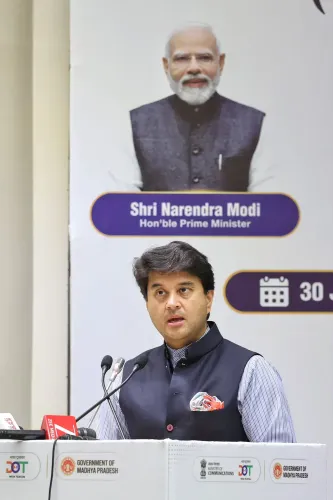
Union Minister of Communications Jyotiraditya M. Scindia will host an investors' meeting in Bengaluru on 21 September 2026 to attract fresh investment into Asia's first Telecom Manufacturing Zone (TMZ), being established in Gwalior, Madhya Pradesh. The event, organised by the Department of Telecommunications (DoT), aims to deepen industry participation and build on commitments already secured through earlier roundtables in New Delhi and Mumbai.
Who Is Attending and What Is on the Agenda
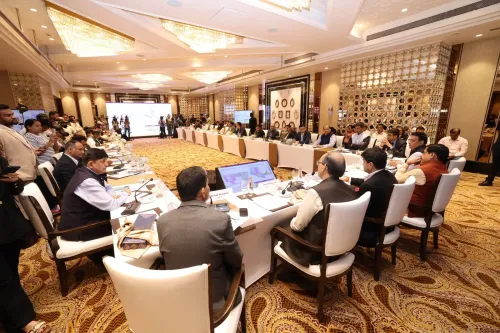
Madhya Pradesh Chief Minister Mohan Yadav will co-host the meeting alongside Scindia. The gathering will bring together leading telecom manufacturers, technology companies, electronics and component makers, investors, infrastructure providers, and other stakeholders from across the telecom ecosystem. Discussions are expected to focus on unlocking investment opportunities, strengthening domestic manufacturing capabilities, promoting innovation, and building a globally competitive telecom supply chain.
Early Momentum: ₹5,500 Crore in Commitments, 18,000 Jobs in Sight
Previous investor roundtables in New Delhi and Mumbai have already generated commitments worth ₹5,500 crore, with the potential to create close to 18,000 jobs, according to an official statement. The Bengaluru meet is intended to build further momentum by tapping the city's well-established technology, electronics, telecom, and innovation ecosystem. Bengaluru's deep startup and R&D base is seen as a strategic fit for the TMZ's mandate of integrating manufacturing with next-generation research.
What the Gwalior TMZ Involves
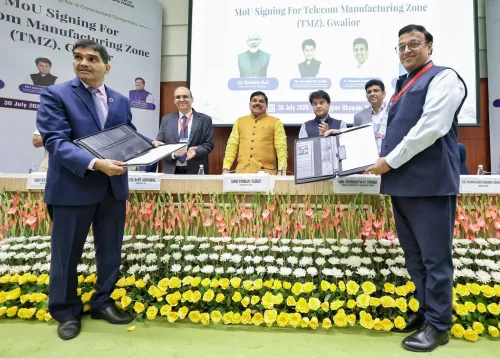
The proposed Gwalior TMZ is envisaged as an integrated, plug-and-play industrial cluster covering mobile devices, optical fibre, telecom equipment, and next-generation 5G/6G technologies. Under a recently signed MoU, the Centre is providing 100 per cent funding of ₹493 crore for Phase-I. The Government of Madhya Pradesh has contributed approximately 170 acres of land free of cost, along with various investor incentives. A special purpose vehicle (SPV) has been set up with 51 per cent equity from the Madhya Pradesh government and 49 per cent from the DoT.
Strategic Intent: Aatmanirbhar Bharat in Telecom
The TMZ initiative is positioned as a key plank of the Aatmanirbhar Bharat vision for the telecom sector. It aims to strengthen domestic value chains, reduce import dependence, promote indigenous design and manufacturing, boost exports, and position India as a trusted global hub for telecom products. Notably, this initiative arrives as India accelerates its push to capture a larger share of the global telecom hardware market, a space currently dominated by Chinese and South Korean manufacturers. An incentive package has been designed with industry inputs to improve India's share in telecom manufacturing, the official statement noted.
What Comes Next
The Bengaluru engagement is expected to yield fresh investment pledges and technology partnership announcements, potentially raising the total commitment tally well above the existing ₹5,500 crore. Industry stakeholders will also explore opportunities in R&D collaboration, supply-chain integration, and employment generation through the zone. With Phase-I funding already locked in, the government's next challenge will be accelerating on-ground execution at the Gwalior site.
Point of View
But the pattern of announcement-first, execution-later is a familiar risk in Indian industrial policy. The ₹5,500 crore in early commitments is encouraging, but commitments at investor roundtables are not the same as capital deployed on the ground. Gwalior's geographic advantage — centrally located, land-abundant — is real, yet the zone must compete with more established electronics clusters in Tamil Nadu and Telangana that already have supply-chain depth. The 51:49 SPV structure is a workable governance model, but accountability for timelines and job creation outcomes needs to be built in explicitly, or this risks becoming another well-funded aspiration that underdelivers on the headline numbers.
NationPress
21 Sept 2026
Frequently Asked Questions
What is the Gwalior Telecom Manufacturing Zone (TMZ)?
The Gwalior TMZ is Asia's first dedicated telecom manufacturing zone, envisaged as an integrated, plug-and-play industrial cluster for mobile devices, optical fibre, telecom equipment, and 5G/6G technologies. The Centre is funding Phase-I entirely at ₹493 crore, while Madhya Pradesh has provided 170 acres of land free of cost.
How much investment has the Gwalior TMZ attracted so far?
Investor roundtables in New Delhi and Mumbai have already generated commitments worth ₹5,500 crore, with the potential to create close to 18,000 jobs. The Bengaluru meeting on 21 September 2026 is expected to add fresh pledges to that tally.
Why is the Bengaluru investor meet significant for the TMZ?
Bengaluru hosts India's largest concentration of technology, electronics, and telecom companies, making it a prime source of manufacturing partners, R&D collaborators, and investors. The DoT is targeting this ecosystem specifically to link the Gwalior zone with innovation and supply-chain capabilities that Gwalior itself does not yet possess.
Who is governing the Gwalior TMZ?
A special purpose vehicle (SPV) has been set up with 51 per cent equity from the Government of Madhya Pradesh and 49 per cent from the Department of Telecommunications to oversee the zone's development and operations.
How does the TMZ fit into the Aatmanirbhar Bharat vision?
The TMZ is designed to reduce India's dependence on imported telecom hardware, strengthen domestic value chains, promote indigenous design and manufacturing, and position India as a global hub for telecom products. It is one of the most concrete sectoral expressions of the Aatmanirbhar Bharat agenda in the telecom space.