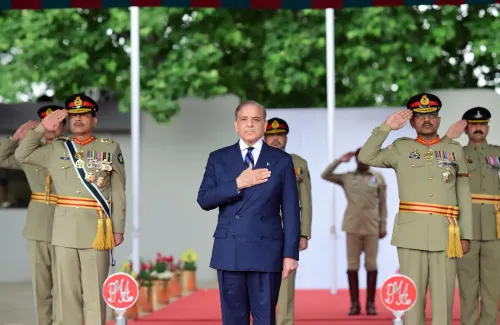
The Increasing Stranglehold of Military Power on Pakistan’s Democracy
Synopsis
A recent report reveals that military dominance in Pakistan is severely undermining democracy, leading to persistent political instability and human rights violations. With the judiciary's independence at stake, the implications for governance are dire as the country heads toward further erosion of civil authority.
Key Takeaways
Military supremacy has been institutionalized in Pakistan, affecting governance.
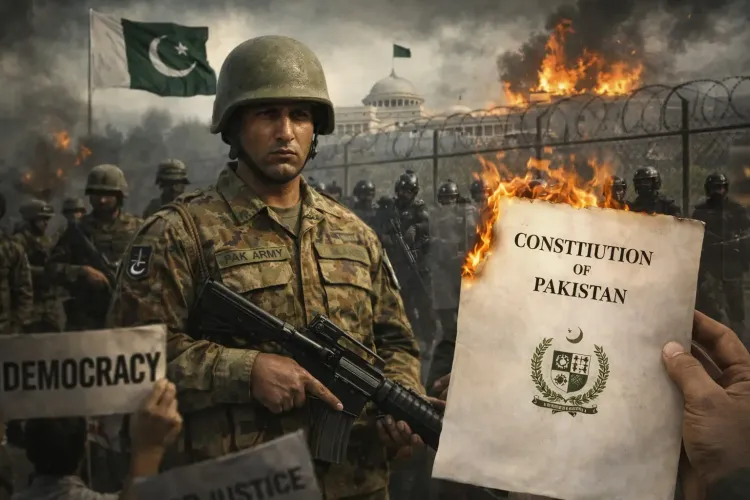
The 27th amendment consolidates military power, undermining civilian authority.
Human rights abuses, including enforced disappearances of journalists, are prevalent.
Corruption remains a significant issue, as highlighted by Pakistan's low ranking in the Rule of Law Index .
The military's role in politics continues to obstruct democratic processes.
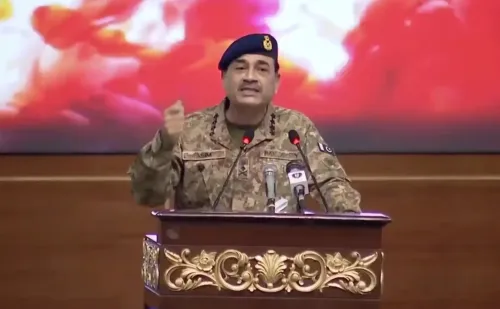
Washington, March 4 (NationPress) The institutionalization of military dominance in Pakistan is exacerbating the nation’s unstable political landscape, weak civilian governance, entrenched military influence, pervasive corruption, organized crime, and widespread violations of human rights, a recent report indicates.
In an article for the American platform 'PJ Media', Turkish journalist Uzay Bulut emphasized that since the founding of Pakistan in 1947, the military has significantly impacted governmental operations, judicial processes, and media narratives—restricting the power of elected officials.
"The military establishment in Pakistan has consistently engaged in the political sphere, including stifling dissent from opposition parties. In 2024, national elections transpired following a deliberate effort by the military to undermine former Prime Minister Imran Khan and his Pakistan Tehreek-e-Insaf Party (PTI)," Bulut noted.
“This maneuver resulted in Khan's imprisonment, and his party was barred from nominating candidates. Khan was Prime Minister from 2018 until April 2022, when he was ousted through a no-confidence vote. He faced imprisonment in August 2023 on multiple corruption charges and allegations of disclosing state secrets," she added.
The report further revealed that in November 2025, the enactment of the 27th amendment to Pakistan's constitution solidified military supremacy, further eroding the power of civilian governance.
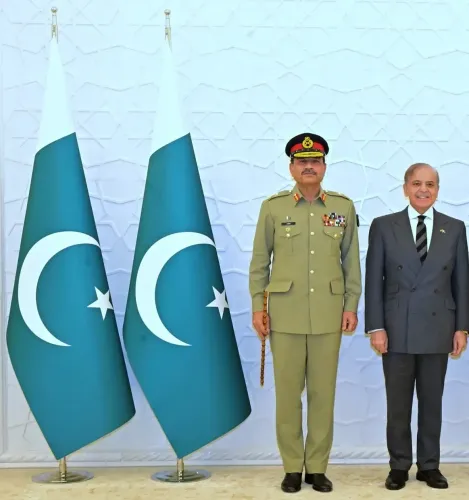
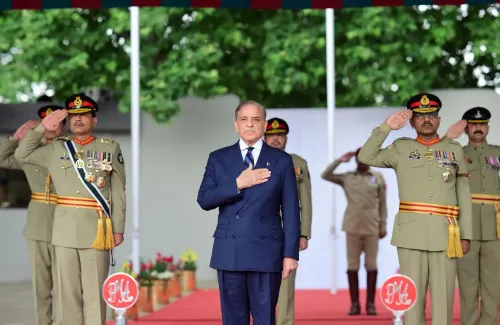
This amendment, supported robustly by the ruling coalition, highlighted the increasing dependence of the civilian government on military authority, obscuring the distinctions between civil and military governance.
“The 27th amendment represents a blatant assault on judiciary independence and the principle of the rule of law,” stated the International Commission of Jurists (ICJ).
“The alterations to the judicial framework introduced by the 27th amendment are concerning as they will significantly hinder the judiciary’s capacity to hold the executive accountable and safeguard the fundamental human rights of the Pakistani populace,” ICJ Secretary General Santiago Canton remarked.
The report highlighted that Pakistan ranked 129 out of 142 in the 2024 Rule of Law Index from the World Justice Project, indicating poor performance in corruption metrics, with the military seen as a major contributor to widespread corruption.
Addressing the military's abuses, it noted, “Journalists perceived as adversaries of the military due to their reporting face threats of enforced disappearance and other forms of mistreatment. Such disappearances occur most frequently in Balochistan, exemplified by the case of Zubair Baloch, who vanished from Hub in December 2024.”
Point of View
It's crucial to approach the topic of military influence in Pakistan with neutrality. The ongoing struggles between military authority and civilian governance highlight the pressing need for a balanced political environment that respects democratic norms and human rights.
NationPress
29 Sept 2026
Frequently Asked Questions
How has the military influenced Pakistani politics?
The military has historically played a vital role in Pakistan's political landscape, including suppressing opposition and influencing governmental decisions, as noted in recent analyses.
What are the consequences of military dominance in governance?
Military dominance leads to weakened civilian governance, increased corruption, and a rise in human rights violations, impacting the overall stability of the nation.
What is the significance of the 27th amendment?
The 27th amendment further entrenches military power, undermining the judiciary's independence and the rule of law in Pakistan, as reported by the International Commission of Jurists.
How are journalists affected by military actions?
Journalists critical of the military face threats, including enforced disappearances, particularly in regions like Balochistan, reflecting a broader issue of press freedom.
What are the implications for Pakistan's future?
The continued military influence poses significant risks to democracy, human rights, and the rule of law, potentially leading to greater instability and conflict.