Minority votes taken for granted, parties fear Hindu base: Ex-RS MP Adeeb
Synopsis
Former RS MP Mohammad Adeeb has put into words what many in India's minority community feel but rarely hear from political insiders: that every party is now hostage to majority-community optics, leaving Muslims with a vote but no real voice. His cautious warning — invoking Myanmar and Gaza as worst-case reference points — signals how far the anxiety has deepened.
Key Takeaways
Former RS MP Mohammad Adeeb said all political parties are focused on retaining the Hindu vote base , leaving minority voters politically cornered.
He said Muslims vote for the Congress out of compulsion, not conviction, having no viable electoral alternative.
Adeeb attributed the rise of Asaduddin Owaisi to community disillusionment, not ideological support.
He cautioned that silence from courts and communal bias in police forces could worsen conditions for minorities.
He called an election boycott by Muslims unviable, but urged parties to lower communal rhetoric during campaigns.
On the INDIA bloc, he said it can challenge the NDA only if Congress and allies resolve internal differences first.
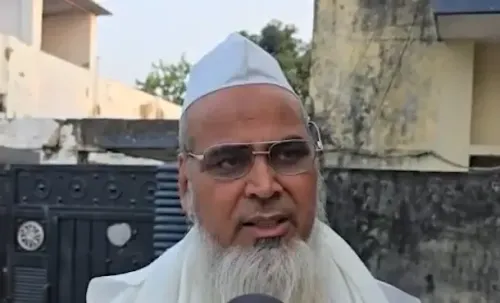
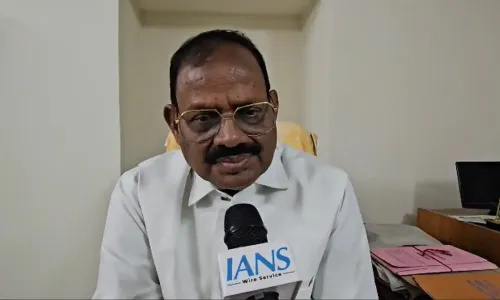
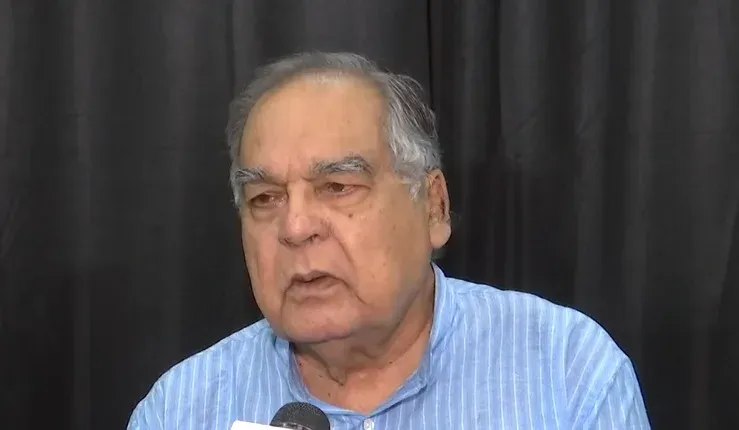
Former Rajya Sabha member Mohammad Adeeb on 15 May offered a pointed critique of India's contemporary electoral politics, arguing that every major political party has become consumed by the fear of losing majority-community votes, while minority voters — particularly Muslims — are treated as captive vote banks with nowhere else to turn. Adeeb, a former Parliamentarian and veteran political voice, made the remarks in a special interaction in New Delhi.
The Core Concern: A Community Cornered
'Every political party has become solely focused on ensuring that the Hindu vote base does not drift away,' Adeeb said, characterising the current political climate as one of deep polarisation. He argued that this singular obsession has left the Muslim community politically marginalised — pushed to the periphery with no meaningful electoral choice of its own.
On whether Muslims could rely on the Indian National Congress, Adeeb was blunt: the community, he said, votes for the grand old party not out of conviction but out of compulsion, having been left with no viable alternative.
Rise of Owaisi and Community Disillusionment
Adeeb attributed the growing electoral footprint of leaders like Asaduddin Owaisi not to any particular ideological appeal, but to a broader sense of disillusionment within the community. According to him, repeated cycles of alignment with various parties and leaders have ended in what he described as betrayal and neglect, driving voters toward more assertive minority-centric voices.
He noted that the Muslim community has, over successive elections, attempted to build coalitions with different political formations — only to find itself sidelined once the votes were counted.
On Recent State Elections and Identity Politics
Adeeb's remarks came against the backdrop of high-stakes assembly elections in five states, which he claimed were conducted under a cloud of communal rhetoric and driven largely by identity politics. He also commented on the Tamilaga Vettri Kazhagam (TVK)'s notable debut in the Tamil Nadu elections, calling it unfortunate that poll discourse had revolved so heavily around religion and faith — including calls to 'eradicate' Sanatan Dharma.
A Cautious Warning on Deteriorating Conditions
Without drawing a direct comparison to the situation of Muslims in Myanmar or Palestinians in Gaza, Adeeb issued a calibrated caution. 'Are we drifting toward a situation akin to that of Muslims in Myanmar or the Palestinians in Gaza? Perhaps not right now, but if the courts continue to remain silent in this manner, and if hatred persists within the police force, the situation could deteriorate even further,' he stated.
He stopped short of advocating an election boycott by the Muslim community, calling it an unviable option, but urged a deliberate effort to lower communal temperatures during campaign seasons.
On the INDIA Bloc and Opposition Unity
Asked whether the INDIA opposition alliance could mount a credible challenge to the ruling National Democratic Alliance (NDA), Adeeb said the prospect was viable only if the Congress and its smaller allies resolved their internal differences and presented a genuinely unified front. Without that cohesion, he suggested, the alliance would remain more symbolic than strategic.
As India's electoral calendar remains packed, Adeeb's intervention reflects a growing conversation within minority communities about political representation, accountability, and whether existing party structures can deliver either.
Point of View
Not from the outside. The argument that minority voters are structurally trapped — forced to support parties that do not prioritise them, for fear of worse alternatives — is a democratic deficit that mainstream coverage rarely examines with this candour. His invocation of Myanmar and Gaza, however carefully hedged, will draw attention; but the more substantive point is the one about institutional silence. When a former Parliamentarian questions whether courts and police forces are failing a community, that is a signal worth taking seriously — regardless of where one sits on the political spectrum.
NationPress
2 Oct 2026
Frequently Asked Questions
What did Mohammad Adeeb say about minority voters in India?
Former RS MP Mohammad Adeeb said minority voters, particularly Muslims, are being taken for granted by political parties that are primarily focused on not losing the Hindu vote base. He argued the community has been reduced to a captive vote bank with no real electoral choice.
Why does Adeeb say Muslims vote for the Congress?
Adeeb said Muslims vote for the Congress not out of ideological alignment but out of compulsion, having found no viable alternative after repeated disillusionment with other parties and leaders.
Why does Adeeb think Asaduddin Owaisi is gaining support?
According to Adeeb, Owaisi's rise is not driven by his championing of minority rights per se, but by the broader disillusionment and disappointment the Muslim community feels toward mainstream political parties that have repeatedly ignored them after elections.
Did Adeeb compare Indian Muslims to those in Myanmar or Gaza?
Adeeb stopped short of a direct comparison, but issued a cautionary warning — stating that if courts remain silent and communal bias persists within police forces, conditions for Muslims in India could deteriorate further. He framed Myanmar and Gaza as worst-case reference points, not current equivalents.
What did Adeeb say about the INDIA opposition bloc?
Adeeb said the INDIA bloc could pose a credible challenge to the NDA only if the Congress and its smaller allies resolved their internal differences and fought as a genuinely united front, implying the alliance currently lacks that cohesion.