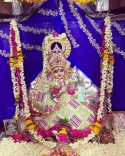
Modi Prays at Thanthania Kali Temple Before Kolkata Roadshow
Synopsis
PM Modi performed Kali aarti at Kolkata's Thanthania Kalibari before a sweeping roadshow across 7 BJP constituencies on April 26 — a spiritual-political move that underscores the BJP's deepening cultural strategy in West Bengal ahead of Phase 2 voting on April 29.
Key Takeaways
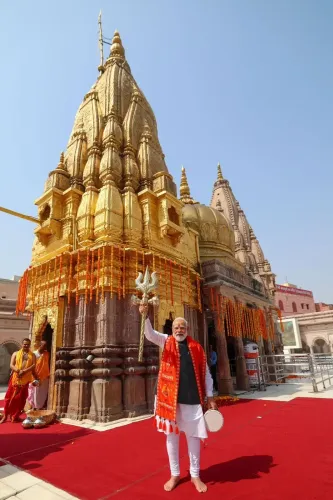
PM Modi performed Kali aarti at the Thanthania Kalibari temple in north Kolkata on April 26, 2025 , during his election campaign visit.
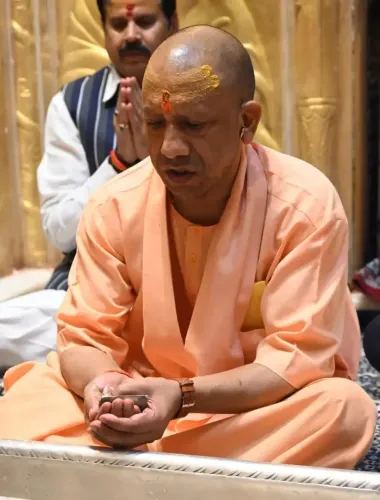
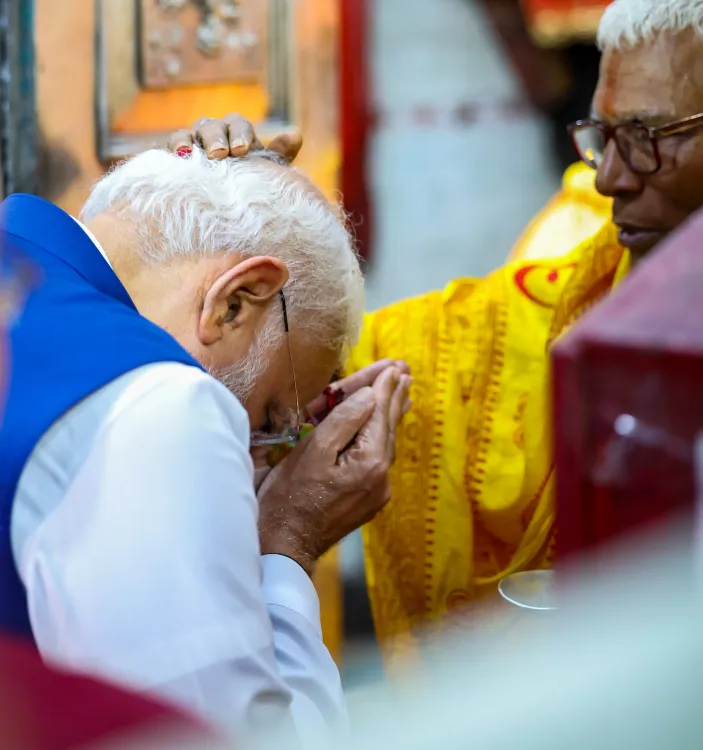
The temple priest blessed Modi by placing flowers from the Kali idol on his head — a customary mark of divine blessing.
The subsequent roadshow ran from B.K.
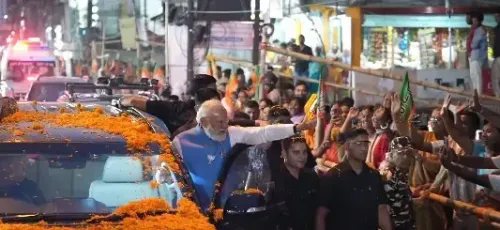
Pal Avenue to Khanna Crossing via Shobhabazar and Hatibagan , covering 7 BJP Assembly constituencies .
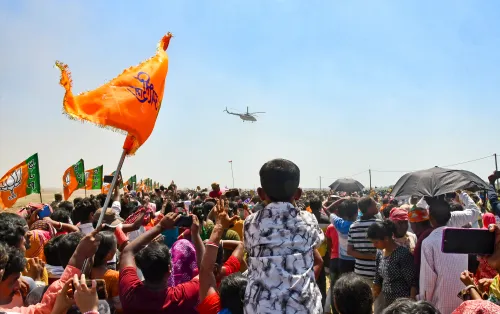
PM Modi addressed two public rallies earlier that day — at Thakurnagar (North 24 Parganas) and Haripal (Hooghly) — targeting the TMC government .
West Bengal Phase 2 polling is on April 29 , with vote counting scheduled for May 4, 2025 .
Police and central forces managed significant crowd pressure at Shobhabazar and Hatibagan , where supporters attempted to breach barricades.
Prime Minister Narendra Modi visited the Thanthania Kalibari temple in north Kolkata on Sunday, April 26, performing Kali aarti and seeking blessings before launching a high-voltage election roadshow across seven Assembly constituencies. The spiritual visit, ahead of West Bengal's second phase of polling on April 29, was seen as a deliberate invocation of the state's deep-rooted Kali worship tradition — a cultural touchpoint the BJP has increasingly leaned on during its Bengal campaigns.
Temple Visit and Aarti Ceremony
Upon arriving at the Thanthania Kalibari in the afternoon, PM Modi performed a full Kali aarti at the temple. The presiding priest blessed the Prime Minister by placing flowers from the deity's idol directly on his head — a customary mark of divine blessing.
This was not an isolated gesture. Modi has consistently opened his public addresses in West Bengal with the chant 'Jai Maa Kali', a practice that political analysts note has struck a chord with a significant section of the state's electorate, particularly among communities with strong devotional ties to Shakti worship.
Roadshow Route and Scale
Following the temple visit, PM Modi proceeded to B.K. Pal Avenue, the starting point of his roadshow. The convoy moved through Shobhabazar and Hatibagan before concluding at Khanna Crossing.
The roadshow was conducted in support of BJP candidates contesting from seven Assembly seats: Kashipur-Belgachia, Shyampukur, Beleghata, Maniktala, Chowringhee, Entally, and Jorasanko. All seven candidates were positioned ahead of the Prime Minister's vehicle during the procession.
Massive crowds lined both sides of the route. At multiple points, supporters welcomed the Prime Minister from temporary stages while flower petals were showered along the path. Police and central forces faced significant crowd management challenges, particularly at Shobhabazar and Hatibagan, where enthusiastic supporters attempted to breach barricades — situations that were swiftly brought under control.
Public Meetings and Political Messaging
Earlier in the day, PM Modi addressed two public rallies — the first at Thakurnagar in North 24 Parganas district, and the second at Haripal in Hooghly district. Both meetings marked the final Sunday of campaigning before the second phase of polling.
At both venues, Modi targeted the Trinamool Congress (TMC) government, intensifying the BJP's political offensive in the run-up to the April 29 vote. The counting of votes is scheduled for May 4.
Strategic Significance: BJP's Cultural Outreach in Bengal
The BJP's consistent use of Kali worship as a campaign anchor reflects a broader strategic shift in how the party approaches West Bengal — a state with a complex religious and cultural identity. Notably, Kali is not merely a deity in Bengal; she is a civilisational symbol, deeply embedded in the state's literary, artistic, and social fabric.
Critics from the opposition argue this constitutes religious mobilisation for electoral gain. However, BJP strategists counter that acknowledging Bengal's Shakta traditions is a form of cultural respect, not exploitation. The debate itself reflects the contested nature of identity politics in one of India's most politically volatile states.
This comes amid the BJP's sustained push to expand its footprint in urban Kolkata, where constituencies like Maniktala, Chowringhee, and Jorasanko represent dense, diverse voter bases that have historically leaned toward the TMC.
What to Watch Next
With Phase 2 polling on April 29 covering these seven constituencies among others, voter turnout and ground-level sentiment will be closely watched. The May 4 vote count will reveal whether Modi's temple outreach and roadshow momentum translated into actual electoral gains for the BJP in Kolkata's urban heartland.
Point of View
Durga Puja, and Shakta identity as political bridges into a state that has long resisted saffron consolidation. What's striking is the precision: the Thanthania Kalibari sits in the heart of north Kolkata's dense urban constituencies — exactly the seats the BJP is contesting. The roadshow through Shobhabazar and Hatibagan was as much a show of street-level strength as it was a cultural statement. Whether this translates to votes or remains optics will be answered on May 4 — but the BJP's Bengal playbook is clearly evolving beyond rural outreach into the city's veins.
NationPress
2 Oct 2026
Frequently Asked Questions
Which temple did PM Modi visit in Kolkata on April 26?
PM Modi visited the Thanthania Kalibari temple in north Kolkata on April 26, 2025. He performed Kali aarti and received blessings from the temple priest, who placed flowers from the idol on his head.
What was the route of PM Modi's Kolkata roadshow?
PM Modi's roadshow began at B.K. Pal Avenue and concluded at Khanna Crossing, passing through Shobhabazar and Hatibagan. The roadshow covered seven BJP Assembly constituencies in Kolkata.
Which Assembly seats did Modi campaign for during the Kolkata roadshow?
PM Modi's roadshow supported BJP candidates from Kashipur-Belgachia, Shyampukur, Beleghata, Maniktala, Chowringhee, Entally, and Jorasanko. All seven candidates were present ahead of his vehicle during the procession.
When is Phase 2 polling in West Bengal and when will votes be counted?
West Bengal's second phase of polling is scheduled for April 29, 2025. The counting of votes will take place on May 4, 2025.
Why does PM Modi invoke Kali worship during West Bengal campaigns?
Kali worship is a deeply embedded cultural and religious tradition in West Bengal, and PM Modi's consistent invocation of 'Jai Maa Kali' is seen as an attempt to connect with the state's Shakta heritage. Political analysts note this approach has resonated with a section of Bengal's electorate, though critics view it as religious mobilisation for electoral purposes.