PM Modi's Hooghly Boat Ride: Gratitude to Maa Ganga, Bengal Pledge
Synopsis
PM Modi's early morning boat ride on Kolkata's Hooghly River — framed as spiritual gratitude to Maa Ganga — doubles as a powerful electoral signal ahead of West Bengal's Assembly elections, where the BJP is locked in a fierce battle against Mamata Banerjee's TMC with Phase 1 recording a historic 92.59% turnout.
Key Takeaways
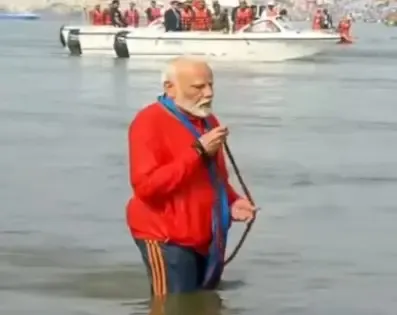
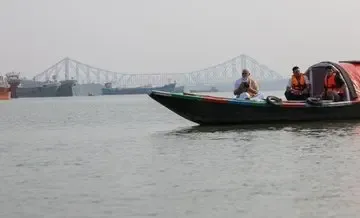
PM Narendra Modi took a boat ride on the Hooghly River, Kolkata on April 24 , expressing gratitude to Maa Ganga and reaffirming his government's commitment to West Bengal's development.
West Bengal's first phase of Assembly elections recorded a voter turnout of 92.59 per cent — the highest ever for a first phase in the state.
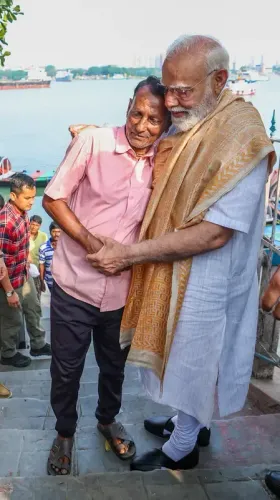
PM Modi met local boatmen and morning walkers along the Hooghly , praising their hardworking nature during the visit.
At a rally in Krishnanagar, Nadia district , Modi predicted BJP victory on May 4 and made a pointed reference to the jhalmuri episode in Jhargram .
The second phase of West Bengal polling is scheduled for April 29 , with vote counting on May 4 .
The election is a high-stakes battle between All India Trinamool Congress (CM Mamata Banerjee) and the Bharatiya Janata Party , amid controversy over voter list revision.
Prime Minister Narendra Modi on Friday, April 24, embarked on a serene boat ride along the Hooghly River in Kolkata, using the occasion to express his reverence for Maa Ganga and reaffirm his government's unwavering commitment to the development and prosperity of West Bengal. The visit, shared widely on social media, carried both spiritual symbolism and sharp political messaging ahead of the state's ongoing Assembly elections.
A Spiritual Pause on the Banks of the Hooghly
PM Modi took to social media platform X to share glimpses of his early morning visit, describing it as a moment of quiet reflection and gratitude. "This morning in Kolkata, I spent some time on the banks of the Hooghly River, an opportunity to express gratitude to Maa Ganga," he wrote.
The Prime Minister underscored the deep cultural and spiritual bond that Bengalis share with the river. "For every Bengali, the Ganga occupies a very special place. One can say that the Ganga flows through the soul of Bengal. Her divine waters carry the timeless spirit of an entire civilisation," he said.
This deliberate invocation of the Ganga's spiritual significance is consistent with Modi's broader political messaging that weaves together cultural identity, religious sentiment, and developmental promises — a formula that has resonated strongly with voters across multiple states.
Modi Meets Boatmen and Morning Walkers
Beyond the symbolism, PM Modi also engaged directly with ordinary citizens during the visit. He met local boatmen along the Hooghly and interacted with morning walkers, praising their industrious spirit. "Also had the opportunity to meet boatmen, whose hardworking nature is admirable, and morning walkers," he noted.
Such ground-level interactions are a hallmark of Modi's campaign strategy — projecting accessibility and empathy with working-class communities. The boatmen of the Hooghly represent a significant constituency in Kolkata's riverine economy, and their inclusion in the PM's public narrative carries electoral weight.
Notably, the Ganga and its tributaries have been central to the BJP's governance narrative since the launch of the Namami Gange programme in 2014, which has seen investments exceeding ₹30,000 crore in river rejuvenation. West Bengal has been a key beneficiary of several projects under this initiative.
Political Context: West Bengal Assembly Elections 2026
PM Modi's Kolkata visit comes at a critical juncture in West Bengal's political calendar. The state witnessed the first phase of its Assembly elections on Thursday, April 24, with polling conducted across several districts in northern and southern Bengal. The phase recorded a remarkable voter turnout of 92.59 per cent — the highest ever recorded for a first phase in the state.
The elections have emerged as a fierce contest between the ruling All India Trinamool Congress (AITC), led by Chief Minister Mamata Banerjee, and the opposition Bharatiya Janata Party (BJP). The campaign has been marked by intense political debate over voter list revision, allegations of booth management, and competing development narratives.
Critics argue that BJP's repeated emphasis on the Ganga and cultural symbolism in Bengal is a calculated strategy to consolidate Hindu identity-based voting, particularly in constituencies where the party made significant inroads in the 2021 Assembly elections, winning 77 seats — its best-ever performance in the state.
Modi's Jhalmuri Jibe and Campaign Trail
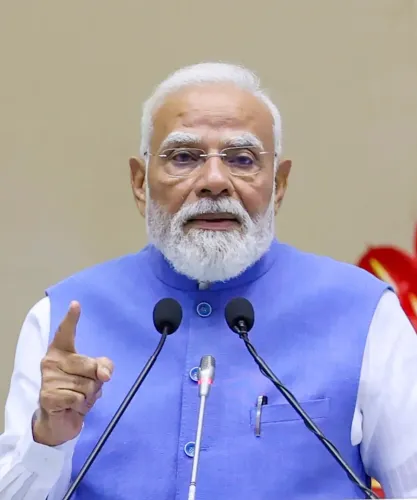
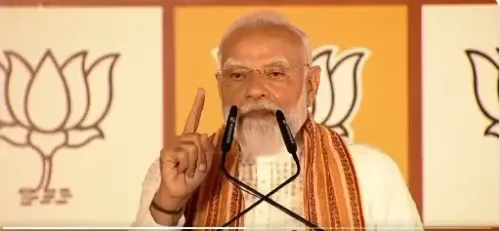
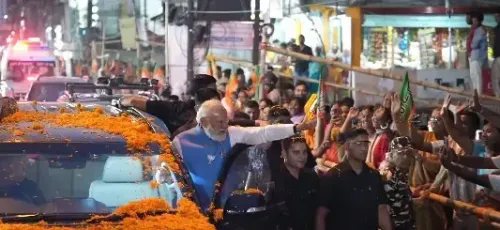
Following the first phase of polling, PM Modi shifted gears to active campaigning for the upcoming rounds. Addressing a rally in Krishnanagar in Nadia district, he took a pointed dig at the Trinamool Congress over his earlier much-publicised moment of eating jhalmuri in Jhargram.
"On May 4, the BJP will be victorious in West Bengal, and sweets and jhalmuri will be distributed. I ate the jhalmuri, but the heat was felt by the Trinamool Congress," he remarked, drawing loud cheers from the crowd. The jhalmuri episode had triggered a political storm, with TMC leaders alleging it was a staged photo-op — a charge the BJP dismissed.
The second phase of polling is scheduled for April 29, with the counting of votes set for May 4. The BJP is banking on a strong showing in seats across central and southern Bengal, where it has invested heavily in organisational outreach since 2021.
What This Means for West Bengal's Political Landscape
The Hooghly boat ride is more than a photo opportunity — it is a carefully orchestrated message to Bengali voters that PM Modi understands and respects their cultural heritage. In a state where the BJP has historically struggled to shed its outsider image, such gestures are designed to bridge the emotional gap between the party and Bengal's deeply rooted cultural identity.
However, the TMC has countered aggressively, arguing that Modi's visits are election-driven rather than development-driven, pointing to what it describes as inadequate central funds for West Bengal under various flagship schemes. The battle for Bengal ultimately hinges on which narrative — cultural connect versus administrative grievance — resonates more powerfully with voters.
With the second phase of voting on April 29 and results due on May 4, the political temperature in West Bengal is set to rise sharply in the coming days, making every symbolic gesture — including a quiet boat ride on the Hooghly — a calculated move in a high-stakes electoral chess game.
Point of View
The state's governance reality — marked by allegations of political violence, central fund disputes, and voter list controversies — tells a more complicated story. The record 92.59% first-phase turnout signals that Bengali voters are deeply engaged, but whether that energy translates into a mandate for the BJP or a consolidation behind Mamata Banerjee remains the defining question of this election cycle.
NationPress
22 Sept 2026
Frequently Asked Questions
Why did PM Modi take a boat ride on the Hooghly River in Kolkata?
PM Modi took a boat ride on the Hooghly River on April 24 to express gratitude to Maa Ganga and connect with the cultural and spiritual significance the river holds for Bengalis. The visit also served as an opportunity to reaffirm his government's commitment to West Bengal's development ahead of the ongoing Assembly elections.
What did PM Modi say about the Ganga and West Bengal?
PM Modi stated that the Ganga occupies a very special place for every Bengali and that 'the Ganga flows through the soul of Bengal.' He described the river's divine waters as carrying the timeless spirit of an entire civilisation.
What is the current status of West Bengal Assembly elections?
West Bengal's Assembly elections are underway, with the first phase recording a historic voter turnout of 92.59 per cent. The second phase of polling is scheduled for April 29, and votes will be counted on May 4.
What did PM Modi say at the Krishnanagar rally about jhalmuri?
At a rally in Krishnanagar, Nadia district, PM Modi quipped that he ate jhalmuri in Jhargram but the heat was felt by the Trinamool Congress. He predicted BJP victory in West Bengal on May 4, saying sweets and jhalmuri would be distributed in celebration.
Who are the main political parties contesting the West Bengal elections?
The West Bengal Assembly elections are primarily a contest between the ruling All India Trinamool Congress, led by Chief Minister Mamata Banerjee, and the opposition Bharatiya Janata Party. The campaign has been intensely fought, with debates over voter list revision and competing development narratives dominating the discourse.