PM Modi to Visit West Bengal on June 20-21 for State Day Event
Synopsis
Prime Minister Narendra Modi will attend programmes in West Bengal on June 20 and 21, 2026. The highlight is a West Bengal Day observance at Tarakeshwar, Hooghly district, honouring Dr. Shyama Prasad Mukherjee's legacy and the state's cultural heritage. The visit reflects the BJP's sustained effort to expand its footprint in Trinamool Congress-governed Bengal.
Key Takeaways
PM Modi will visit West Bengal on 20 and 21 June 2026 for multiple programmes.
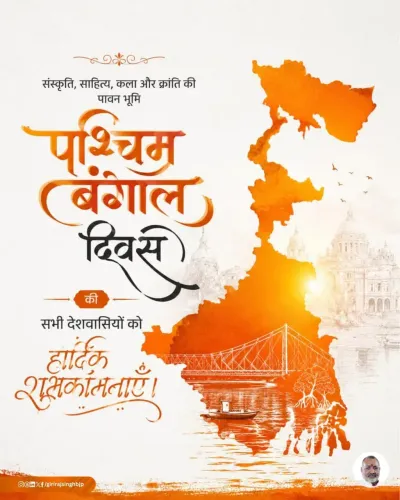
The main event on 20 June is the West Bengal Day observance at Tarakeshwar, Hooghly district .
The occasion highlights the connection to Dr.
Shyama Prasad Mukherjee , founder of the Bharatiya Jana Sangh in 1951 and forerunner of the BJP.
The Prime Minister posted the announcement in Bengali , directly addressing the state's audience in their language.
The visit is part of the BJP's ongoing cultural and organisational outreach in Trinamool Congress -governed West Bengal.
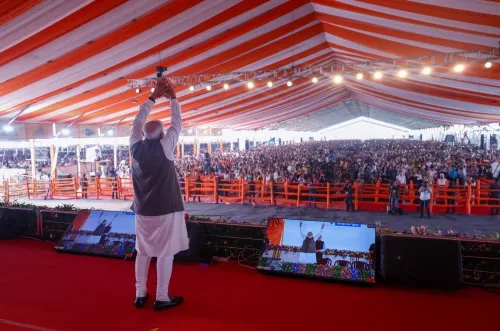
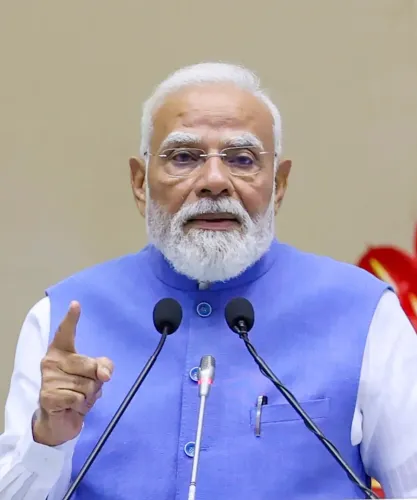
Prime Minister Narendra Modi announced on Friday, 19 June 2026, that he will be present at multiple programmes in West Bengal over two days — 20 and 21 June — with 20 June holding special significance as West Bengal Day. The centrepiece event will be held at Tarakeshwar in Hooghly district, and the Prime Minister highlighted the occasion's connection to Dr. Shyama Prasad Mukherjee and the cultural heritage of West Bengal.
Context
Posting in Bengali on X, PM Modi wrote that 'আগামীকাল, ২০ জুন তারিখটি আমাদের পশ্চিমবঙ্গ দিবস পালনের কারণে বিশেষভাবে উল্লেখযোগ্য' ('Tomorrow, 20 June, is especially significant as we observe West Bengal Day'). He noted the event's association with Dr. Shyama Prasad Mukherjee and the state's cultural identity, signalling a programme that blends political history with regional pride.
The venue, Tarakeshwar, is a prominent pilgrimage and cultural town in Hooghly district, known for the Tarakeshwar temple — a site of deep significance for Bengali Hindus. Choosing this location underscores the cultural dimension the BJP seeks to project through the visit.
Policy Backdrop
Dr. Shyama Prasad Mukherjee founded the Bharatiya Jana Sangh in 1951, the organisational forerunner of the BJP. He is remembered as a Bengali leader who championed national integration and opposed special constitutional provisions for Jammu and Kashmir. The BJP has consistently invoked his legacy in its Bengal outreach, framing him as a symbol of both Bengali pride and national unity.
PM Modi's visits to West Bengal have frequently combined tributes to pre-Partition Bengali leaders with efforts to strengthen the party's presence in a state governed by the Trinamool Congress. The West Bengal Day observance provides a formal, culturally resonant occasion for such engagement.
Stakeholders and Impact
West Bengal BJP workers and Bengali cultural groups are the primary stakeholders for this visit. A high-profile two-day presence by the Prime Minister in the state — anchored around a cultural and historical occasion — is expected to energise the party's organisational base ahead of future electoral cycles.
For Bengali voters, the invocation of Dr. Shyama Prasad Mukherjee's legacy alongside West Bengal's cultural heritage is a deliberate attempt to build an emotional bridge between the BJP's ideological roots and the state's distinct regional identity. The choice of Tarakeshwar as venue reinforces this cultural outreach.
What's Next
The full schedule for 20 and 21 June in West Bengal is yet to be detailed publicly. Observers will watch for any policy announcements, cultural initiatives, or organisational decisions that emerge from the two-day visit. The programmes are likely to draw significant attention given the historical framing and the Prime Minister's direct engagement with the Bengali-speaking audience in their own language.
As the BJP continues its long-term effort to deepen roots in West Bengal, visits that fuse cultural tribute with party mobilisation are expected to become a recurring feature of its Bengal strategy in the run-up to the next state assembly elections.
Point of View
Anchored to a formal cultural occasion and communicated in Bengali, is a carefully calibrated move that blends historical symbolism with grassroots mobilisation. By centering the visit on Dr. Shyama Prasad Mukherjee — a figure who is simultaneously a BJP founding ancestor and a Bengali icon — the Prime Minister attempts to reframe the party's identity in the state as culturally rooted rather than externally imposed. The choice of Tarakeshwar, a site of deep religious significance for Bengalis, adds another layer of local resonance. This pattern of visits positions the BJP for sustained, long-cycle electoral investment in a state that has remained elusive for the party despite repeated efforts.
NationPress
18 Sept 2026
Frequently Asked Questions
Why is PM Modi visiting West Bengal on June 20 2026?
PM Modi is visiting West Bengal on 20 June 2026 to attend the West Bengal Day observance at Tarakeshwar in Hooghly district, an event that highlights the legacy of Dr. Shyama Prasad Mukherjee and the cultural heritage of the state.
What is West Bengal Day and when is it celebrated?
West Bengal Day is an occasion that marks the cultural and historical identity of West Bengal. In 2026, the BJP-led central government is observing it on 20 June with a programme at Tarakeshwar, Hooghly district.
Who was Dr. Shyama Prasad Mukherjee?
Dr. Shyama Prasad Mukherjee was a prominent Bengali leader who founded the Bharatiya Jana Sangh in 1951 — the party that later evolved into the BJP. He is remembered for championing national integration and opposing special provisions for Jammu and Kashmir.
Where is Tarakeshwar and why was it chosen for the event?
Tarakeshwar is a town in Hooghly district, West Bengal, known for its prominent Shiva temple and deep cultural significance for Bengali Hindus. It was chosen as the venue for the West Bengal Day observance during PM Modi's visit.
What is the BJP's strategy in West Bengal?
The BJP has been working to expand its presence in West Bengal, a state governed by the Trinamool Congress, by invoking the legacy of pre-Partition Bengali leaders like Dr. Shyama Prasad Mukherjee and combining cultural outreach with party mobilisation during high-profile visits.