Madhya Pradesh Tragedy: Mother Takes Life After Drowning Daughters in Well

Synopsis
A devastating incident in Madhya Pradesh's Khamaria village sees a mother, Savita Lodhi, accused of drowning her four daughters before hanging herself. This shocking event raises serious concerns about mental health support in rural areas.
Key Takeaways
Tragic Incident: A mother drowned her daughters and then took her own life.
Ages of Victims: The daughters were between a few months and seven years old.
Police Investigation: Authorities are looking into the reasons behind this act.
Mental Health Crisis: Calls for better support and awareness in rural areas are urgent.
Community Action: Leaders emphasize the need for counseling and mental health services.
Bhopal, March 12 (NationPress) A tragic event has unfolded in the village of Khamaria, located in Madhya Pradesh's Kesli police station jurisdiction, leaving residents in shock. A 30-year-old woman named Savita Lodhi is accused of taking the lives of her four minor daughters by throwing them into a deep well, subsequently ending her own life by hanging.
This shocking incident transpired on Thursday when Savita allegedly pushed her children, whose ages ranged from just a few months to seven years, into a well situated on the property of a local villager, Harpal Ghoshi.
The eldest child was only seven, while the other three were significantly younger. Due to the well's considerable depth and water level, all four girls tragically drowned.
Authorities reported that following this horrific act, Savita returned to her residence and took her own life by hanging from a tree.
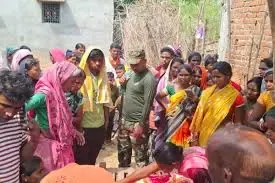
Upon learning of the incident, a police team from Kesli police station and the Tada outpost quickly arrived at the scene. They initiated a rescue operation and retrieved the bodies of the four girls from the well, while Savita’s body was discovered hanging nearby.
All five bodies were sent for a post-mortem examination to determine the precise cause and timing of their deaths.
A team from the Forensic Science Laboratory (FSL) was summoned to gather evidence from both the well and the family home.
Senior police officials also visited the location to supervise the ongoing investigation.
Investigators are questioning Savita's husband and in-laws to uncover potential motives behind this tragedy.
The police have urged the community to refrain from speculation, assuring that they will thoroughly investigate all aspects, including mental health issues, family dynamics, and any external pressures.
Community leaders have emphasized the urgent need for counseling support for affected families and increased awareness of mental health issues in rural areas, where such services are often scarce.
Experts warn that a silent mental health crisis is increasingly evident in both urban and rural settings. Factors like stress, financial strain, isolation, and societal pressures can drive individuals to despair, often without adequate support.
Tragically, communities often recognize the signs of distress only after a disaster occurs.
Improving access to counseling, diminishing stigma, and promoting open discussions are crucial to preventing further tragedies.
Point of View
It is imperative to recognize the critical need for mental health resources in rural areas. The community must come together to support families affected by such crises and advocate for enhanced mental health services to prevent similar tragedies.
NationPress
30 Sept 2026
Frequently Asked Questions
What happened in Khamaria, Madhya Pradesh?
A mother, Savita Lodhi, allegedly drowned her four daughters in a well and then took her own life by hanging.
What are the ages of the children involved?
The children were aged between a few months and seven years old.
What actions are being taken by authorities?
Police are investigating the incident, questioning family members, and have called for a forensic examination.
What is the community response?
Community leaders are advocating for mental health support and awareness in rural areas.
Why is mental health awareness important?
Improving mental health resources can help prevent tragedies and support individuals facing distress.